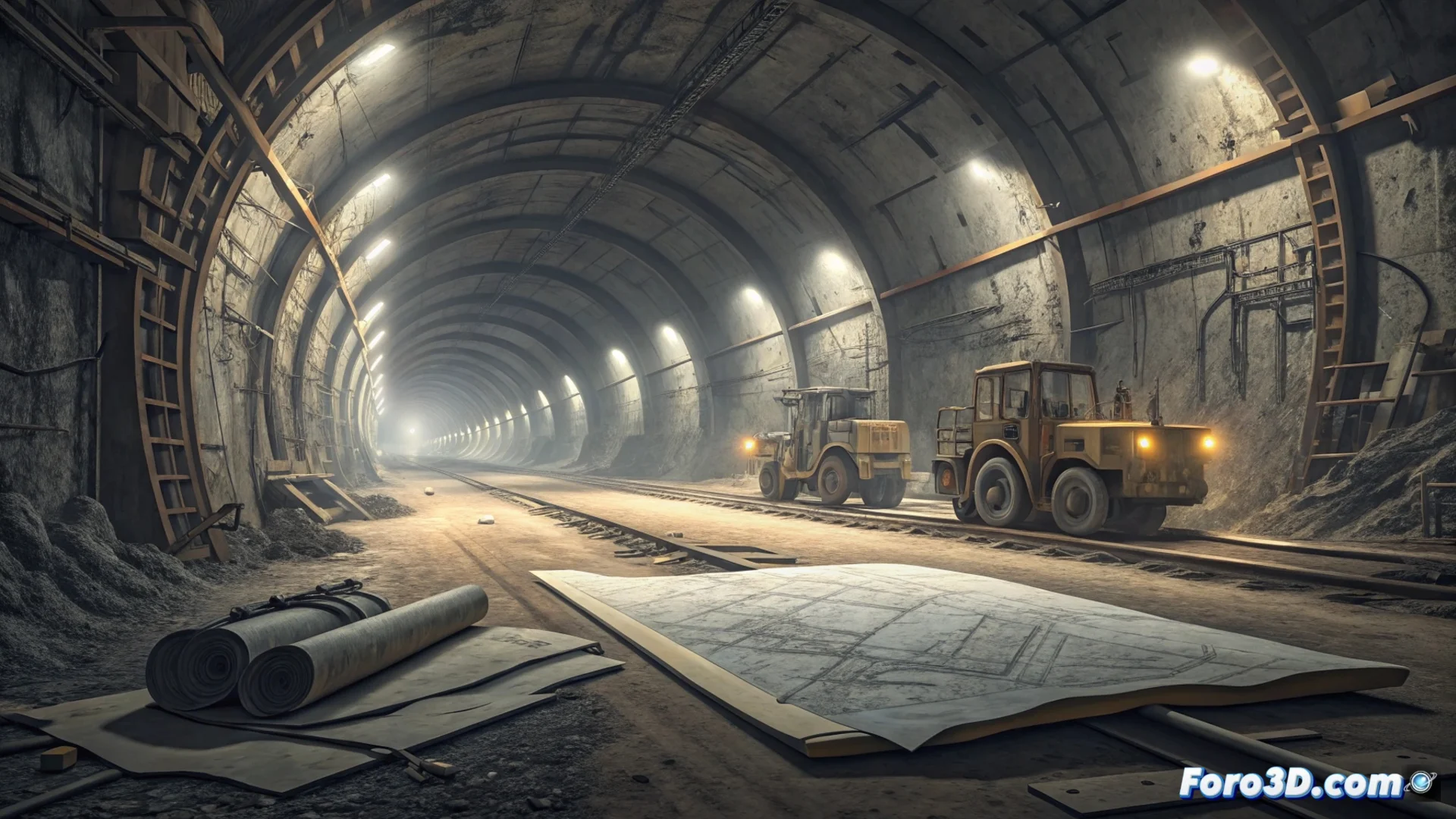
Valencia Railway Bypass Remains Stalled After Decades of Planning
The initiative to build a through railway tunnel under Valencia, colloquially known as the third Tunnel of the Laugh, continues without advancing toward its actual execution. This project, conceived to eliminate a crucial obstacle in the network, is essential for the Mediterranean Corridor to operate efficiently. Its purpose is to allow passenger and freight trains to cross the city without having to stop, which would optimize travel times and expand the line's capacity. However, the work is trapped in administrative disputes and funding issues, symbolizing the persistent delays in modernizing Spain's train infrastructure. 🚇
A Historical Knot in the Heart of the Network
The Valencia-Nord station functions as an endpoint for most services, forcing trains to reverse direction or perform complicated maneuvers to continue their route. This configuration, dating back to the 19th century, significantly slows down connections and restricts how many trains can run. The through tunnel would address this problem by directly linking the northern tracks with the southern ones, creating a continuous route under the central urban area. Experts estimate that this would shorten journey durations and allow more services to operate, fully integrating Valencia into the high-speed network.
Main benefits the tunnel would provide:- Eliminate the need for trains to turn around at the terminus station, saving time and resources.
- Increase the frequency and capacity of freight and long-distance trains.
- Seamlessly connect railway traffic from the north and south of the city, improving interoperability.
Meanwhile, trains continue to arrive in Valencia to turn around like cars in a parking lot, in a railway choreography that operators have been perfecting for over a hundred years.
The Obstacles Keeping the Project Paralyzed
The main barrier has always been securing funds for a project of such magnitude, which requires drilling a several-kilometer tunnel under a densely populated area. Different governments, both national and regional, have mentioned the project in their strategic documents, but have never unlocked the final budget allocation to tender and start construction. This is compounded by technical complexity and prolonged urban and environmental impact studies, which have indefinitely extended the design phase. The absence of a solid and lasting political agreement has ultimately shelved the proposal, always opting to prioritize other infrastructures.
Key factors of the paralysis:- Difficulty in financing a large-scale underground project in a complex urban environment.
- Lack of stable political will and consensus among the different involved administrations.
- Planning and impact assessment processes that extend over time without reaching an executive decision.
An Uncertain Future for the Connection
The current situation leaves the Valencia railway bypass in perpetual limbo, where planning continues without moving to action. This paralysis not only affects the efficiency of the Mediterranean Corridor but perpetuates an obsolete operational model that harms the competitiveness of freight transport and passenger mobility. Without a decisive push that overcomes the financing and governance obstacles, Valencia could continue relying on the outdated choreography of turning trains around for many more decades, while other regions advance in modernizing their connections. 🔄