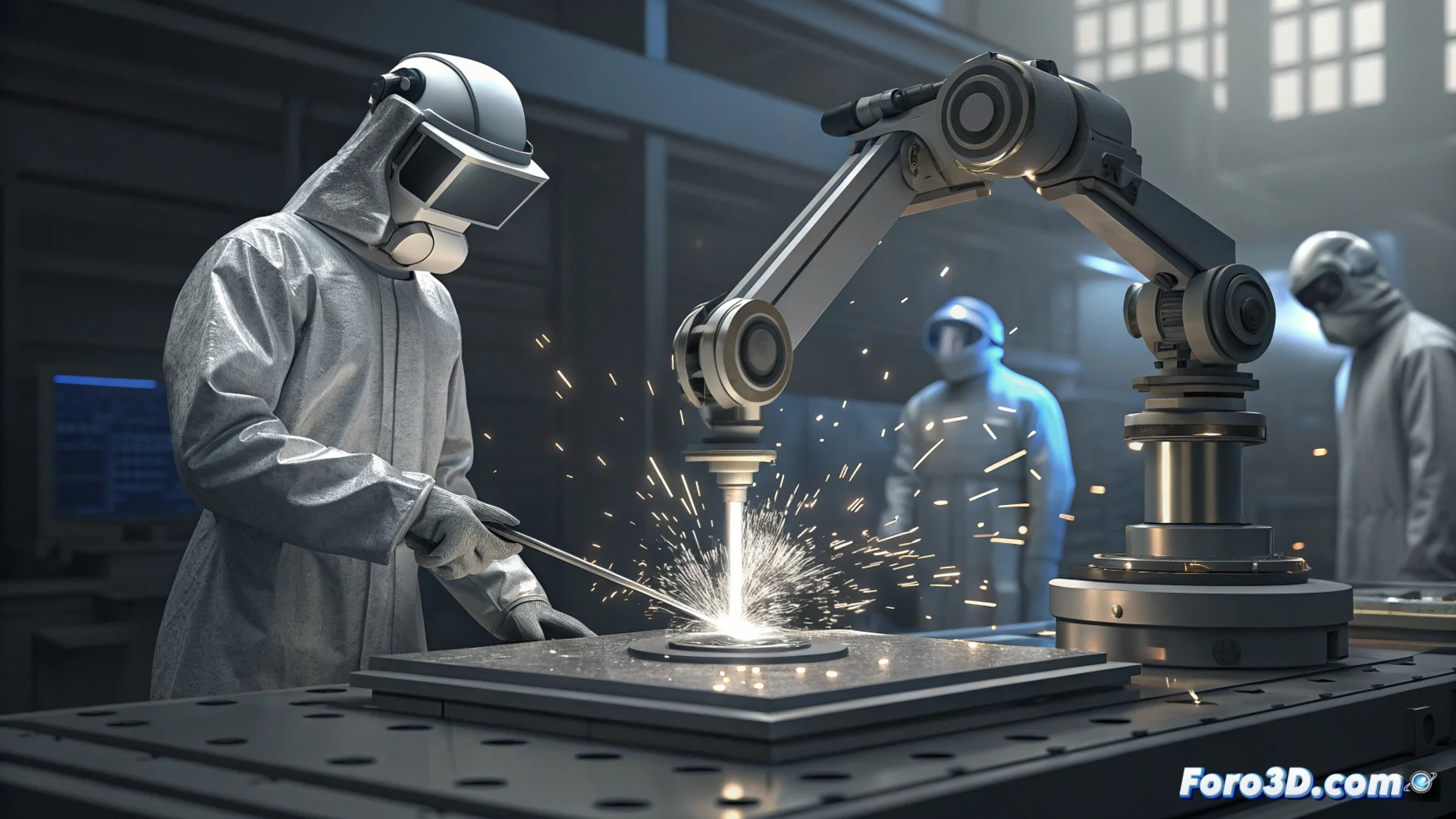
Titomic and RPI Research Manufacturing Electrodes with Cold Spray
The Australian company Titomic and the Rensselaer Polytechnic Institute (RPI) have established an alliance to explore an innovative manufacturing method. Their goal is to use cold spray technology to produce electrodes for lithium-ion batteries. This collaboration seeks to revolutionize how these critical components are made, promising to accelerate and make their production more efficient. 🔬
How Does Cold Spray Work for Batteries?
Cold spray is a deposition process where metallic powder particles are accelerated to extremely high speeds using hot gas. Upon impacting a substrate, these particles deform and bond, forming a solid layer without the need to melt the material. To manufacture an electrode, this technique could directly apply the layers of active material and conductors onto the current collector, eliminating several conventional steps.
Potential Advantages of Cold Spray:- Eliminates processes such as mixing, sheeting, and drying materials.
- Allows precise control over the thickness and composition of the deposited layer.
- Could facilitate the use of novel active materials or complex combinations.
The challenge is not just sticking the material, but ensuring the resulting batteries maintain their charge efficiently and durably.
The Role of Academic Research
The RPI team, led by Professor Daniel Lewis, will focus on analyzing how different cold spray process parameters influence the final properties of the electrode. Their work is key to understanding the relationship between the manufacturing method and battery performance.
Key Research Project Objectives:- Evaluate how gas velocity and temperature affect the electrode's microstructure.
- Achieve optimal porosity, adhesion, and electrical conductivity to maximize performance.
- Control the process to produce electrodes that offer higher energy density.
Implications for the Future of Batteries
If this collaboration between Titomic and RPI succeeds, it could unlock a pathway to scale up production of more powerful and lower-cost batteries. A faster and more direct electrode manufacturing process would not only benefit the electric vehicle industry but all devices that rely on lithium energy storage. The path now is to turn a promising additive manufacturing process into a viable industrial solution. ⚡