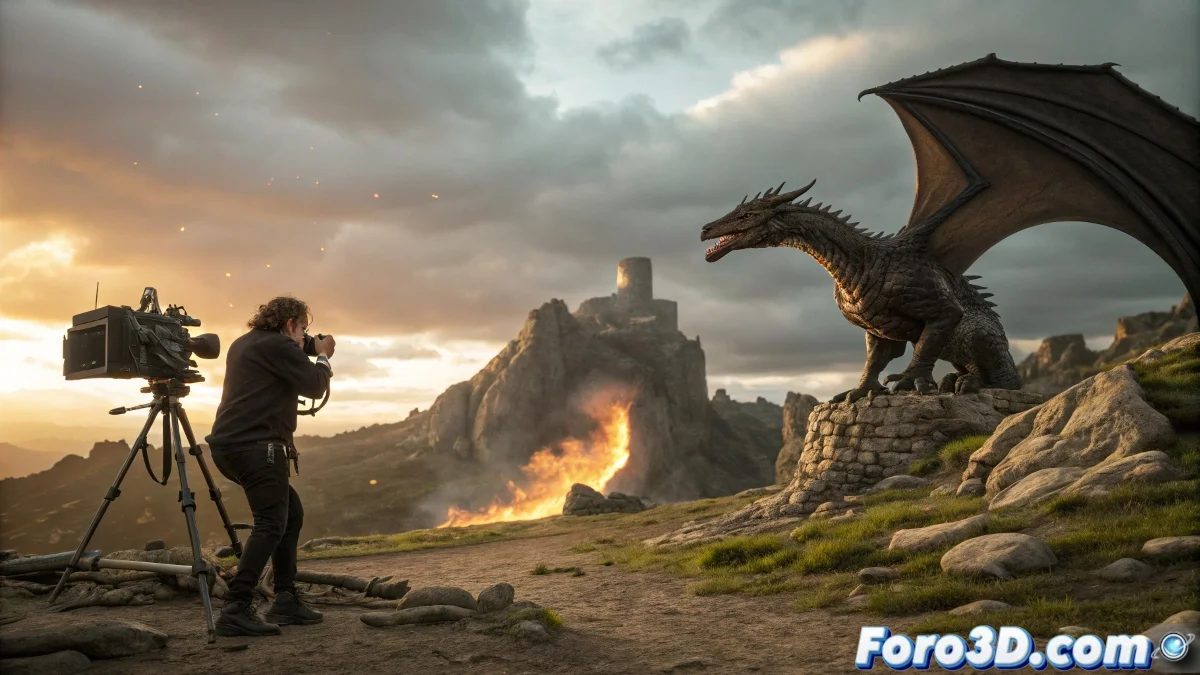
When fantasy becomes (almost) real
If there's anything harder than explaining to your grandma what a PBR shader is, it's making a 20-meter dragon look as real as the neighbor's dog. 🐉 In In the Lost Lands, NOLABEL achieved exactly that: an epic fantasy that doesn't look like it's from a game engine, but from a world that could exist… if physics and biology were more flexible.
Here there's no shiny and polished magic, but dirt, cursed shadows, and fire that burns even per pixel.
Houdini for magic, Maya for monsters
The team used Houdini to simulate chaotic magic effects, epic winds, and fire that doesn't look like it's from an Instagram filter. Meanwhile, Maya was in charge of bringing creatures to life with anatomies that even a veterinarian would hesitate to diagnose. Because, let's be honest, who knows how a three-headed dragon breathes? 🤔
- Textures that sweat reality: Rough skins, eroded rocks, and atmospheres that weigh more than an electricity bill.
- Global illumination or nothing: Because a poorly calculated shadow reveals more than an actor reading the script on screen.
- Unreal Engine in pre-production: To avoid those "What if we put a floating castle here?" in the middle of filming.
The trick is that the trick isn't noticeable
The key was to treat each effect as if it had to fool a professional skeptic. A dimensional portal? Let the particles drag leaves from the ground. An ice spell? Let the breath come out at the right angle. ❄️ No "anyway, it's fantasy, the audience will buy it". Here even the craziest magic follows internal laws… or at least, rendering laws.
And if something went wrong, there was always the perfect excuse: "It was a compilation error on the render farm… or maybe a file corruption spell". 🧙♂️ After all, in epic fantasy, even bugs can be lore.