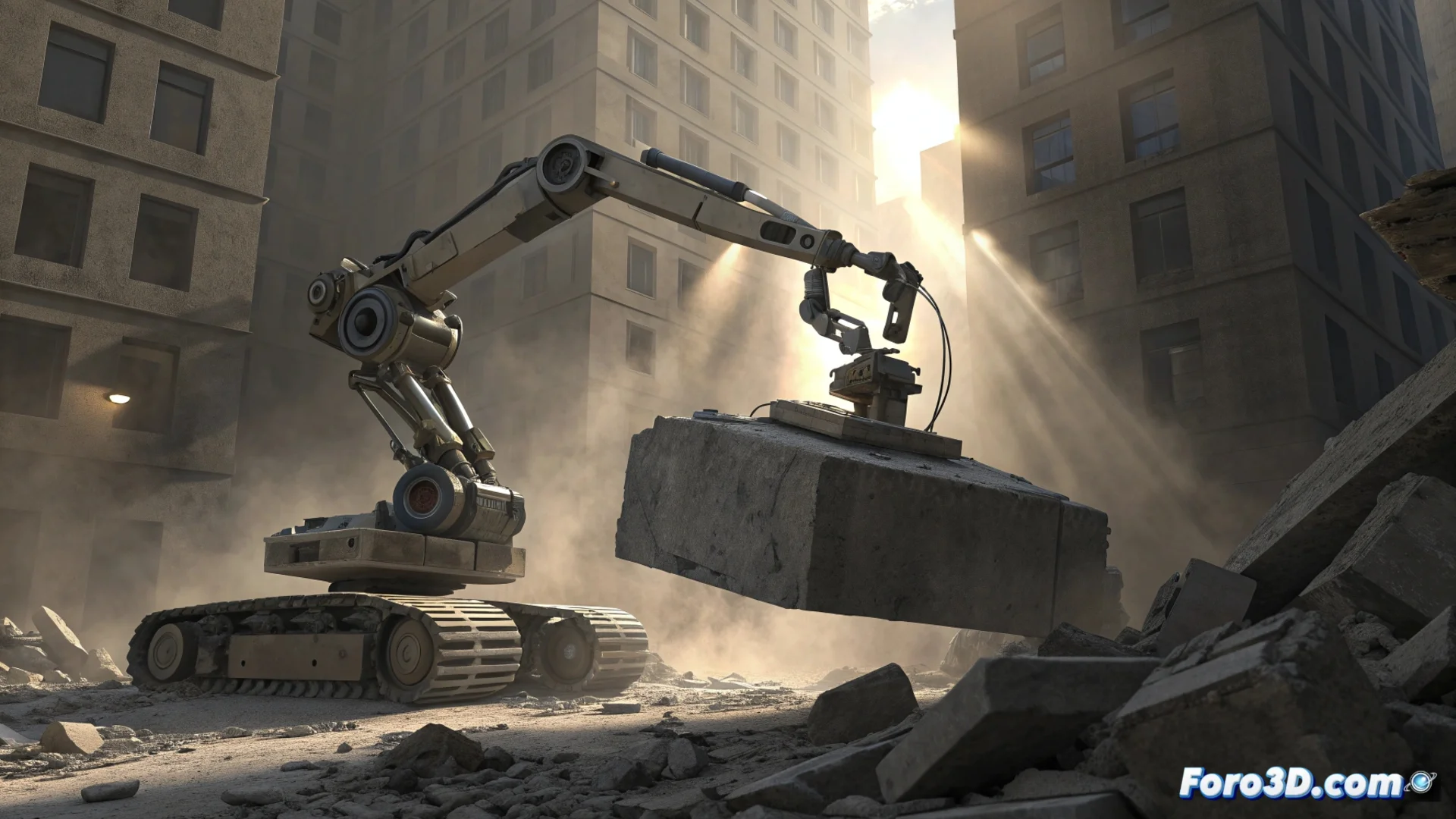
U.S. Army's RoMan Robot Manipulates Objects in Complex Environments
The U.S. Army Research Laboratory has created a new robotic system to operate where humans cannot. It is called RoMan and is a ground robot equipped with arms that can physically interact with the real world. Its main mission is to manipulate objects in unstructured and dangerous spaces, such as those left by natural disasters or conflicts. 🤖
Intelligent Perception to Understand the Environment
RoMan does not just capture images; it builds a three-dimensional understanding of its surroundings. For this, it uses sensors like cameras and lidar systems that scan the area. Special software processes this data and generates a detailed map of the terrain and all present objects, from logs to construction debris. This map is the basis for the robot to make autonomous decisions on how to act.
Key features of its perception system:- Generates 3D models of the environment in real time to identify objects.
- Calculates the safest and most efficient way to grasp each element, evaluating its shape and weight.
- Plans the trajectory of its arms and the necessary force to move debris without causing collateral damage.
The ability to perceive and plan in 3D is what allows RoMan to operate in real scenarios, where nothing is orderly and everything can change.
Robotic Arms with Dexterity and Strength
RoMan's physical power resides in its manipulator arms. They are designed to imitate the versatility of a human arm, but with superior levels of strength and endurance. They can adapt their grip instantly, allowing them to perform very diverse tasks.
Tasks it can perform:- Roll or push heavy and bulky objects, such as logs or vehicles.
- Carefully pick up sharp or irregularly shaped metal debris.
- Remove obstacles to clear access routes in emergency zones.
Current Limits and Future Potential
Although RoMan is already an expert at manipulating large debris, its development continues. A curious fact is that, for now, it still cannot pick up small and delicate objects like cables or tools that its human operators sometimes leave in the test field. This detail underscores that, despite its advanced autonomous manipulation capabilities, robotics for unstructured environments continues to evolve to cover all the challenges of a real scenario. 🛠️