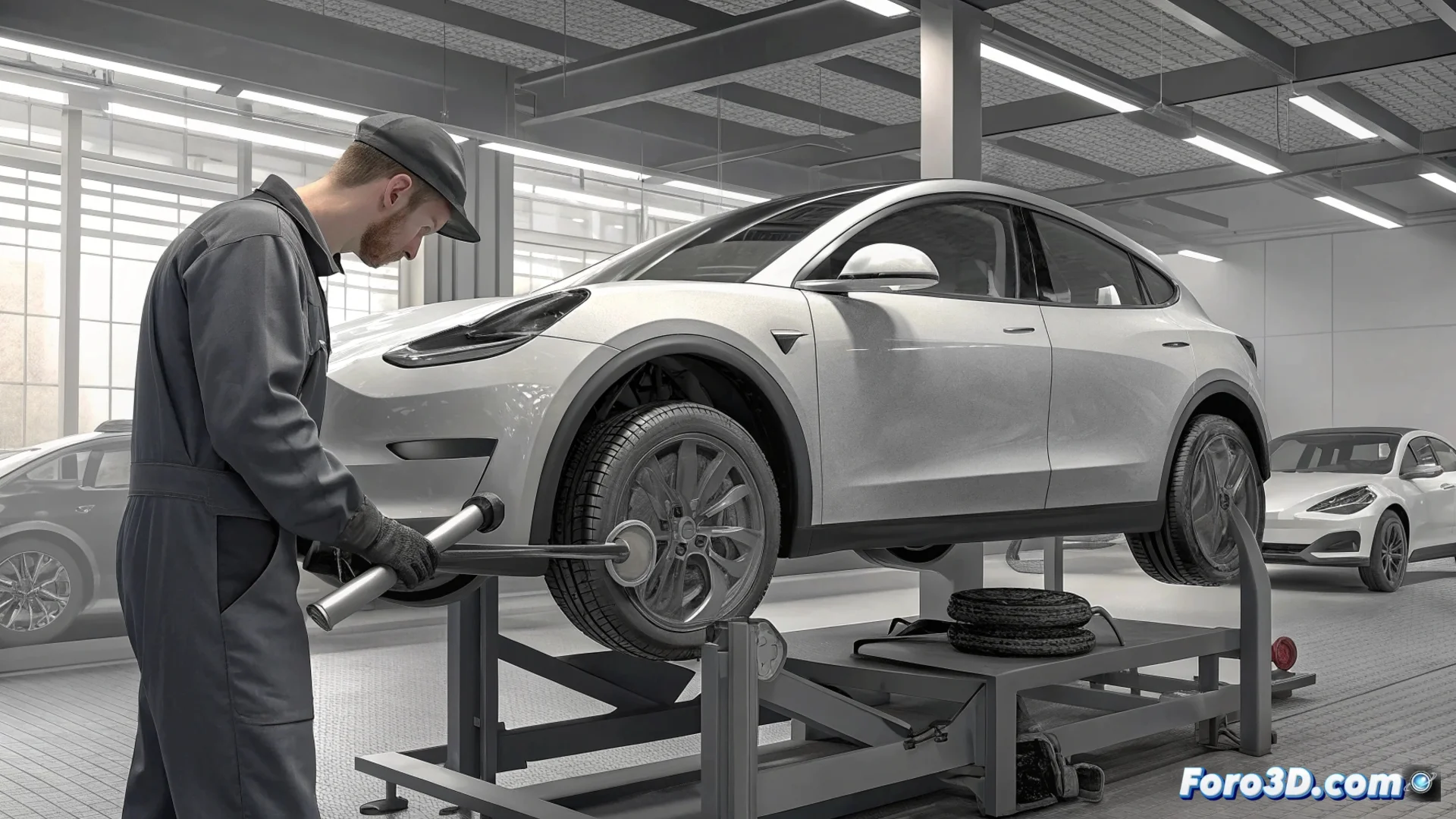
The TÜV Report 2026 Reveals Reliability Issues in the Tesla Model Y
The German technical inspection organization TÜV has published its annual report, the TÜV Report 2026, which evaluates how vehicles age. The results for the early generations of the Tesla Model Y are concerning, showing a high rate of major defects after just two or three years on the road. This data questions its medium-term robustness compared to other competitors. 🚗⚠️
Details on Tesla Model Y Failures
The study analyzes the condition of cars during the mandatory technical inspection. For Tesla Model Y vehicles manufactured between 2020 and 2024, the defect index classified as serious or dangerous reaches 17.3%. This percentage places it among the worst results for vehicles of that age. Inspectors detect recurring problems in key components.
Most Affected Components:- Brake Discs: Premature wear or deformations.
- Suspension Elements: Issues with ball joints, bushings, or shock absorbers.
- Lighting Systems: Failures in headlights, taillights, or LED lighting systems.
Technological innovation in electric vehicles must be accompanied by proven mechanical solidity to ensure durability.
Comparison with Other Electric Vehicles
The aging pattern is not exclusive to the Model Y. Its sibling, the Tesla Model 3, shows a defect index of 13.1%, somewhat better but still high. In contrast, the report highlights that other EV models age more favorably under the strict German criteria.
Electric Models with Better Performance:- Mini Cooper SE: Shows superior reliability in inspections.
- Audi Q4 e-tron: Records more controlled aging.
- Fiat 500e: Presents fewer serious defects for its age.
Implications for the Electric Market
These data from the TÜV Report 2026 offer a crucial perspective on medium-term reliability in the electric car segment. They emphasize that an excessive focus on software and electronics cannot neglect traditional mechanical engineering. For a car to last, it needs good brakes and a robust suspension, regardless of its propulsion. 🔧📉