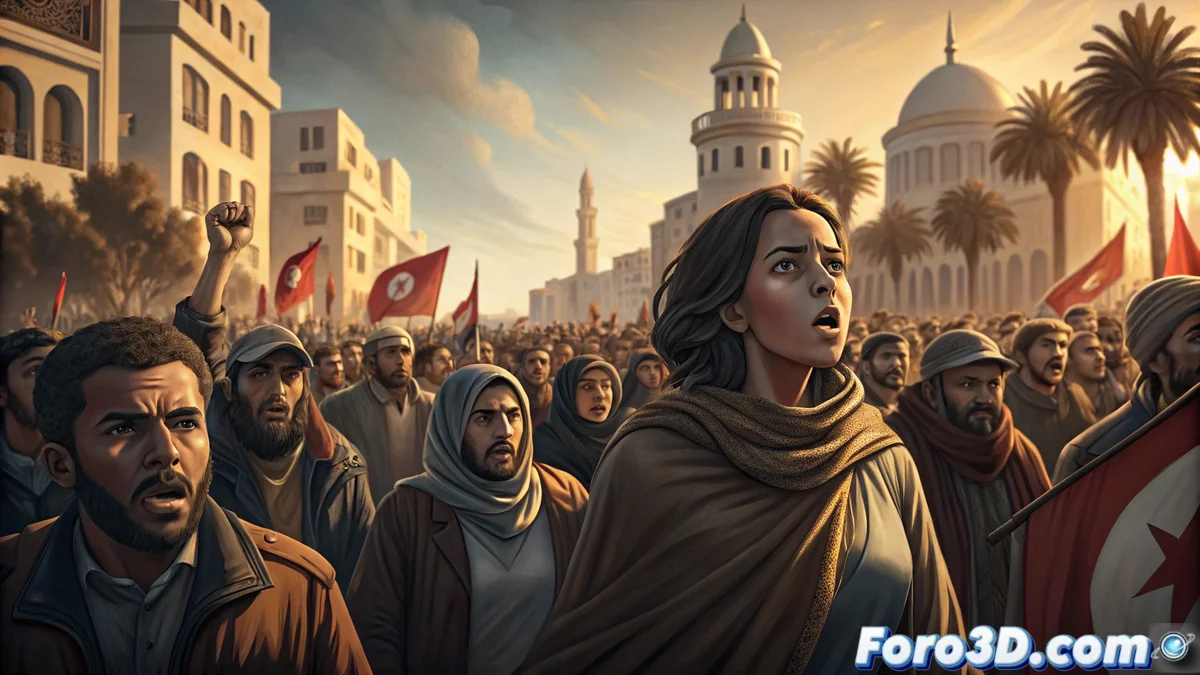
Tunisian Opposition Unites to Challenge Kais Saied's Government
In Tunisia, a coordinated opposition front emerges to organize large-scale demonstrations, demanding that President Kais Saied step down. Protesters accuse his administration of adopting authoritarian measures and silencing critics, including journalists and human rights defenders. This joint movement signals a transformation in the national political landscape, where dissent previously operated in a dispersed manner. 🏛️
The Decline of a Control Tactic
The classic strategy of divide and conquer, which describes how a leader fragments his critics to dominate, is losing effectiveness in this context. Saied's government initially took advantage of a disunited opposition, but now faces a cohesive coalition gaining strength in the public space. This solidarity complicates the authorities' ability to overlook or downplay citizen discontent.
Key Factors of the New Unity:- Coordination between diverse political groups and civil society previously separated.
- A clear common goal: pressuring the president to leave power.
- A massive and sustained presence in the streets that amplifies their message.
The supreme excellence consists in breaking the enemy's resistance without fighting. – Sun Tzu, The Art of War.
The Challenge of a Consolidated Opposition Front
For a power that bases its control on polarization, a united opposition poses a formidable challenge. Current protests demonstrate that when dispersed factions agree on a shared goal, their capacity to exert pressure on the government multiplies. Political analysts indicate that this unity could force the initiation of a political dialogue or, at the very least, more forcefully highlight the demands to restore the democratic system that many citizens perceive as weakened.
Potential Consequences of This Cohesion:- Increase national and international pressure on Saied's government.
- Force negotiations or political concessions previously avoided.
- Serve as an example for other opposition movements in similar contexts.
A Lesson for Power Manuals
It seems that the contemporary authoritarianism manual missed the chapter on how to act when those who used to be divided choose, for once, to join forces instead of subtracting them. The situation in Tunisia demonstrates that the tactic of fragmenting the rival has a limit, and that strategic unity can erode the foundations of control based on division. The near future will tell if this unified pressure succeeds in changing the country's political course. ⚖️