The Terra Hunting Experiment Project Begins Its Search for Earth-Like Planets
An ambitious astronomical mission has just officially begun. The Terra Hunting Experiment (THE) embarks on a decade of observations dedicated to a primary goal: finding worlds analogous to ours. This project will employ an extremely precise technique to scrutinize nearby stars, marking a milestone in the hunt for exoplanets 🪐.
A Decade of Meticulous Observation
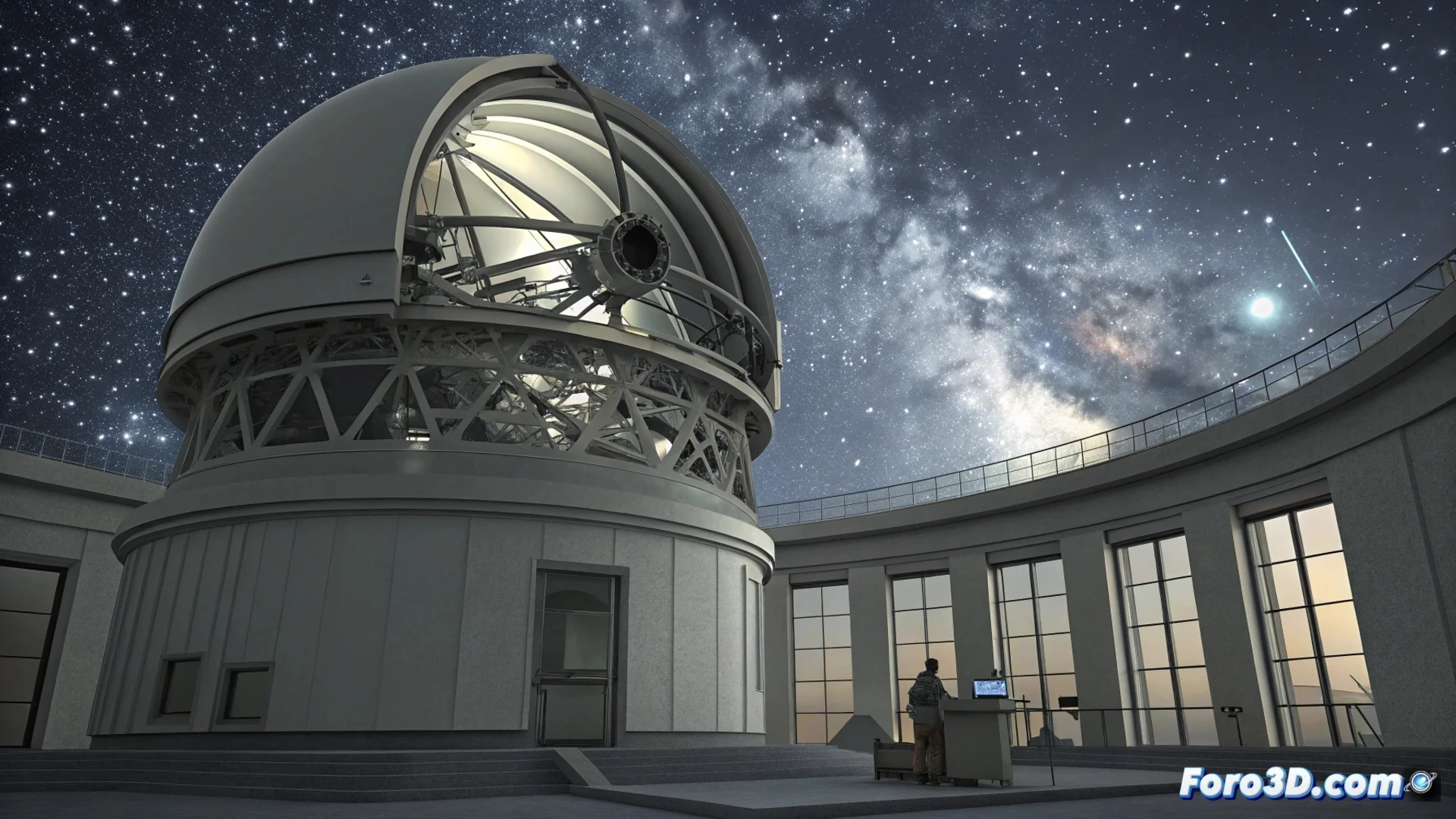
THE's strategy is based on persistence and precision. Over ten years, the project will continuously observe a select group of approximately forty stars. These Sun-like stars have been chosen for their stability and proximity. Observations will be conducted from the Roque de los Muchachos Observatory on the island of La Palma, taking advantage of its privileged conditions. The key instrument is the HARPS3 spectrograph, designed to measure infinitesimal variations in starlight with unprecedented accuracy.
The fundamental pillars of the experiment:- Radial Velocity Method: Detects the small motion that a planet induces in its star as it orbits.
- Extreme Precision: HARPS3 can measure changes in the star's velocity as small as 30 cm per second.
- Extended Duration: Thousands of nights of observation allow filtering out stellar "noise" and isolating the planet's signal.
While some search for intelligent life by listening to radio signals, THE prefers to look for the house first, patiently measuring the tremor of the stars.
The Goal: Finding "Earth 2.0"
The scientific goal is concrete and challenging. THE is not looking for just any planet; its focus is on identifying those with a mass comparable to Earth's that orbit within the habitable zone of their host star. This region, often called the "Goldilocks zone," is where temperatures allow water to exist in liquid form on the surface, an ingredient considered essential for life as we know it. Finding these worlds requires separating the faint gravitational signature of a small planet from the star's natural activity and pulsations.
Characteristics of the ideal planet that THE is seeking:- Low mass, similar to Earth's.
- Orbit within the habitability zone of its star.
- Stable, solar-type host star.
A Legacy of Data for the Future
THE is a collaborative effort by a consortium of universities from the United Kingdom, Sweden, Switzerland, and Portugal. Beyond immediate discoveries, its greatest contribution will be a public catalog of radial velocity data. This exceptional quality archive with unique temporal coverage will become a fundamental reference for exoplanet astronomy. Scientists will use this data to confirm candidates, study complete planetary systems, and, crucially, prioritize targets for the next generation of giant telescopes, such as the Extremely Large Telescope (ELT). These future facilities will be able to directly analyze the atmospheres of the worlds that THE helps to find, searching for possible biosignatures 🔭.