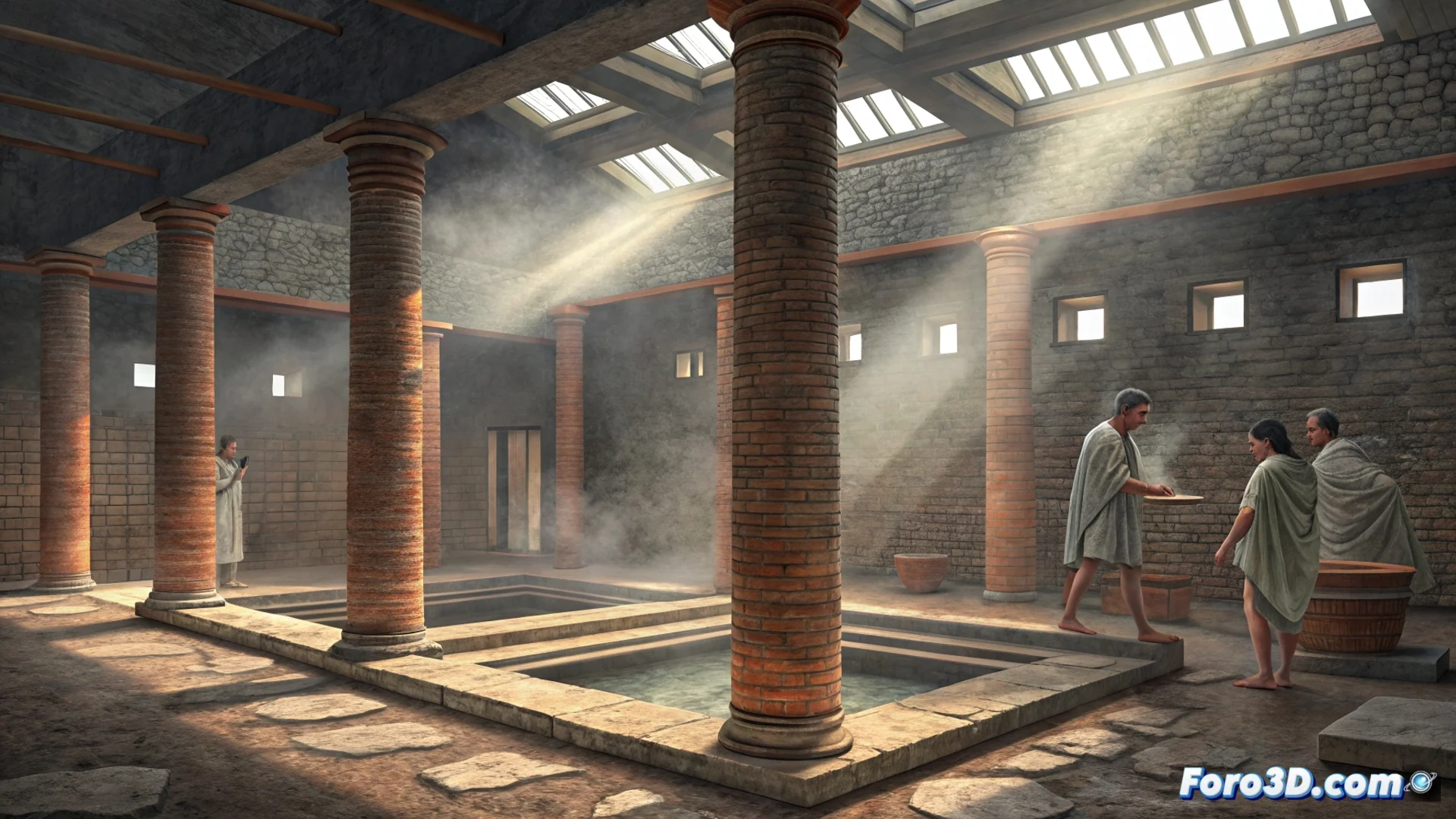
The Samnite Baths of Pompeii Before the Roman Conquest
Before Roman power spread over Pompeii, the city operated under Samnite administration. Its public baths represented a technological advance for their time, although today we would perceive them as an experience far from pleasant. The core of their operation was the hypocaustum, an ingenious but imperfect heating system. 🔥
The Heating System and Its Limitations
The Samnite hypocaust operated by burning wood in an underground furnace. The resulting hot air circulated under the floor, which was supported by brick pillars, and rose through the walls via ceramic tubes. However, this method had significant flaws. Achieving and maintaining a uniform temperature in all rooms was a constant challenge, often leaving the baths cold. Additionally, combustion smoke frequently seeped into the bathing areas, creating an uncomfortable and smoky environment.
Main problems of the Samnite hypocaust:- Difficulty in distributing heat evenly in all rooms.
- Leakage of smoke and gases from the furnace into the bath rooms.
- Intensive wood consumption to keep the fire burning continuously.
Imagine entering a warm room but with a persistent smell of damp smoke and sweat, where the steam mixes with echoes of conversations in a dark language.
The Communal Experience and Hygiene Habits
Visiting these baths was a public and social act, not private. Large rooms gathered users to bathe, but also to converse and close deals. The water in the common pools was shared, and body cleaning methods differed greatly from today's. Instead of soap, aromatic oils and strigils (curved metal scrapers) were used to remove dirt and sweat from the skin. Although aqueducts renewed the water periodically, their cleaning was not constant, and the high influx of people made the feeling of cleanliness relative.
Characteristics of Samnite hygiene:- Use of aromatic oils and metal strigils to clean the skin.
- Baths in shared water pools by all users.
- Ren