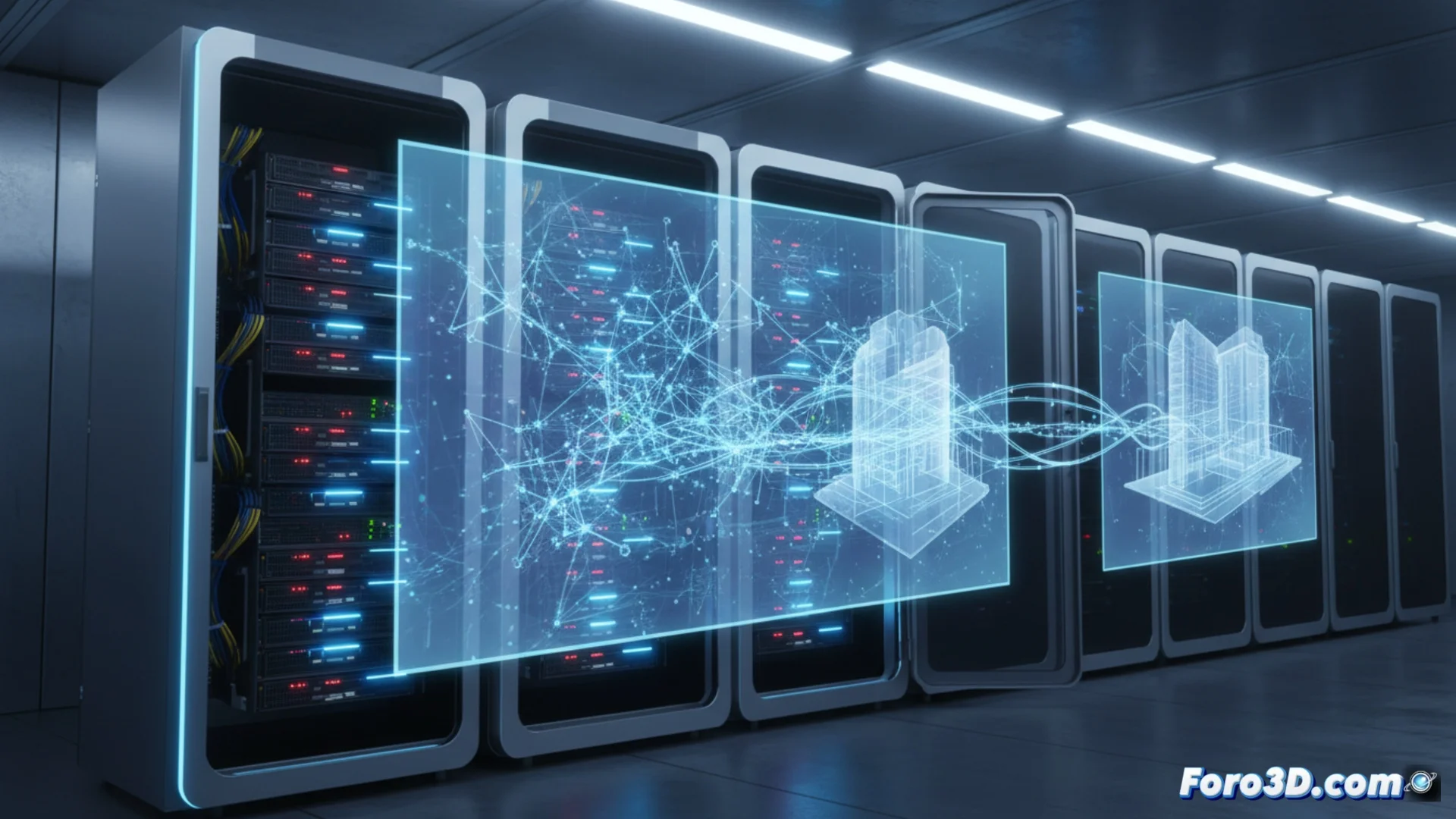
The Russian GPU server rental market is growing strongly
The segment of full physical hardware rental, known as bare metal, within the Russian GPU server market, exhibits very dynamic activity. Data from the local provider Reg.cloud, published by the newspaper Kommersant, indicate that this business generated nearly 17 billion rubles during 2025. Estimates for the next year anticipate that this amount will double, reaching 34 billion rubles. This accelerated progress is due to the massive need for computing power for tasks linked to artificial intelligence. 🚀
Artificial intelligence as the main driver
Nearly 60% of the demand for these resources comes from companies that need to run AI models and train machine learning systems. An additional 30% of the revenue is generated by virtual desktop infrastructure (VDI) services, which allow users to access remote environments with high graphical performance. The remaining 10% corresponds to specialized jobs, such as rendering complex 3D images and animations. This access model allows companies to use large processing capacity without buying expensive equipment.
Demand distribution by segments:- AI and Machine Learning: Represents 60% of usage, driving sector growth.
- Virtual Desktops (VDI): Contributes 30% of revenue, for powerful remote work environments.
- Specialized workloads: Such as 3D rendering, occupy the final 10% of the market.
While some are still looking for the ultimate graphics card for their PC, others simply rent a complete data center by the hour.
Key operational and financial advantages
The popularity of this scheme is based on its operational flexibility and cost efficiency. Organizations can scale their computing resources up or down as their projects evolve, and they only pay for the power they actually consume. This avoids maintaining their own infrastructure that can quickly become obsolete or remain unused during certain periods, helping to optimize investment.
Bare metal model benefits:- On-demand scalability: Increase or reduce resources as needed.
- Pay-per-use: Only billed for the computational capacity actually used.
- No high initial investment: Allows startups and large firms to experiment with complex algorithms or process big data without a large initial outlay.
Prospects of an expanding market
The outlook for this sector in Russia is one of continuous growth. The projected doubling of revenue for 2026 underscores the growing dependence on external and scalable computing solutions. This model not only meets the current demand for processing AI but also establishes itself as a viable alternative for managing any workload that requires high graphical or computational performance, democratizing access to cutting-edge technology. 💻