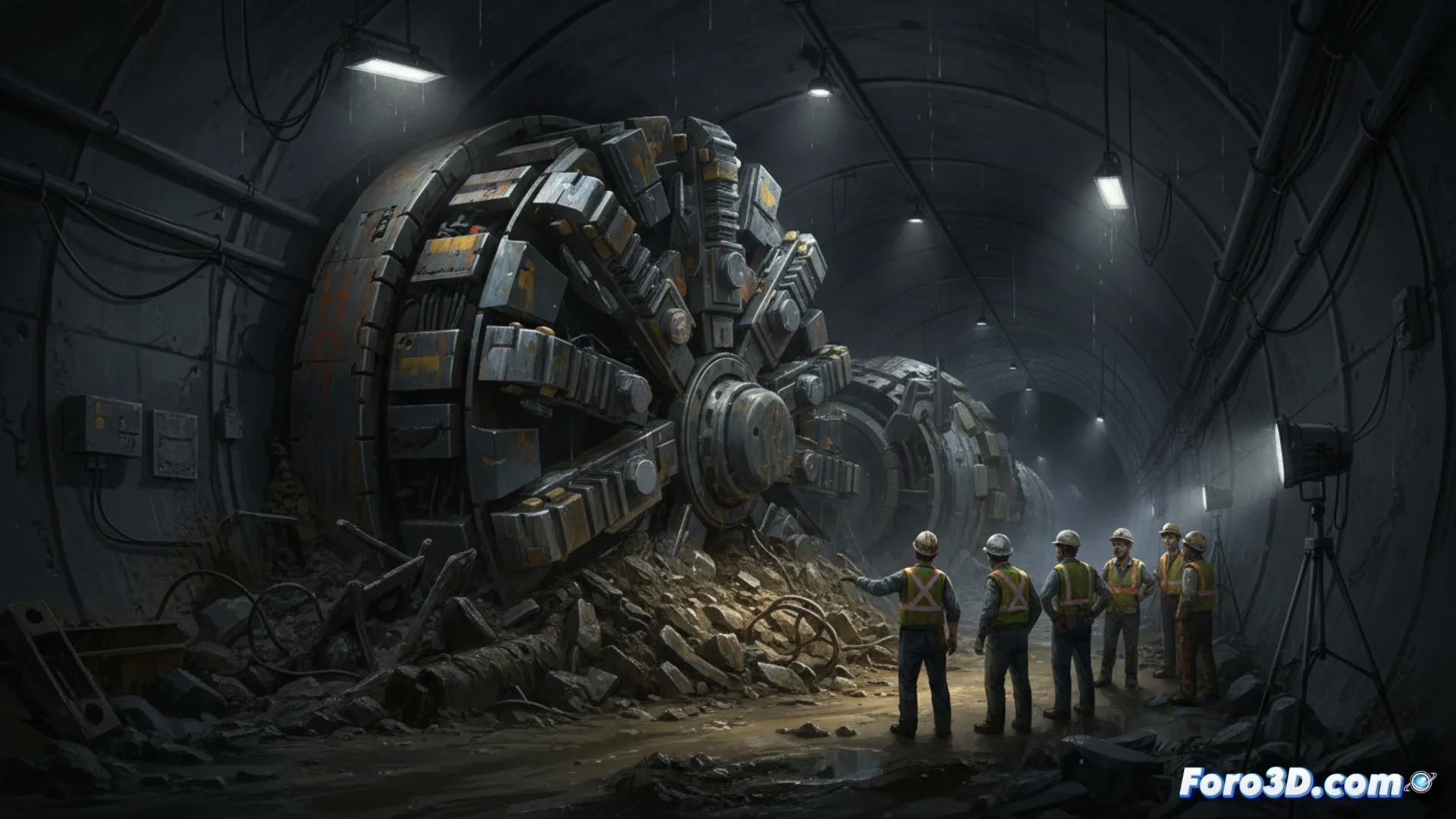
Alaskan Way Viaduct Replacement Tunnel Gets Stuck
The initiative to replace the elevated Alaskan Way Viaduct in Seattle with an underground passage encounters a serious problem. Bertha, the most colossal tunnel boring machine on the planet, comes to a complete halt after advancing barely 1,000 feet. An obstacle in its cutting head, probably a metal pipe from an old survey, damages the primary seals. This allows water and sand to enter the interior, forcing everything to stop. The machine remains immobilized underground, raising doubts about how to resolve the mishap and the time it will take. 🚧
Repair Requires a Deep Excavation
To reach the front part of Bertha that suffered the damage, engineers plan to open a rescue pit that goes down 120 feet. This task is intricate and carries risk, as it is carried out next to downtown skyscrapers. The project begins to accumulate considerable delays and a budget increase that adds millions of dollars. The tunnel boring machine remains stopped under the city for nearly two years, while they design and implement the solutions. This episode transforms the work into an emblematic case of the dangers involved in large-scale infrastructure.
Key challenges of the rescue operation:- Accessing the damaged cutting head, located at great depth under the city.
- Carrying out the pit excavation next to sensitive buildings without affecting their stability.
- Managing technical uncertainty and skyrocketing costs during the shutdown.
This period turned the project into a frequently cited example of the risks involved in large-scale infrastructure works.
The Work Resumes After Overcoming the Impediment
After an extensive reconstruction that includes renewing the cutting head, Bertha resumes operations at the end of 2015. The machine finishes boring the nearly two-mile conduit in 2017, although with a significant delay compared to the initial schedule. The incident highlights how unpredictable it is to build in dense urban areas with complex geology. Although the tunnel eventually opens to traffic, Bertha's story serves as a persistent reminder of the technical and logistical obstacles in contemporary engineering.
Consequences and lessons from the incident:- It proves the vulnerability of the largest machinery to unforeseen events underground.
- It underscores the need for robust contingency plans for monumental projects.
- The experience generates a legacy of caution and analysis for future urban tunneling works.
A Legacy of Overcome Challenges
The Bertha saga even inspired local jokes about Seattle having its own permanent underground tourist attraction, though not exactly the one they expected. The episode, nevertheless, demonstrated the resilience capacity in engineering to solve extreme problems. The tunnel, now operational, is the physical testament to a monumental effort that overcame a critical shutdown. 🏗️