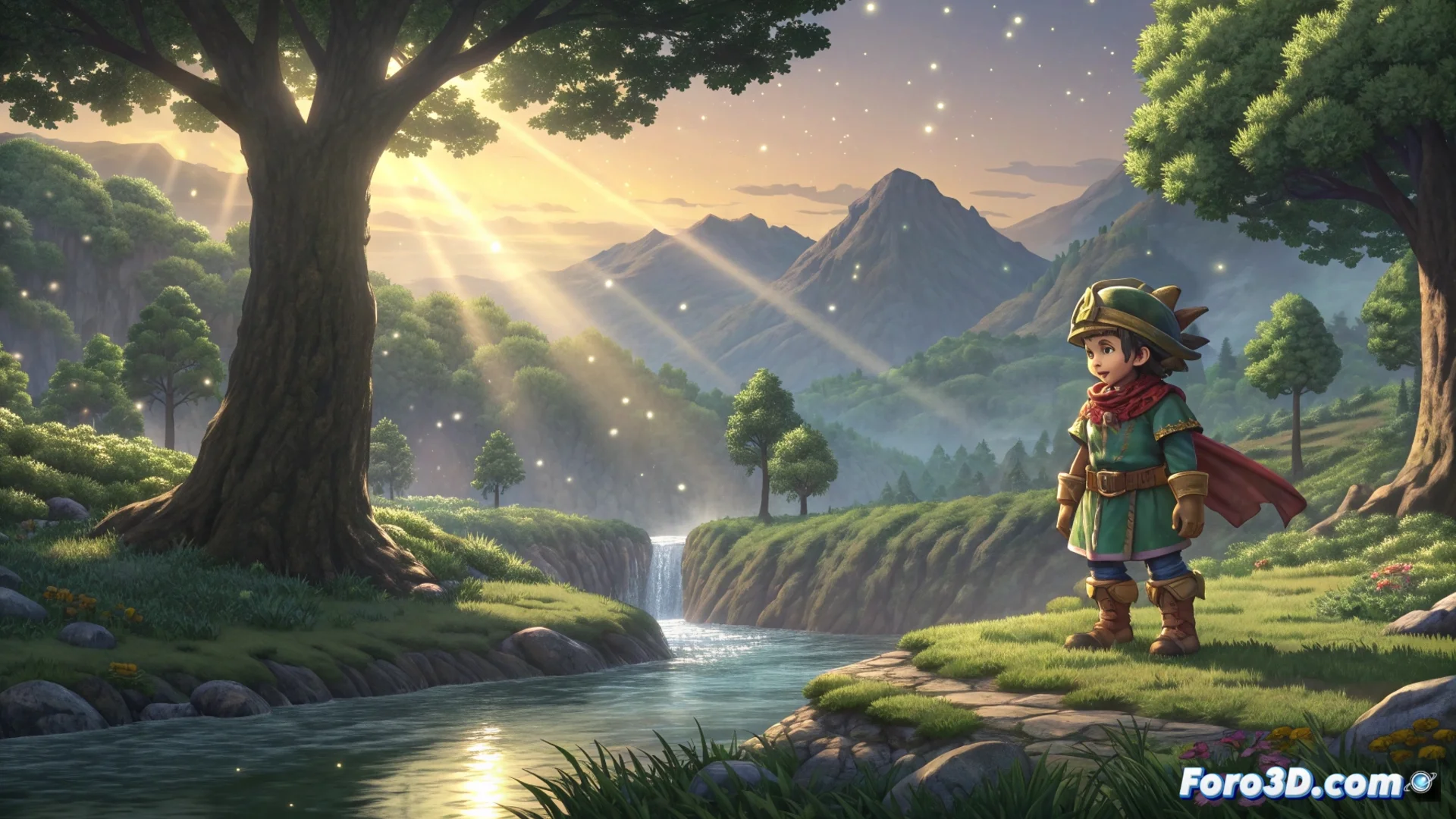
The Dragon Quest III Remake Uses a Proprietary HD-2D Engine
Square Enix presents the long-awaited remake of Dragon Quest III with a renewed technical approach. The title employs a proprietary HD-2D engine, which is speculated to derive from Unreal Engine. This technology perfects the visual style that began with Octopath Traveler, creating a unique fusion between the classic and the modern. 🎮
Technical Fusion Between 2D Sprites and 3D Worlds
The graphics system is based on integrating two distinct visual layers. On one hand, it uses highly detailed two-dimensional sprites to represent characters. On the other, it builds complete 3D environments, enabling a dynamic camera and perspective effects. This deliberate contrast makes the pixel art figures stand out against backgrounds with real volume.
Key Elements of HD-2D Integration:- Character sprites in high-resolution pixel art that preserve the original design.
- Three-dimensional scenarios rendered with a modern engine to achieve depth.
- A movable camera, offering angles and views not possible in the classic game.
The HD-2D style not only evokes nostalgia but enriches it with a layer of contemporary visual richness.
Visual Effects that Enhance the Atmosphere
The engine implements several rendering techniques to bring the worlds to life. Advanced effects are observed that add realism and atmosphere without breaking the main pixelated aesthetic.
Implemented Visual Techniques:- Depth of field: Blurs distant planes to focus attention on the main action.
- Volumetric lighting: Simulates light rays passing through the environment, as in forests or dungeons.
- Dynamic reflections: On surfaces like water or polished floors, adding realism to the 3D environment.
- Particle systems: For environmental and magical phenomena, such as fog, fire, or spells.
Character Customization and Progression
The game allows customizing the appearance of the hero or heroine, with options like changing the hairstyle. However, the initial equipment remains during the first hours of adventure, emphasizing the classic RPG progression. This design decision balances aesthetic customization with the sensation of character growth from a humble beginning. The final result is an experience that respects its legacy while adopting present-day graphical tools. ✨