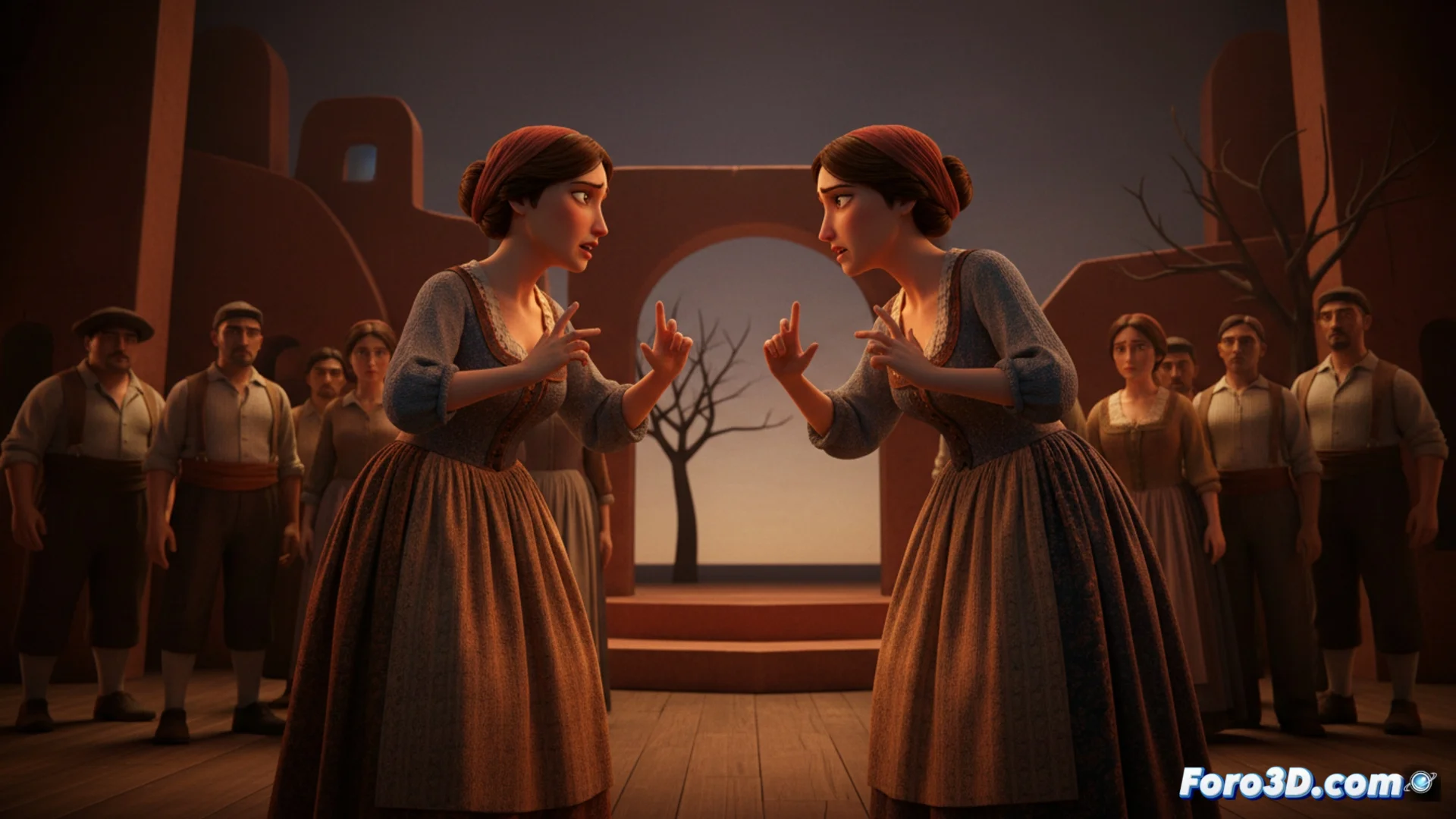
The National Drama Center Premieres Grito, boda y sangre, a Sign Language Version of Lorca
The Teatro María Guerrero presents this Friday an innovative stage proposal: Grito, boda y sangre. This play revisits the classic Bodas de Sangre by Federico García Lorca, placing Spanish Sign Language at the heart of its narrative. An approach that radically transforms how the drama is perceived on stage 🎭.
Sign Language as the Backbone of the Production
The artistic direction integrates sign language not as a complement, but as the main channel to tell the story. This alters the dynamics of the scene and requires both the cast and the audience to adjust to a different rhythm and way of perceiving. The staging explores how the body and hands can communicate the passion, conflict, and tragedy inherent to Lorca with a different force.
Key Elements of This Transformation:- Protagonism of two deaf actresses, redefining the codes of dramatic communication.
- Sign language structures the narration, demanding a new scenic syntax.
- The audience must read the drama through movement and body expression.
A dialogue between theatrical tradition and a contemporary, inclusive scenic expression.
Reinterpreting Rural Drama from a New Sensitivity
The play preserves the essence of the original conflict: a story of love, honor, and death in a rural setting. However, it filters it through the sensory experience of its performers. This method adds an additional layer of meaning to the text, emphasizing non-verbal communication and silences that were already vital in the work of the Granada poet.
Aspects that Stand Out in This Reinterpretation:- Maintains the Lorquian themes of love, honor, and death in a rural setting.
- Adds depth by emphasizing the non-verbal and the power of scenic silence.
- Proposes a challenge to traditional theater perception.
A Challenge to Conventional Theatrical Perception
This performance poses a direct challenge to those who think that understanding theater is reduced to hearing words. It reminds us that, in tragedies, the body has always had a more powerful cry. It is an invitation to experience dramatic force from an inclusive and renewed perspective, where every gesture tells the story 👐.