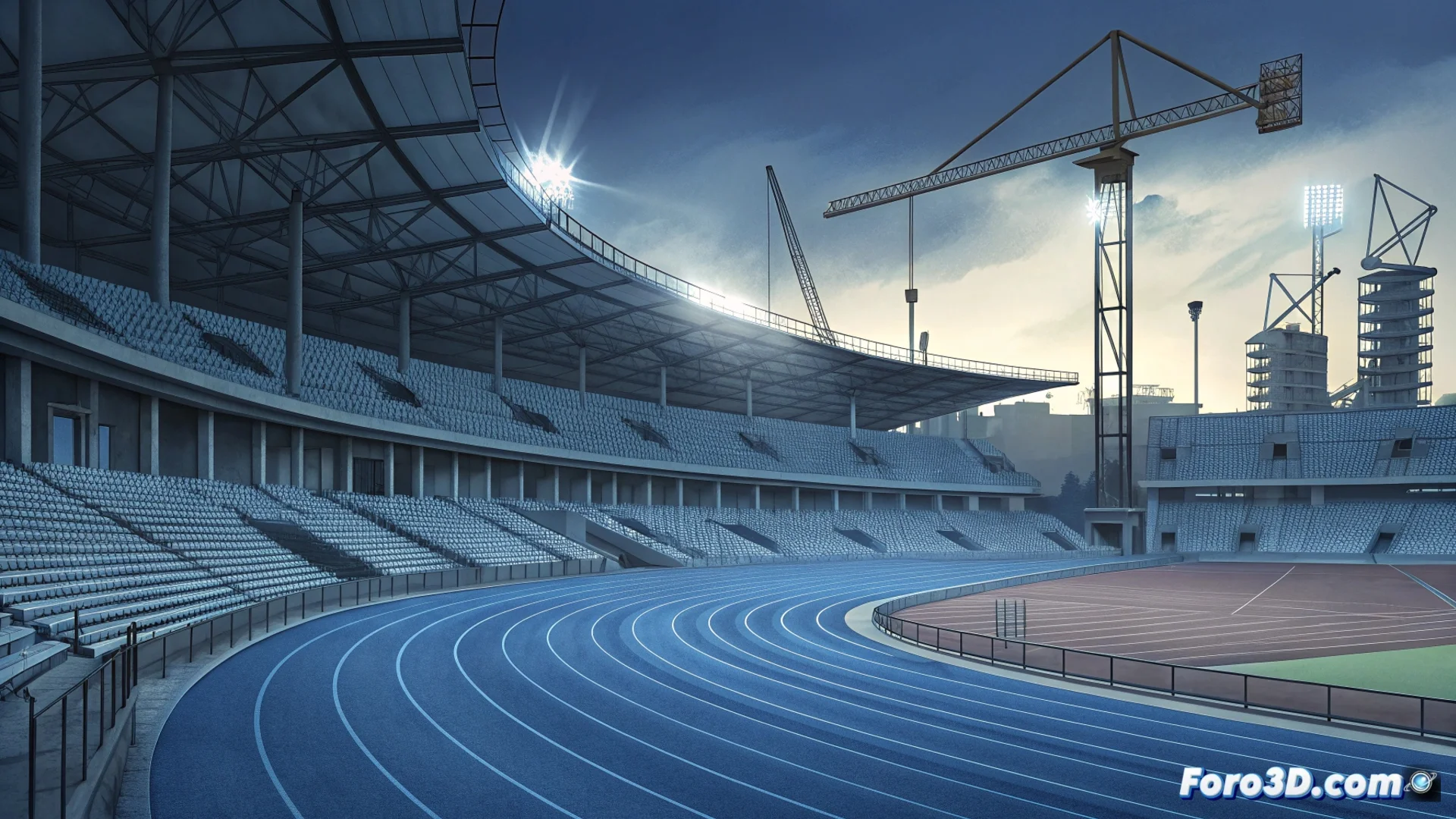
The Metropolitano Stadium: From Athletics Track to Football Temple
In Madrid, a structure first known as La Peineta completely changed its destiny. It was born with an Olympic purpose that was never fulfilled, remaining an underutilized space for years. Its subsequent transformation is a clear example of how to adapt infrastructure to new needs. 🏟️
An Original Design That Remained on Hold
The initial project prioritized hosting athletics competitions. It featured an eight-lane track and stands arranged around the oval, prepared to receive elite athletes. However, when Madrid failed to host the Olympic Games, the stadium entered limbo. It went from being a promise to a remnant of a dream that never came true, half-renovated and without a defined use.
Features of the initial project:- Design centered on an eight-lane athletics track.
- Stands arranged around the oval to optimize viewing of the events.
- Conceived as a key piece for an Olympic bid that ultimately did not prosper.
A stadium that was born to run, jump, and throw, now only serves to kick a ball.
Total Conversion Toward the Ball
The acquisition by Atlético de Madrid marked the point of no return. The club decided to remodel the venue from scratch to adapt it to professional football. The most symbolic and complex work was the complete removal of the athletics track. This allowed the stands to be brought dramatically closer to the pitch, eliminating the distance that characterized the original design and improving the visual experience for spectators.
Main changes in the renovation:- Complete elimination of the athletics track and facilities for jumps and throws.
- Bringing the stands closer to the playing field to create a more immersive atmosphere.
- Expansion of the roof to protect all spectators and increase capacity to over 60,000 seats.
A Transforming Sports Legacy
With this renovation, the stadium forever abandoned its athletic essence. The Metropolitano became a modern and successful coliseum for football, but its conversion had a direct consequence: Madrid lost a top-level infrastructure for athletics. This sport now must seek other venues, generally with lesser capacity and features, to organize its competitions in the capital. The historical irony is evident in this twist of sporting destiny. ⚽➡️🏃♂️