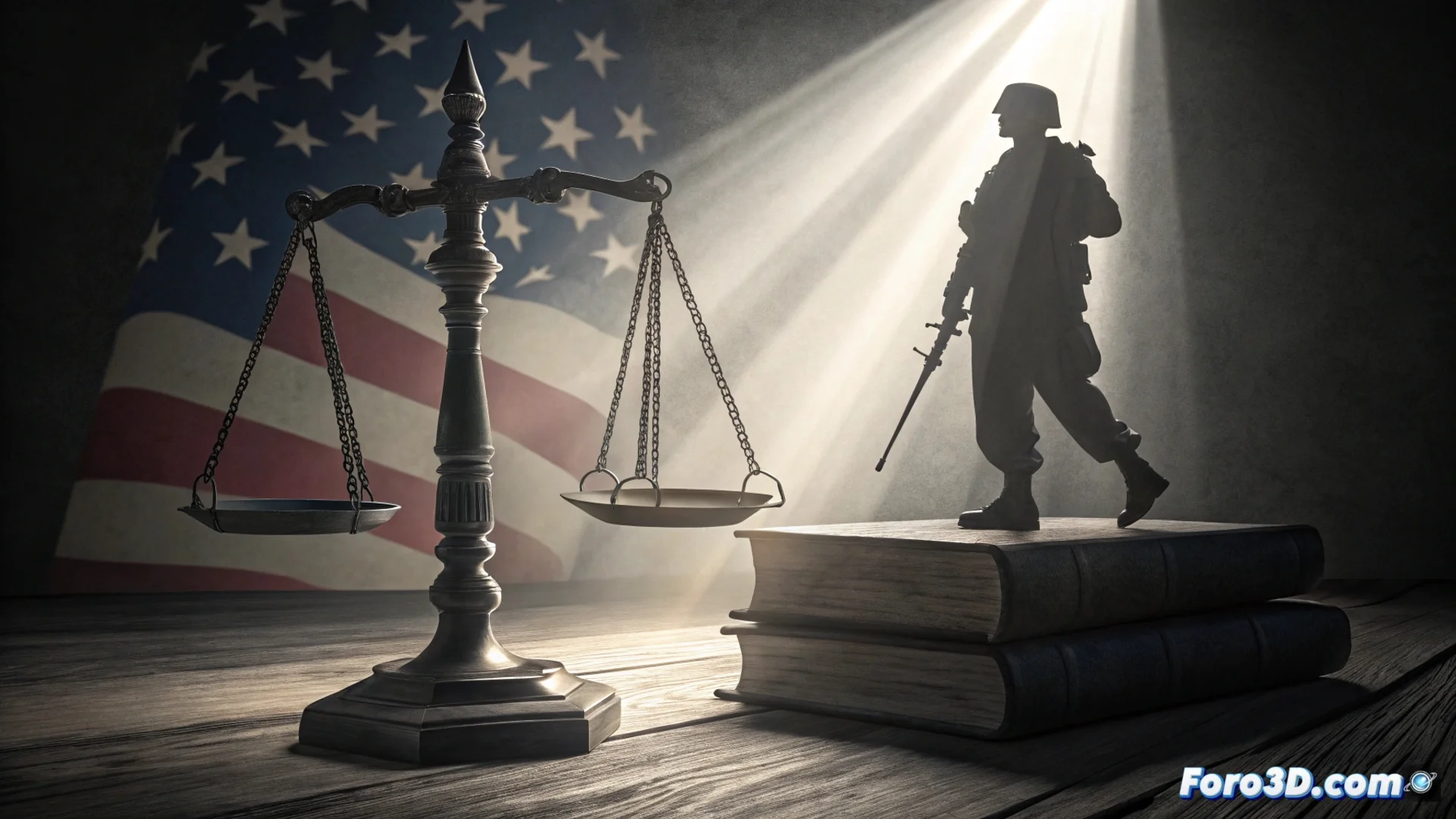
The Insurrection Act in the United States: Definition and Application
In the legal framework of the United States, there exists an uncommon but powerful federal statute known as the Insurrection Act. This text defines a serious crime that involves conspiring to overthrow the federal government, declaring war on it, or using force to resist its authority. Its origin dates back to 1807 and it has evolved through several amendments by Congress. The law grants an exceptional power to the president to use military force within the country when constitutional rights are in danger and local order collapses. ⚖️
Legal Basis and Mechanism to Activate the Law
The legal foundation is located in Title 10 of the United States Code, specifically in sections 251 to 255. To employ its most forceful provisions, the president must follow a staggered process. First, he must issue a public proclamation ordering the protesters or insurgents to disperse. Only if the disorder situation persists, can he authorize the deployment of the army or the national guard to restore order. This law acts as an explicit exception to the Posse Comitatus norm, which generally restricts the use of armed forces in domestic police tasks.
Key Procedure to Invoke the Law:- The president identifies an insurrection, riot, or conspiracy that threatens constitutional rights.
- A formal proclamation is issued demanding that those involved disperse.
- If resistance continues, the use of military force is authorized to enforce the law.
Its application is infrequent and whenever it is considered, it unleashes a profound debate about the limits of presidential power and the balance with civil liberties.
Historical Precedents of Its Application
Throughout U.S. history, presidents have resorted to this authority on few occasions, each one establishing a significant legal precedent. These cases show how the law is interpreted and applied in contexts of deep internal crisis, defining the fragile balance between security and freedom.
Notable Examples of Invocation:- Abraham Lincoln used it during the outbreak of the Civil War, to respond to the secession of the Confederate states.
- Dwight D. Eisenhower invoked it in 1957 to send federal troops to Little Rock, Arkansas, and enforce racial integration in schools