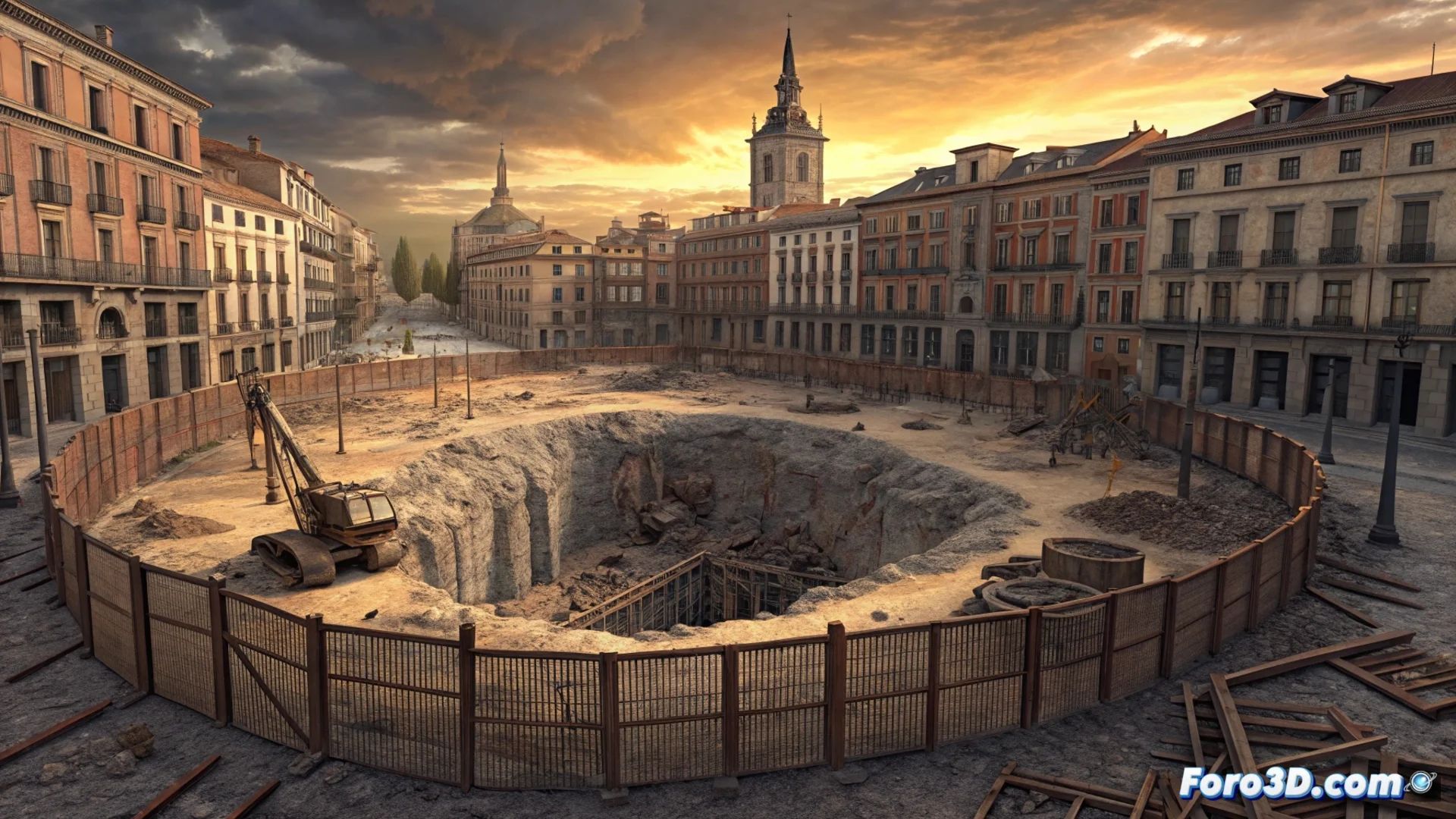
The Hole that Preceded the Mushrooms of Seville
In the historic center of Seville, the space now occupied by the Metropol Parasol was dominated for years by a large urban wound. A project to build an underground market and parking lot started in 1990, but technical and financial problems halted it, leaving an open crater. 🏗️
A Symbol of Citizen Frustration
The lot remained abandoned for nearly two decades. The Sevillians named the place the hole of shame, a term that reflected the collective frustration over poor planning. This void became a constant reminder of a public work that could not be completed and sparked intense debate about what to do with the area.
Consequences of the Abandonment:- It generated a great public debate on urban management.
- It became a visual symbol of failed projects.
- It forced the authorities to seek a definitive solution for the space.
What was for years a symbol of stagnation finally served as the foundation to raise a new city icon.
From Urban Scar to Architectural Icon
The persistence of this pit forced the city hall to act. An international ideas competition was organized to regenerate the Plaza de la Encarnación. The winning project was by German architect Jürgen Mayer. Thus, the shadow of the failed hole directly gave way to the development of the wooden structure that today defines the skyline of the area. 🌳
Key Elements of the Transformation:- International competition as the starting point for regeneration.
- Metropol Parasol project as a bold architectural solution.
- Radical transformation of the perception and use of public space.
A Necessary Precedent
The story of the abandoned pit is the essential precedent to understand why the current icon was built. Without that urban void and the discomfort it generated, such an innovative solution probably would not have been sought. The Metropol Parasol not only covered a wound but completely redefined the identity of a place, demonstrating how a failure can drive a memorable creation. 🍄