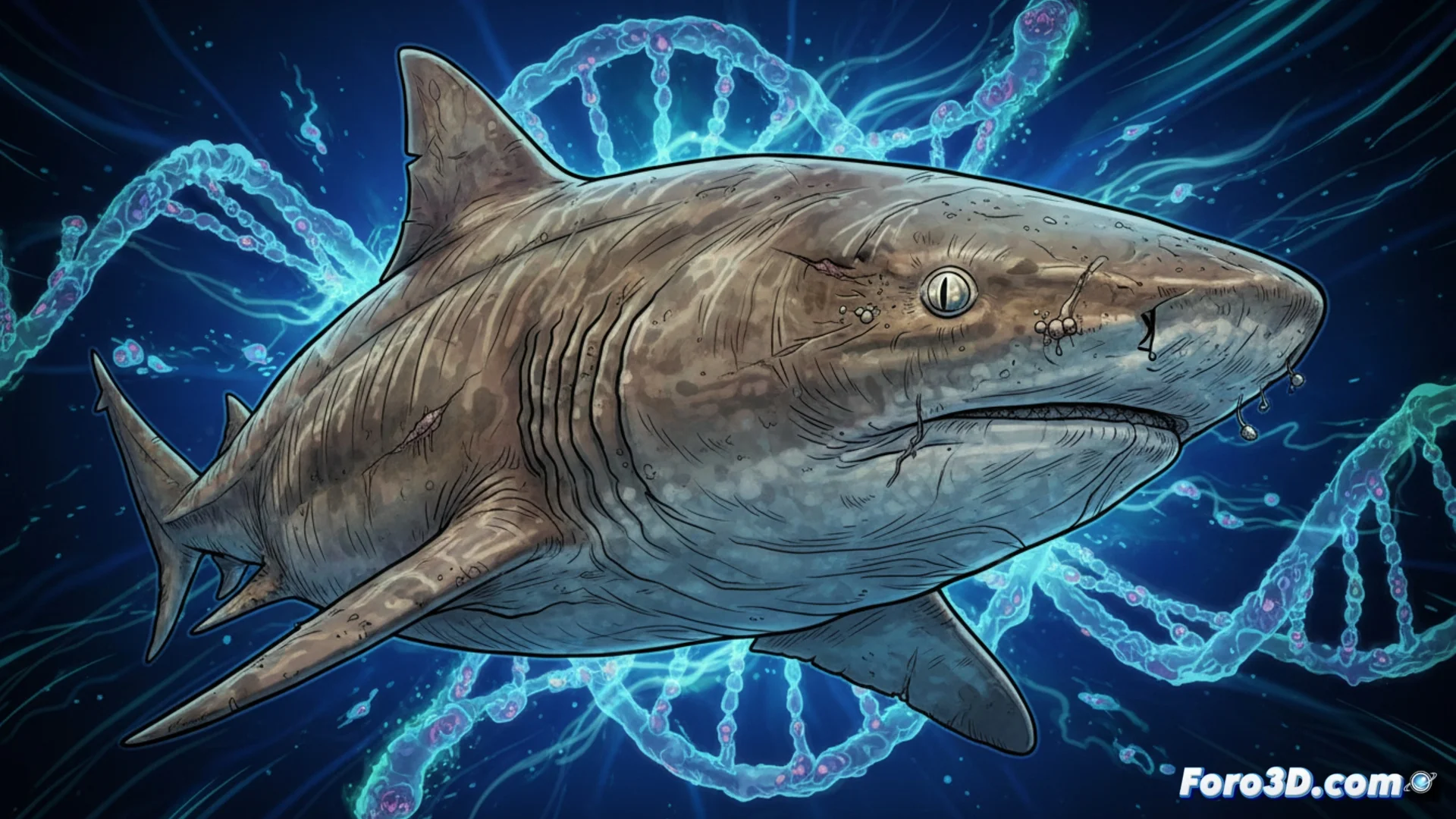
The Greenland Shark Teaches How to Live for Centuries
The Somniosus microcephalus, known as the Greenland shark, ranks among the most long-lived vertebrates on the planet. Recent research confirms that its lifespan can extend beyond four hundred years. This extraordinary fact attracts the scientific community, which seeks to decipher the biological processes that allow it to maintain its vital functions over such extended periods. 🦈
Exceptional Organic Resilience
Studies on this shark reveal an unusual resilience capacity. Not all its organs show the wear expected with the passage of time. For example, its heart may exhibit scar tissue, but it continues to beat without apparent failures. This indicates that the animal has evolved to manage the damage that accumulates in its tissues over centuries, rather than avoiding it entirely.
Key Findings on Its Physiology:- Some organ systems do not deteriorate with age in the typical way.
- The heart accumulates injuries but its function remains stable.
- The species has special adaptations to deal with chronic tissue damage.
The strategy for a long life is not to avoid damage, but to learn to function with it.
The Eyes: A Case of Extreme Preservation
Parallel research on the eyes of these sharks provides revealing data. Despite inhabiting the darkness of the depths and harboring parasites in the cornea, its retina remains operational even in advanced-age specimens. Scientists observe high activity in genes related to DNA repair in this ocular tissue.
Highlighted Ocular Mechanisms:- The retina maintains its integrity and function despite environmental adversities.
- Notable gene expression linked to genetic material repair is detected.
- This process could be fundamental for protecting eye health in the long term.
Biological Lessons for Science
The case of the Greenland shark suggests that the secret of extreme longevity does not lie in remaining intact, but in developing functional tolerance to deterioration. The mechanisms it employs, especially for maintaining key organs like the eyes, offer valuable clues. Understanding these processes could inspire new ways to address age-related wear in other species, including humans. 🔬