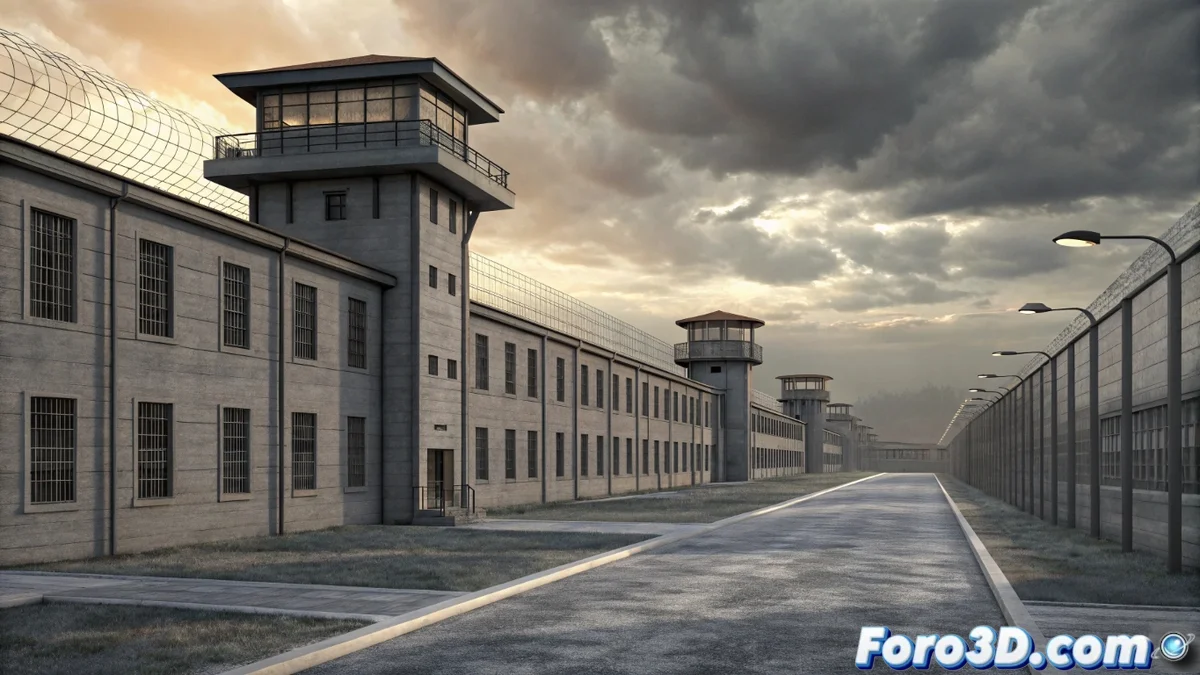
The Ghost Prison of Nanclares de la Oca
In the Álava municipality of Nanclares de la Oca stands a peculiar facility: a state-of-the-art prison that remains completely empty. Although its construction is finished and it is equipped with everything necessary to operate, it has never received an inmate. This building has become a symbol of public planning that fails to anticipate reality. 🏛️
A project born from an erroneous calculation
The authorities initiated this project foreseeing that the Spanish penitentiary system would need more space. It was designed to alleviate the saturation of other centers, but incarceration rates did not grow as estimated. Changes in laws and in the way sentences are applied made the urgency to build new prisons vanish. Thus, a priority solution transformed into an underutilized asset immediately.
Features of the inactive facility:- Modern penitentiary complex with cells, patios, and common areas fully equipped.
- Construction finished several years ago, maintained in optimal conservation condition.
- Designed to house inmates, but its occupancy has always been zero.
Perhaps the greatest punishment in Nanclares de la Oca is served by the public budget itself, condemned to pay a perpetual bill for a service that is not provided.
The cost of maintaining an empty building
Maintaining a structure of this size unused generates an ongoing expense for the public treasury. Although it does not operate, it requires surveillance, basic maintenance tasks are performed to preserve it, and utilities are paid to prevent deterioration. This expenditure, lower than if it were full, provokes constant debate about what to do with the property.
Proposed alternatives without success:- Transform the complex into a migrant reception center.
- Reconvert it for other administrative or logistical purposes.
- None of these ideas have materialized so far.
An uncertain and costly future
The ghost prison of Álava embodies a public management problem: investing in infrastructure based on failed projections. Meanwhile, the cost of preserving this white elephant continues to accumulate. The debate about its fate continues, but the facility remains in perpetual silence, awaiting a use that seems not to arrive. The true prisoner here is public money, trapped in a cycle of expenditure without return. 🔒