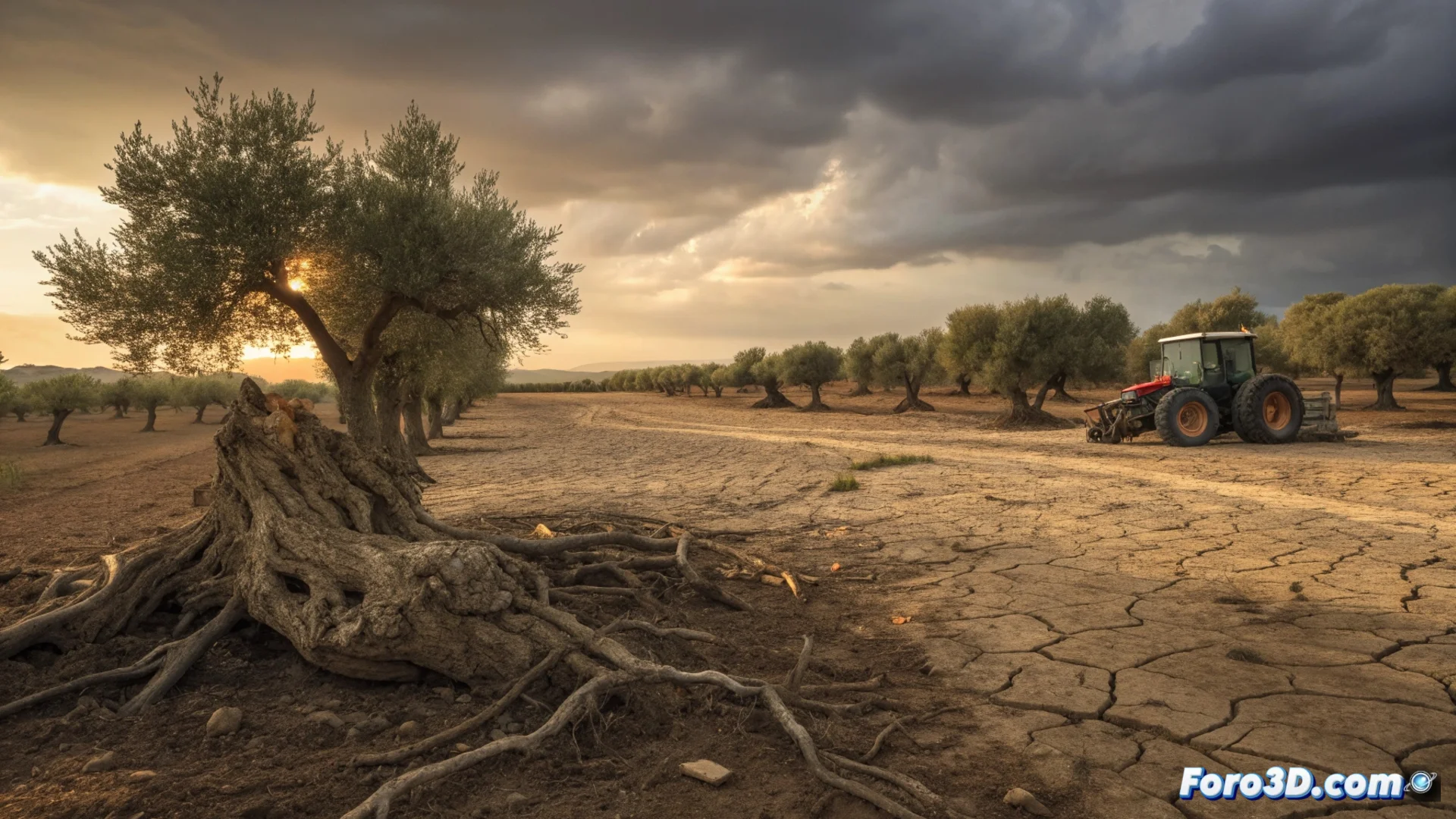
The European Union forces the uprooting of olive trees to control the market
To prevent the price of olive oil from collapsing, the European Union has implemented a system that forces farmers to reduce their production capacity. This mechanism, which includes uprooting trees and setting harvest caps, generates strong controversy due to its social and economic effects in rural areas. 🌍
How the intervention measures work
These regulations are framed within the Common Agricultural Policy (CAP). Their main objective is to balance supply and demand. When a risk of surplus is detected, tools are activated such as paying premiums to those who remove olive groves or imposing strict limits on how much can be produced per hectare. Although producers receive compensation, many argue that this payment does not reflect the future value of the tree nor repair the damage to the landscape heritage and cultural heritage.
Main control instruments:- Uprooting premiums: Economic incentives to eliminate olive groves, especially the least productive ones.
- Production limits: Maximum quotas of olives that can be harvested per cultivated area are established.
- Compensations: Direct payments to farmers who agree to reduce their production capacity.
It seems that to stabilize the market, the countryside must first be destabilized. An irony that does not amuse those who see their livelihood literally uprooted.
Effects on employment and the local economy
Olive cultivation is labor-intensive. By reducing the number of trees and limiting the harvest, fewer people are needed to work, directly affecting regions where this activity is the main source of livelihood. Job loss is not limited to the fields, but extends to oil mills, transportation, and the entire auxiliary industry linked to the sector.
Documented consequences:- Job destruction: The sector estimates that around 15,000 jobs are lost in rural areas each year.
- Broad economic impact: The annual cost to the economy is estimated between 800 and 1,200 million euros.
- Chain effect: The decline affects the entire value chain, from those who cultivate to those who export bottled oil.
A balance with a high social cost
While the EU seeks to avoid a price crisis with these measures, the debate centers on whether the social and territorial cost is too high. The long-term sustainability of a system that, to protect the market, may be accelerating rural depopulation and eroding a centuries-old landscape and productive fabric is questioned. The challenge is to find formulas that do not sacrifice the future of communities for price stability. ⚖️