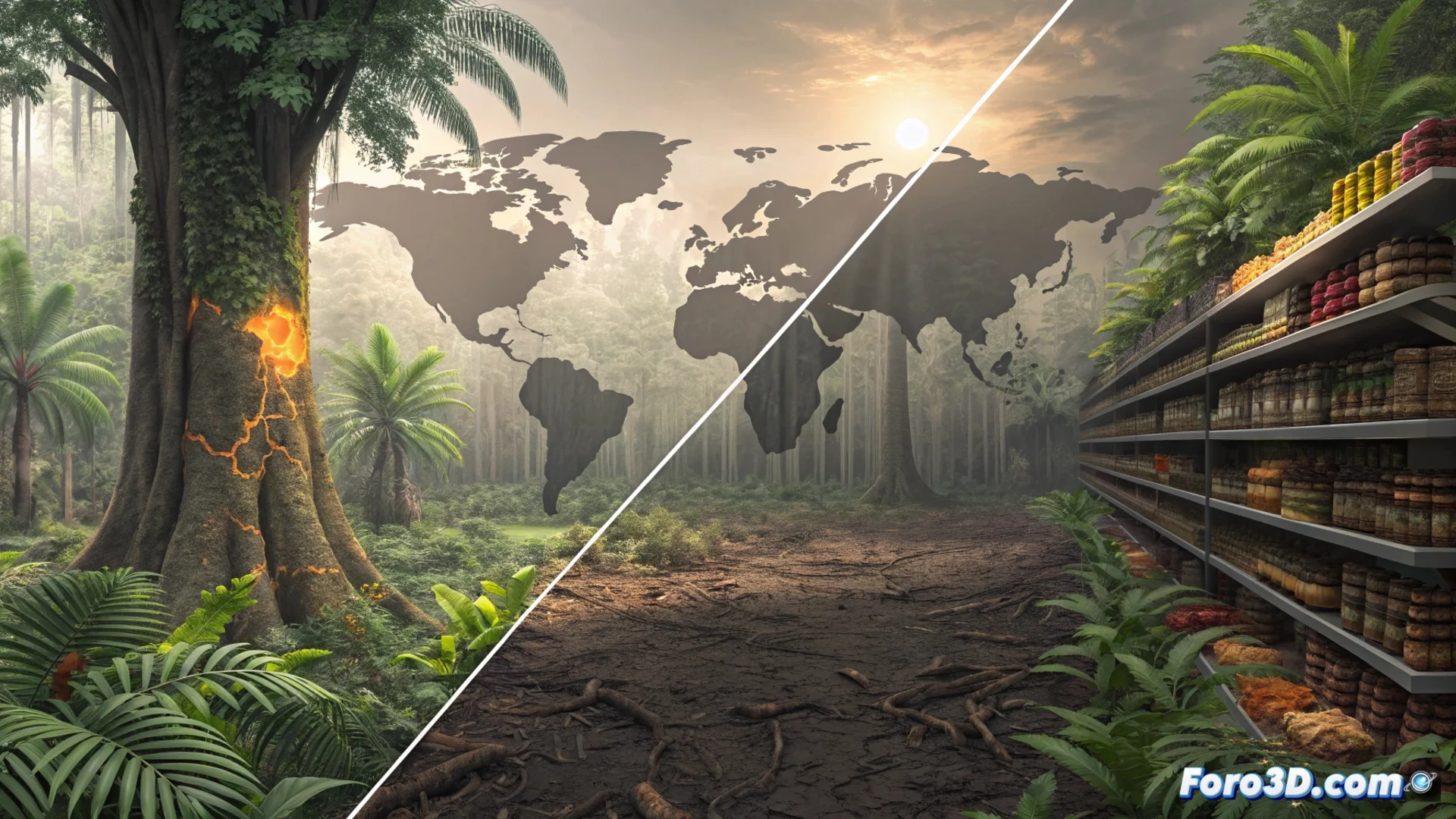
European deforestation regulation comes into force
From December 30, a new European Union law requires companies to verify the origin of key raw materials. Products such as beef, cocoa, coffee, palm oil, soy, wood, and rubber, along with derivatives like leather or chocolate, must demonstrate that they were not grown or extracted from deforested land. This change forces a complete rethinking of how global supply chains operate 🌍.
Demonstrating origin with precise coordinates
To sell in the European market, medium and large companies now have to collect and declare comprehensive data. It is not enough to identify the supplier; the central requirement is to provide the exact geolocation coordinates of the land where the raw material was produced. This allows verification that no forest was felled in that location after December 31, 2020. The responsibility to prove compliance falls on the entity marketing the product in the EU.
Key obligations for companies:- Identify each product batch, its quantity, supplier, and customer.
- Provide precise geographic data on the production location.
- Assess the deforestation risk in their supply chain.
- Take additional measures, such as field audits or using satellite images, if the risk is high.
The burden of proof falls on the operator marketing the product in the EU.
Immediate consequences on costs and availability
Implementing this regulation generates a massive administrative burden that is already being passed on to all links in the chain. Importers and supermarkets in Spain face higher costs to ensure compliance, which may cause final prices to rise for the consumer. Additionally, many suppliers outside Europe are not prepared to provide the required information.
Effects on the supply chain:- There may be disruptions in the supply of basic products.
- European companies might simplify their chains and buy only from suppliers that can certify the origin.
- Compliance departments are working under intense pressure to adapt processes.
A new landscape for consumption
This law marks a turning point in how the European market relates to the management of global natural resources. As companies adapt, the question arises whether consumers will see changes, such as coffee with GPS coordinates next to the expiration date. The goal is clear: to disconnect EU consumption from forest destruction, but the path to achieve it will transform logistics, costs, and shopping habits 🛒.