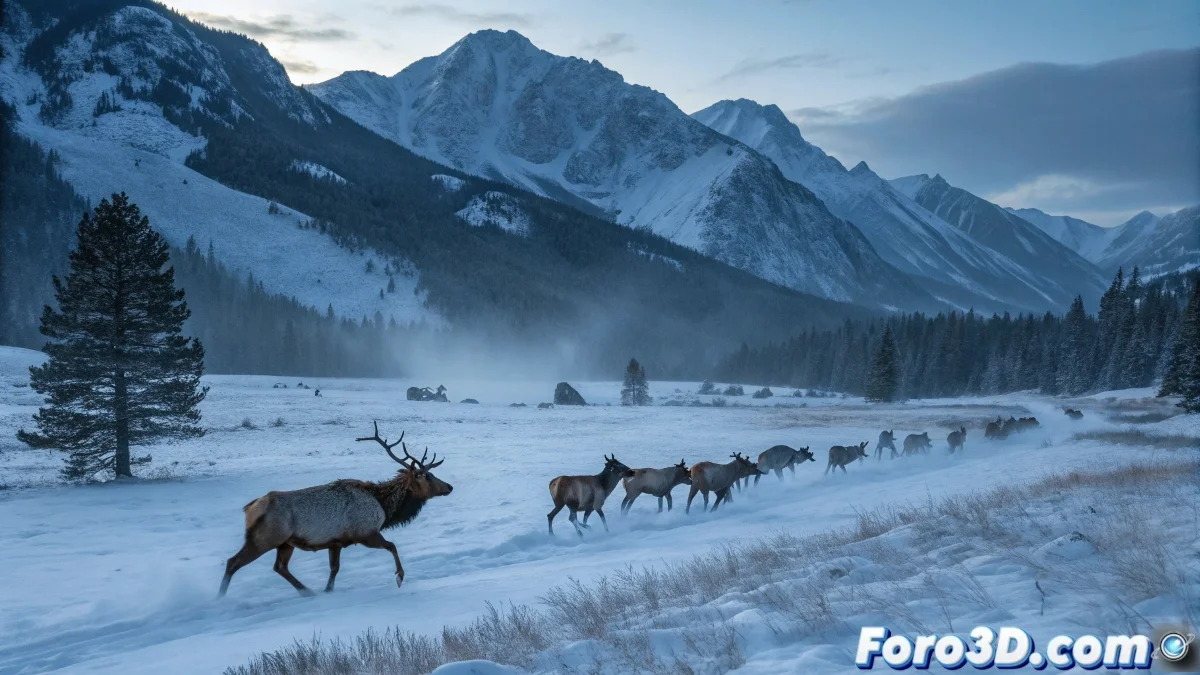
The Moose of 1923: When Hollywood Makes You Believe in Digital Ghosts
The second season of 1923 has an epic scene: moose crossing snowy mountains. The irony? Neither the moose nor the snow existed ❄️. The studio FOLKS created everything digitally, and the result is so perfect that even a hunter with binoculars would fall for it. How did they do it? With a cocktail of technology and patience worthy of a render god.
"The best VFX is the one you don't even know is there... until they tell you your favorite scene was a PNG on steroids" — Anonymous compositing artist.
The Problem: Filming Winter in Summer (Without It Showing)
When the weather didn't cooperate, the team decided to invent an entire ecosystem:
- Snow simulated with realistic physics (more believable than that in shopping malls).
- Moose modeled from anatomical scans 🦌.
- Fur textured in Yeti, because of course, what could go wrong?
Technical Details That Will Make Your GPU Cry
So the moose wouldn't look like they came from a free asset:
- Grooming: Every strand of hair reacted to the wind like in real life.
- Subsurface Scattering: Light passing through the ears like real flesh and bone.
- Adapted Motion Capture: Natural movements, without that cheap video game rigid body.
Compositing: Where the Magic (and Bugs) Happen
Integrating CGI with real images requires:
- Perfect Matchmoving, even in aerial shots.
- Atmospheric fog to hide... let's say, "areas for improvement".
- Shadows that follow the sun as if someone had used a real HDRI 🌞.
The Paradox of Invisible VFX
The funniest part? The better the effect, the less the audience appreciates it. While Transformers screams "Look at me!", these moose go unnoticed like a well-done background. Ironies of digital art: if no one notices, you did it great. And you, do you prefer real moose... or the ones that don't leave crap on the set? 🦌💻