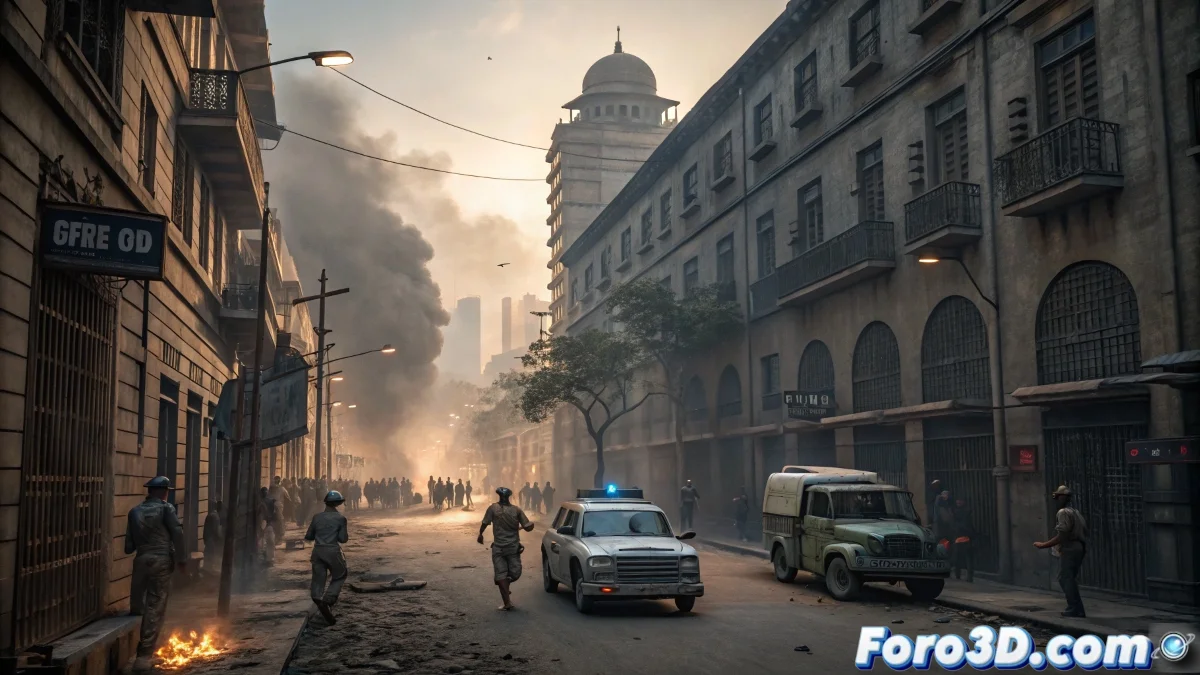
When Streets Breathe Digital Paranoia
In Jigra, Philm CGI didn't create visual effects - they reprogrammed urban reality. Over 16 months of production, they transformed Mumbai and Singapore into Hanshi Dao, a fictional city where every shadow hides danger and every building was remade pixel by pixel to generate unease. 🌆👁️
"We wanted the audience to feel the city pulling the trigger" - Philm CGI VFX Director
The Recipe for Urban Unease
The workflow included:
- Digital matte painting to rewrite architectures
- Houdini simulating urban chaos with precise physics
- Maya for vehicles and imperceptible digital doubles
- Nuke poisoning atmospheres with toxic light
Details That Generate Digital Claustrophobia
The most unsettling elements:
- Neon lights that don't illuminate, only betray
- Smoke that behaves like a supporting character
- Reflections in puddles that show what you shouldn't see
- Modified architecture to break reference points
As one artist commented: "We rendered urban anxiety in 4K". 💻
Physics of the Perfect Chase
The simulations included:
- Crowds that react to danger with realistic patterns
- Police vehicles whose movements generate tension
- Smoke particles that follow logical escape routes
- Destruction that obeys real architectural structures
When Color Grading Is a Narrative Weapon
The true power of these VFX lies in what they don't do:
- No gratuitous explosions
- No effects that steal attention from the drama
- No digital elements that reveal their artificiality
- No loss of the thriller's documentary pulse
As the director aptly summarized: "If you leave the cinema and look at your city differently, our job is done". Because in Jigra, the most powerful visual effects are the ones you don't see, but can't stop feeling... like an invisible hand tightening around your throat as you walk through streets you thought you knew. 🎥🌃