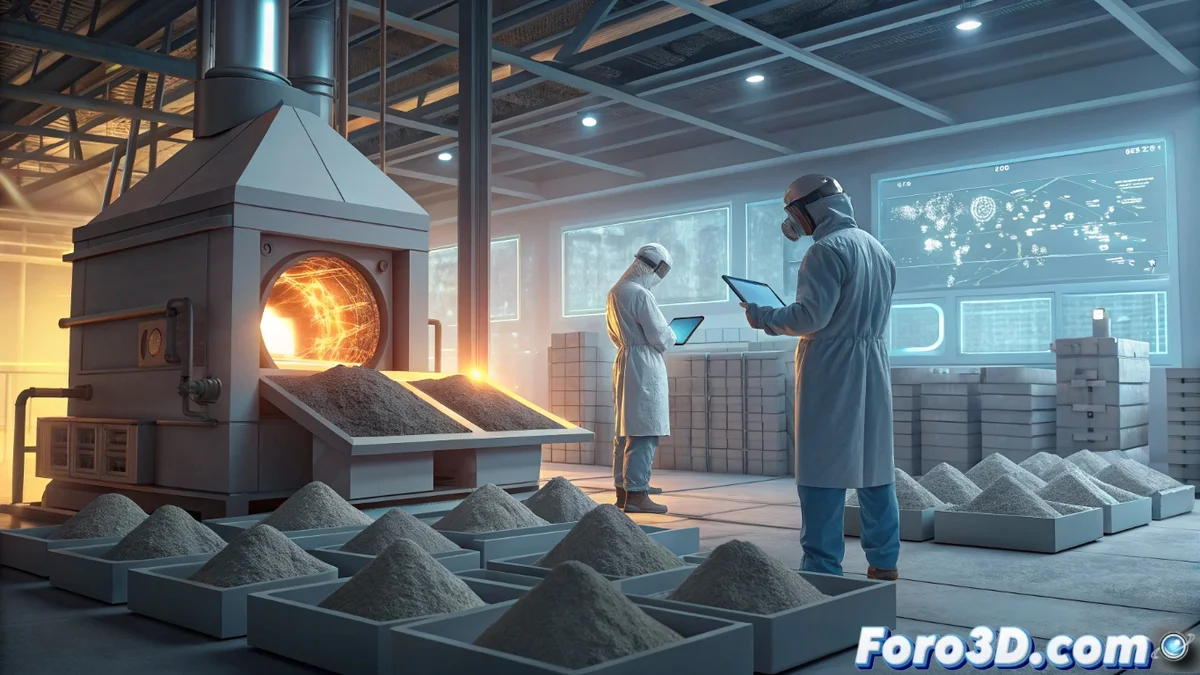
The Cement Industry Seeks to Produce Without Emitting CO2
The cement sector, responsible for nearly 8% of global emissions of carbon dioxide, is in a race to reinvent its fundamental processes. The traditional method for making Portland cement, which heats limestone to extreme temperatures, inherently releases CO2. Now, the goal is to break that polluting chemical bond. 🏗️
Replacing Fuels in Kilns
A key strategy is to change the energy source for heating. Instead of burning coal or gas, several companies are testing kilns that run on renewable electricity or green hydrogen. These pilot kilns achieve temperatures over 1400°C without combustion emissions. However, this step only solves part of the problem, as the limestone itself continues to release carbon when processed.
Approaches to Decarbonize Manufacturing:- Electrify Kilns: Use solar or wind energy to generate the intense heat needed.
- Inject Hydrogen: This gas, produced with clean energies, acts as a high-temperature fuel without emitting CO2 when burned.
- Integrate Renewables: Connect cement plants directly to wind or solar farms to ensure a constant and clean supply.
Eliminating cement emissions requires addressing both the process chemistry and the energy source for heating.
Tackling Chemical Process Emissions
To address the CO2 released from the limestone itself, two main approaches are being explored. The first is to capture the carbon right as it exits the kiln, for storage or reuse. The second, more radical, is to reformulate the cement composition using different raw materials.
Chemical and Capture Solutions:- Install Capture Systems: Technologies that trap CO2 in the chimney before it reaches the atmosphere.
- Use Calcined Clays: Replace part of the limestone with clays that do not release carbon when heated.
- Leverage Industrial Byproducts: Incorporate waste from other industries, such as ashes, to create an alternative binder.
A Future for Building Without Polluting
Some projects are advancing toward cements that absorb CO2 while setting or during their service life, seeking carbon-neutral or even negative balance. Although the technological and economic challenge is great, these advances signal a crucial change. Finally, the industry that builds the modern world is beginning to lay the foundations to do so without harming the planet. 🌱