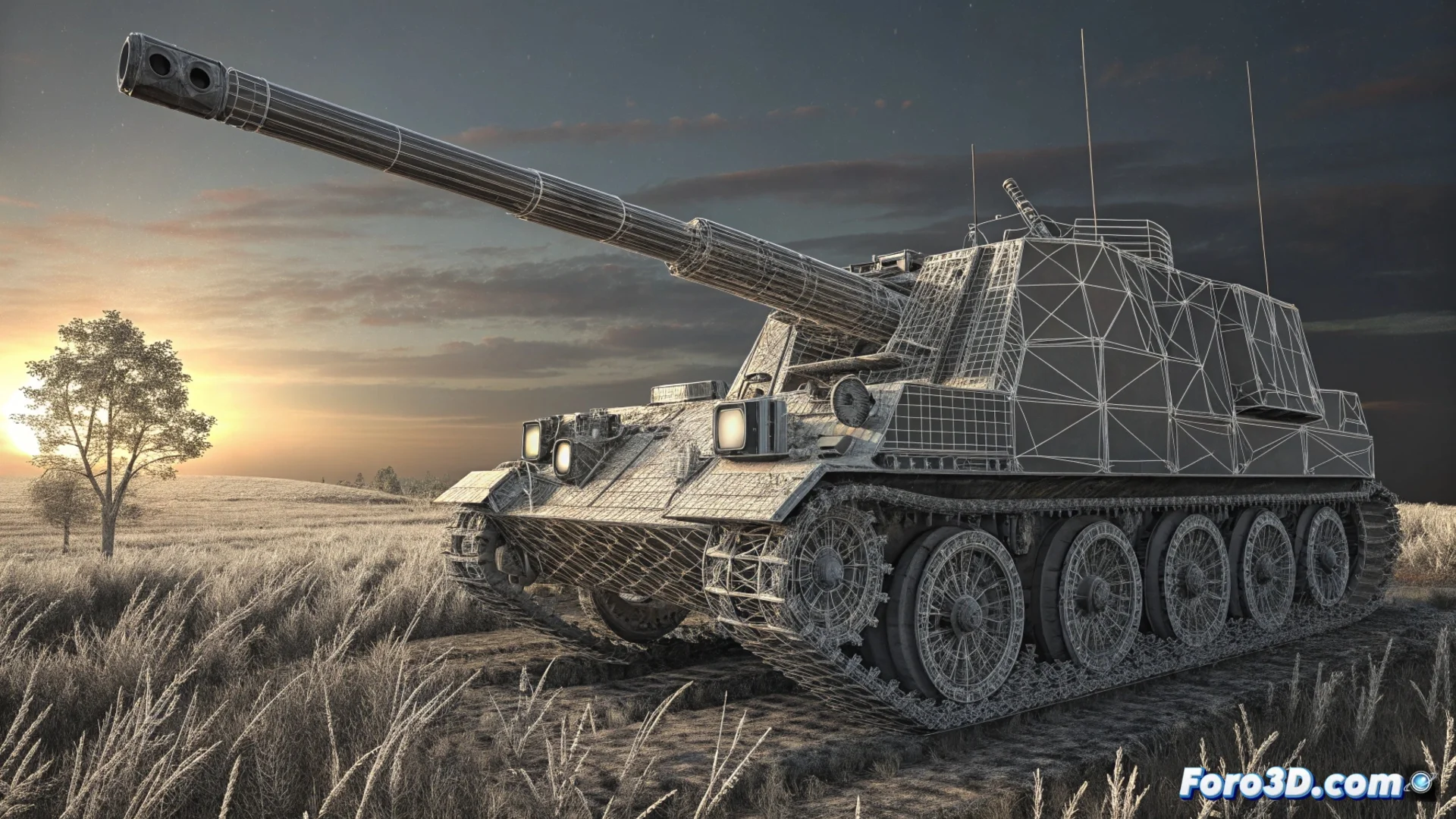
The 2S4 Tyulpan: a Russian Heavy Self-Propelled Mortar
This artillery system combines the power of a large-caliber mortar with the mobility of a tracked armored vehicle. Its design prioritizes the ability to fire and change position quickly, although its operation involves very defined steps. 🛡️
Technical Characteristics and Deployment
The vehicle moves on a tracked armored chassis with considerable dimensions: 8.5 meters long, 3.2 meters wide, and 3.2 meters high. To prepare for firing, the crew must fully stabilize the platform. The main weapon is a 240 mm M-240 mortar, and for close defense it mounts a 7.62 mm PKT machine gun.
Firing Process:- The vehicle is parked in the chosen position and lowers a large rear base plate to absorb the strong recoil.
- An external crane, which usually comes on another vehicle, loads the heavy 240 mm projectile into the mortar's chamber.
- This reloading method, although not fast, allows the use of high-power ammunition that automatic systems could not handle.
Its operation is not from the march; it requires time to deploy and load, but then it can withdraw quickly.
Role and Capabilities in Combat
The 2S4 Tyulpan acts as a heavy indirect fire support system. Its main mission is to attack enemy fortifications and troop concentrations from long distance. The mobility provided by the tracks allows it to operate in difficult terrain where towed artillery would have problems.
Ammunition and Range:- It launches several types of projectiles, such as high explosive, fragmentation, and antipersonnel mines.
- Its effective range exceeds 9 kilometers with conventional ammunition and extends much further with rocket-assisted projectiles.
- The rate of fire is low due to the complex and manual process of reloading the weapon after each salvo.
A Little-Known Operational Detail
After firing the powerful mortar, the noise inside the armored vehicle is deafening. It is common for the crew to prefer to get out of the vehicle for a few moments after firing to let it settle