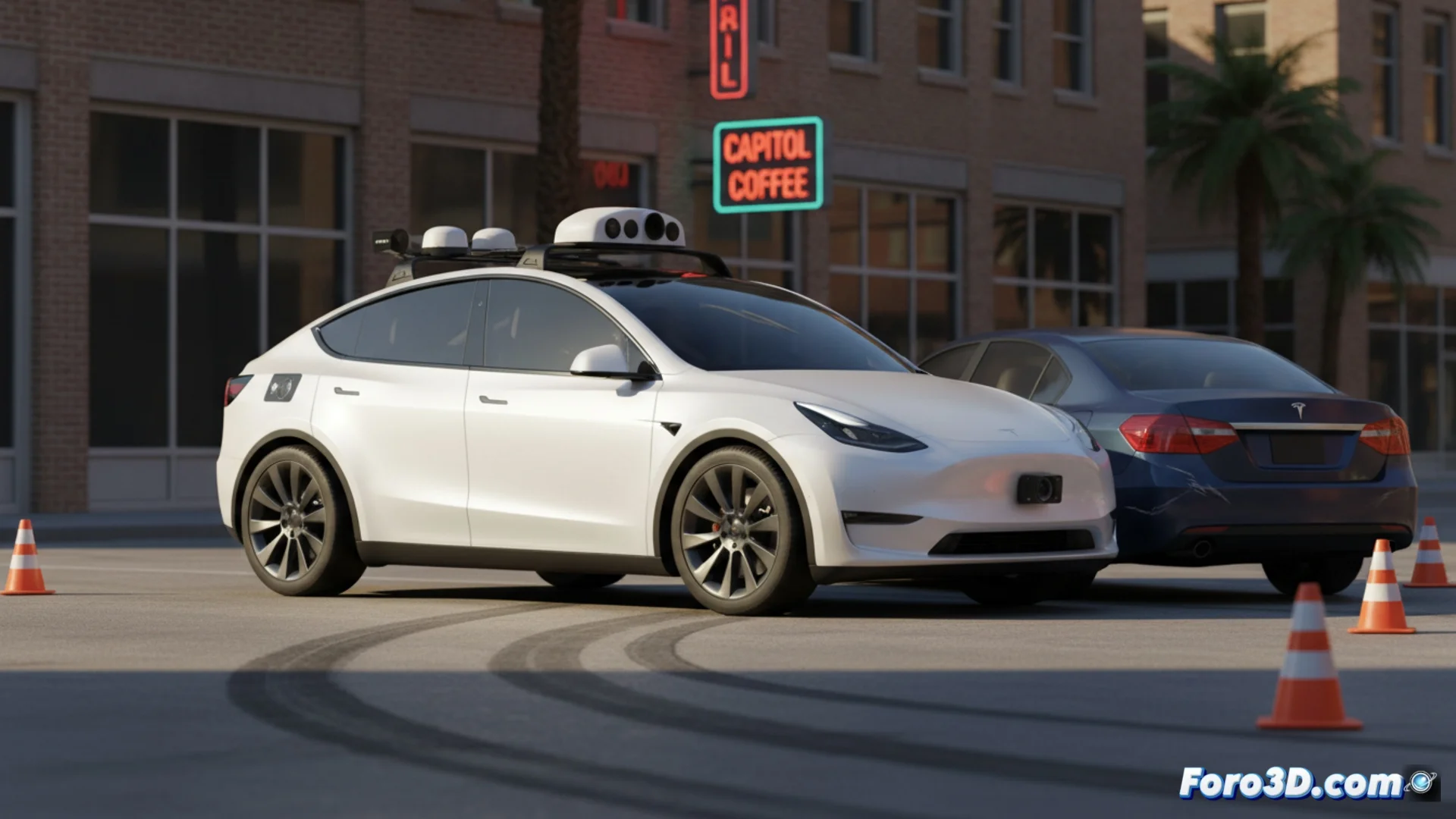
Tesla's Robotaxis in Austin Suffer More Accidents Than Human Drivers
Tesla's fleet of autonomous prototypes being tested on the streets of Austin, Texas, is involved in traffic incidents at a frequency that far exceeds that of human motorists. Reports required by the regulatory agency NHTSA reveal concerning safety performance 🚗💥.
An Alarming Accident Rate
Between July and November 2025, these modified Model Ys designed to operate as driverless taxis were involved in nine accidents. This figure translates to one incident per approximately 88,000 kilometers driven. The contrast with human driving in the same area is overwhelming, where data indicate one incident per 800,000 kilometers. During that period, the fleet accumulated nearly 800,000 kilometers in total.
Types of Collisions Recorded:- Impacts with other vehicles in traffic.
- Crashes into fixed obstacles on public roads.
- One accident involving a cyclist.
- Another incident involving an animal.
NHTSA data provide an objective metric to evaluate how this technology performs in the real world.
Comparison with Other Autonomous Technologies
The performance of Tesla's robotaxis is not only inferior to that of human drivers but also lags behind other companies developing autonomous vehicles. Companies like Waymo present operational records with more favorable safety indices. This context places Tesla's prototypes in a comparatively less advantageous position than anticipated.
Relevant Factors in the Tests:- Tesla had reduced in-cabin human supervision in some of these vehicles.
- The shift toward greater autonomy did not correlate with improved safety.
- The accident rates turned out to be substantially worse.
The Path of Practical Learning
It seems that, for now, Tesla's autonomous driving system in Austin is learning traffic rules in the most direct way possible: by colliding with a wide variety of elements, both moving and stationary, that it encounters on the road. These data raise crucial questions about the development phase and the real preparedness of this technology for safe, large-scale integration into urban traffic 🤖❓.