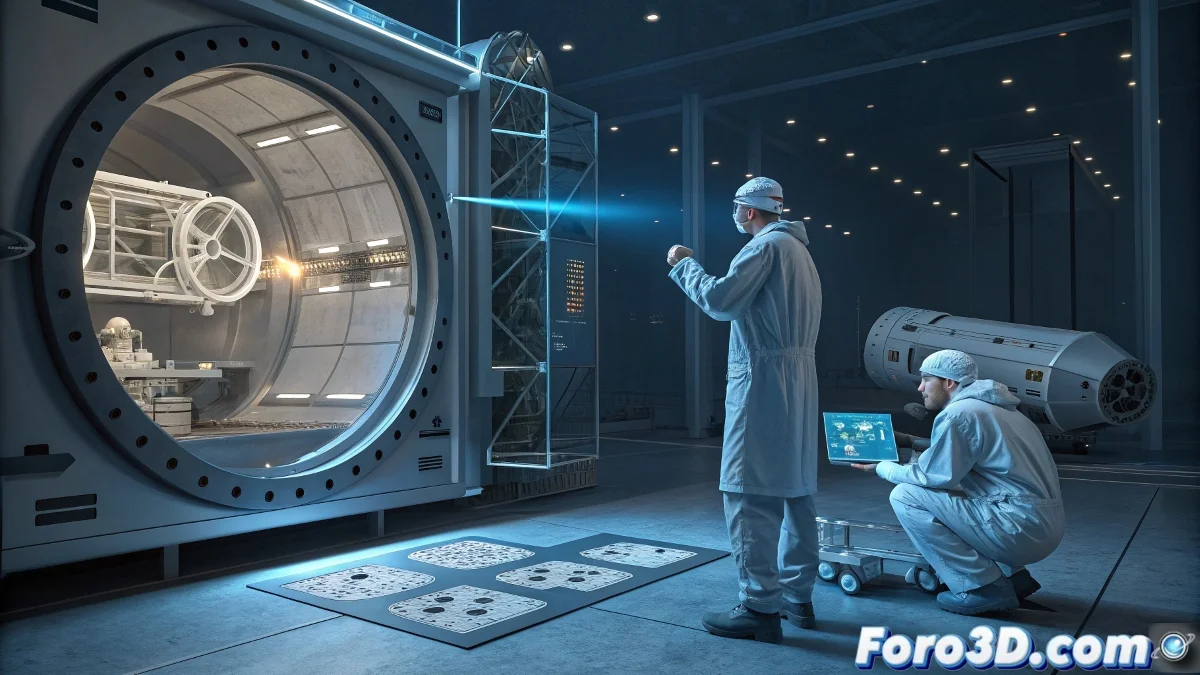
When Plastic Conquers Space: 3D Printing Passes NASA's Exam
A company has achieved what many considered impossible: 3D printed plastic parts that not only meet, but exceed outgassing standards for space applications 🚀🖨️. Now even plastic can dream of traveling to space without risking million-dollar equipment.
The Holy Grail of Space Materials
Through special coatings and advanced formulations, these printed components withstand the vacuum of space without releasing volatile compounds that could damage sensitive instruments. Tests demonstrate they are as reliable as traditional materials, but with the added advantage of design flexibility that only 3D printing offers ✨.
We have closed the gap between additive manufacturing and the most demanding space requirements. This completely changes the game for non-metallic components — explains the development team, probably looking toward the stars.
Why This Is a Giant Leap for the Industry
- NASA Compliance: Exceeds ASTM E595 and ECSS-Q-70-02 tests
- Maintained Precision: Complex geometries without deformation
- Reduced Cost: Up to 60% more economical than traditional methods
- Speed: Components ready in hours instead of weeks
The applications are endless: from small satellites to components for space stations. And the best part: no more choosing between performance and affordability when it comes to conquering space 🌌.
So aerospace engineers: your dreams of 3D printing in orbit have just come true. Plastic has received its passport to space... that said, with a very exclusive visa 🛰️✨.