Soria Smart Grid for Energy Transition and its 3D Visualization
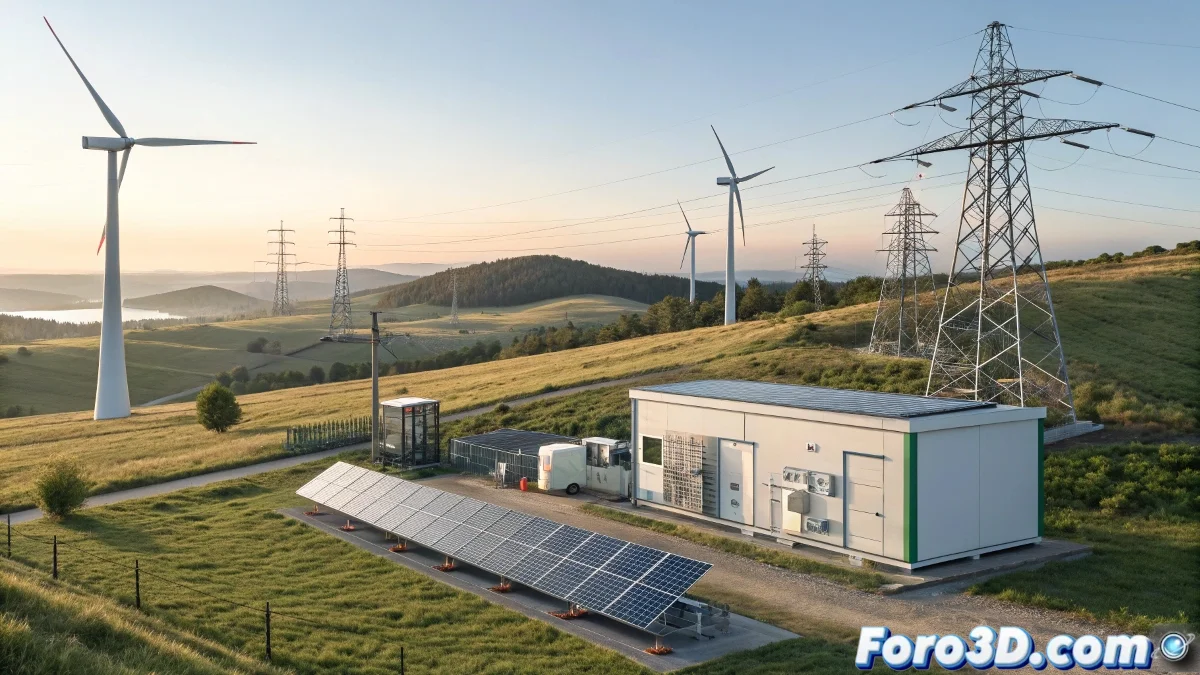
Spain is firmly advancing toward the energy transition with a strategic project in the province of Soria ⚡. The Ministry of Science, Innovation and Universities has allocated more than 5 million euros to create a smart grid managed by CEDER-CIEMAT, which will serve as a real laboratory to test and validate technologies that reduce energy transmission losses and facilitate the integration of renewable sources. This infrastructure will become a European benchmark for digitalized energy management, combining solar, wind, and storage systems to ensure a stable supply and reduce dependence on fossil fuels. To visualize this ambitious project, Blender and Unreal Engine offer powerful tools that allow recreating both the technical appearance and the landscape impact of this pioneering installation.
When you visualize the energy future before it's built... and consume more electricity rendering than the grid will save.
Topographic Modeling and Energy Infrastructure
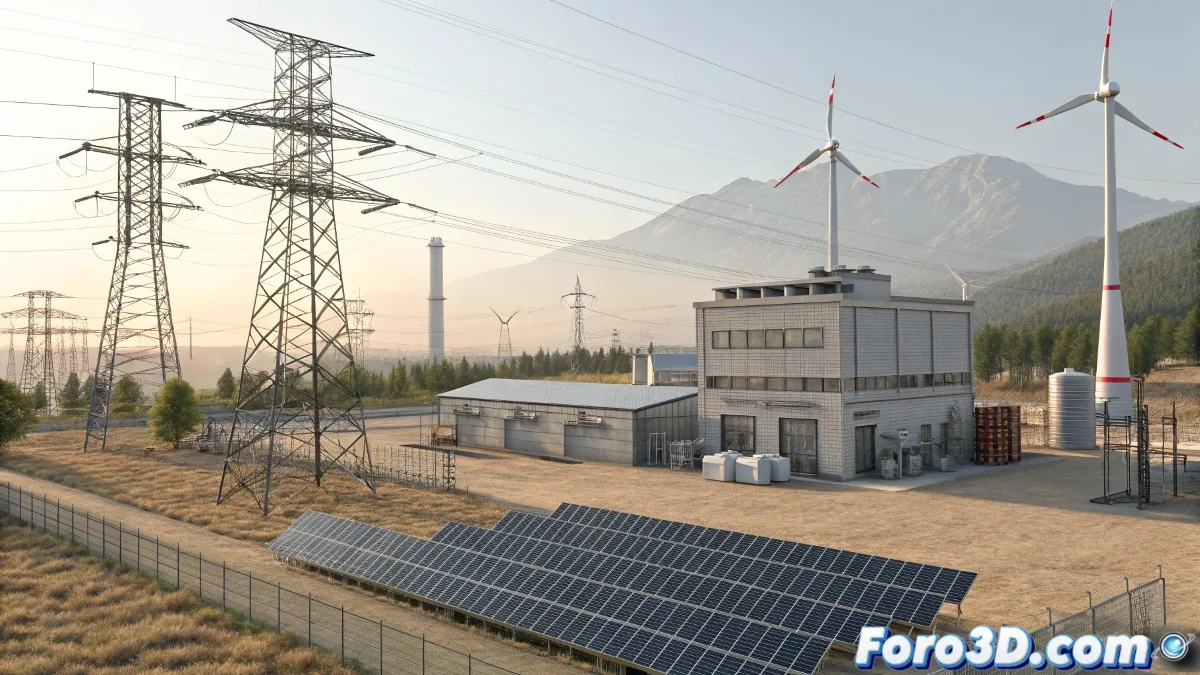
The first step consists of recreating the characteristic topography of the Soria region using a terrain mesh, either by importing DEM data or manually sculpting the geometry. Over this terrain, we distribute roads and plots where solar panels and wind turbines will be located, placing groups of panels in rows aligned with the terrain slope and positioning wind turbines at elevated points to maximize wind exposure. We use instances for repetitions, keeping the scene lightweight and optimized. The substation and control building are modeled as modular structures, incorporating technical details such as flow batteries, switchgear boxes, and monitoring systems. 🏗️
Materials Systems and Technical Realism
Visual credibility is achieved through PBR materials specific to each technological component. For photovoltaic panels, we use shaders with soft specular reflection and roughness maps that capture the characteristic silicon texture, adding slight anisotropy and a subtle Fresnel effect for realistic sky reflection. The substation's metal structures employ anodized materials with weak emissives for equipment status lights. We apply dirt maps and light displacement on grounds and paths to increase verisimilitude, creating the impression of an operational installation integrated into the environment.
Native Vegetation and Landscape Integration
To contextualize the infrastructure in its Soria environment, we distribute native vegetation using scatter systems or geometry nodes. Low shrubs, scattered pines, and native grasslands surround the installation, using billboards or LODs for distant elements and detailed models for close-ups. We add complementary infrastructure elements such as perimeter fences, light poles, and transmission lines connecting the substation to the grid, using splines with tension modules so the cables sag slightly between towers, adding physical realism to the scene. Landscape integration is crucial to convey the harmony between technology and nature.
Animation and Energy Flow Simulation
We bring the scene to life through animations that simulate the energy system's operation. Wind turbines rotate controlled by curves or drivers that respond to variable wind parameters, while battery racks show blinking LEDs indicating charge and discharge states. To visualize energy flow, we create particle traces or subtle volumetric bands that travel from panels and turbines to the substation, illustrating energy transfer without explanatory text. In Unreal Engine, we use Blueprints to simulate substation state changes, while in Blender we employ Animation Nodes to control complex variables.
Lighting and Rendering Strategies
Lighting is set up to show the installation at its best technical and aesthetic. We choose golden hour or mid-morning with soft directional sun and an environmental HDRI for realistic reflections. In Unreal, we enable Lumen for real-time global illumination, adjusting exposure to avoid blowouts on emissive elements. We set up multiple cameras: aerial views showing solar-wind integration, medium shots highlighting technical equipment, and close-ups of the control building. We use soft depth of field in close-ups to direct the viewer's attention to key narrative elements.
Optimization and Final Post-Production
We keep the scene optimized through instances, LODs, and proxies for vegetation and machinery. We render in separate passes (diffuse, specular, emission, volumetric, depth) using denoising in Cycles for Blender, while in Unreal we use the Path Tracer for high-quality images or export sequences from Sequencer. In post-production, we add subtle bloom and glare effects on screens and LEDs, with color correction emphasizing panel greens and sky blue, avoiding sensational effects to keep the focus on the technology and its landscape integration. The result is a visualization that not only documents but inspires toward the energy future. 😉