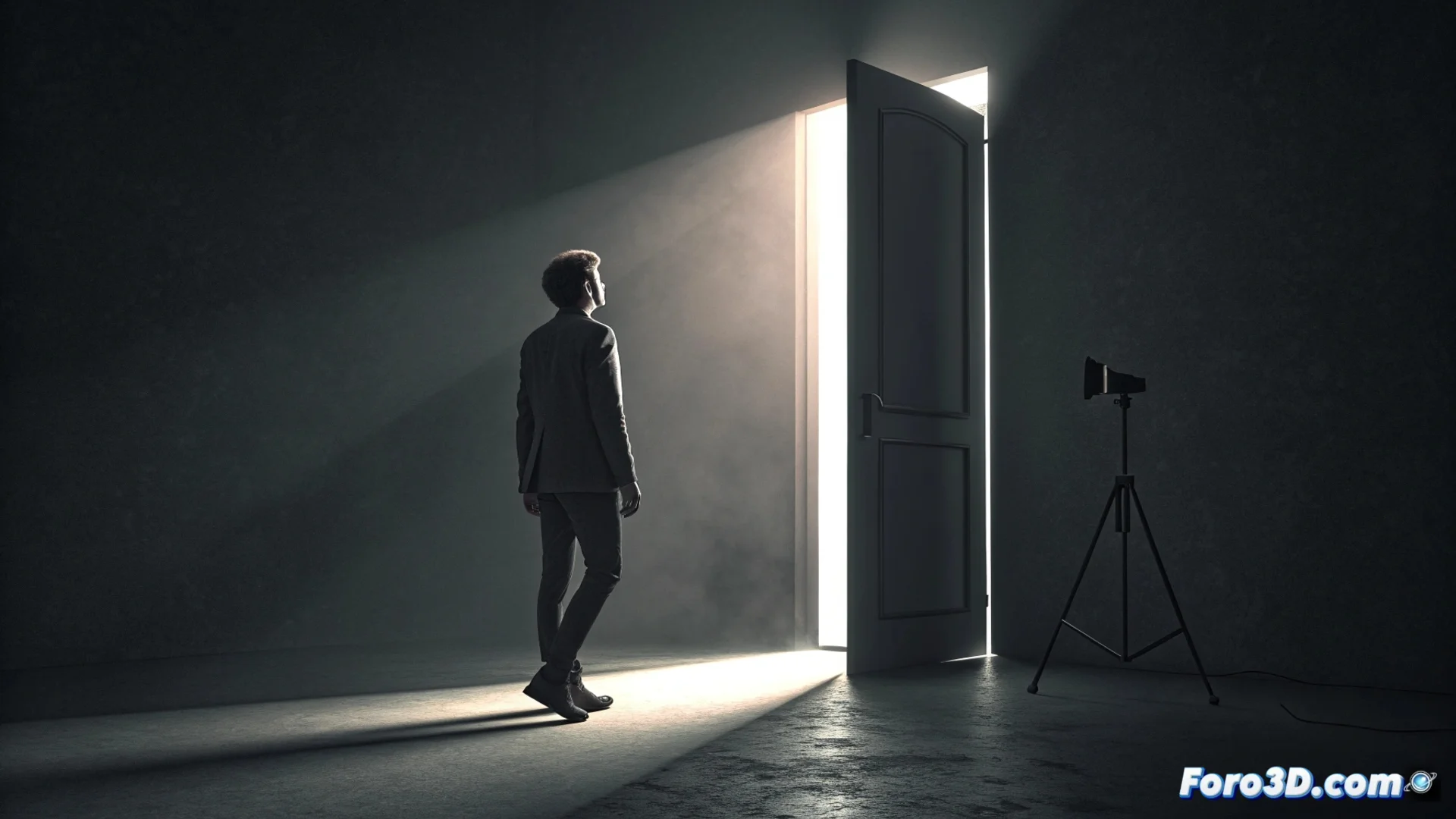
Slit Lighting Photography or Slit Lighting
The technique known as slit lighting is based on passing light through an extremely thin opening. This method illuminates only a specific line on the model, producing a radical contrast between the bright and dark areas. The final result is images with an intense and volumetric character, where the light defines contours and highlights surface details with millimeter precision. 🎭
Prepare and Handle the Light Source
To achieve this effect, you need a thin slit. You can use the space between a door and its frame, a Venetian blind, or create one with two opaque surfaces. Position the subject very close to this opening so that the light hits them sideways. It is essential to adjust the width of the light strip; to do this, move the model or adjust the separation of the panels. A dark and distant background is ideal for isolating the protagonist and eliminating distracting elements.
Key Elements for Setup:- Find or create a thin slit, such as in a partially open door.
- Place the subject next to the opening so the light hits from the side.
- Adjust the thickness of the strip by moving the model or the panels.
- Use a dark and distant background to achieve total isolation.
Slit lighting transforms photography into an exercise in precision, where every millimeter of illumination counts.
Technical Camera Settings
You must operate in manual mode to correctly expose the lit area, assuming the shadows will be lost in black. A low ISO value and a medium aperture, such as f/5.6 or f/8, are a good starting point. The focus must be exact; manual mode is recommended, focusing directly on the light line. Using a tripod is crucial to avoid vibrations and allows you to use slower shutter speeds if the light is scarce.
Essential Technical Steps:- Work in manual mode to control the exposure of the bright strip.
- Start with a low ISO and an aperture like f/5.6 for sharpness.
- Focus precisely, preferably manually, on the lit area.
- Use a tripod to ensure stability and allow long exposures.
Tips for Executing the Shot
This technique demands a lot of patience. Any slight movement of the model or camera can ruin the scene. Getting the light strip to fall exactly where you envision it requires more skill and fine adjustments than a conventional session. It is a meticulous process where planning every detail makes the difference between a good photo and an exceptional one. 🎯