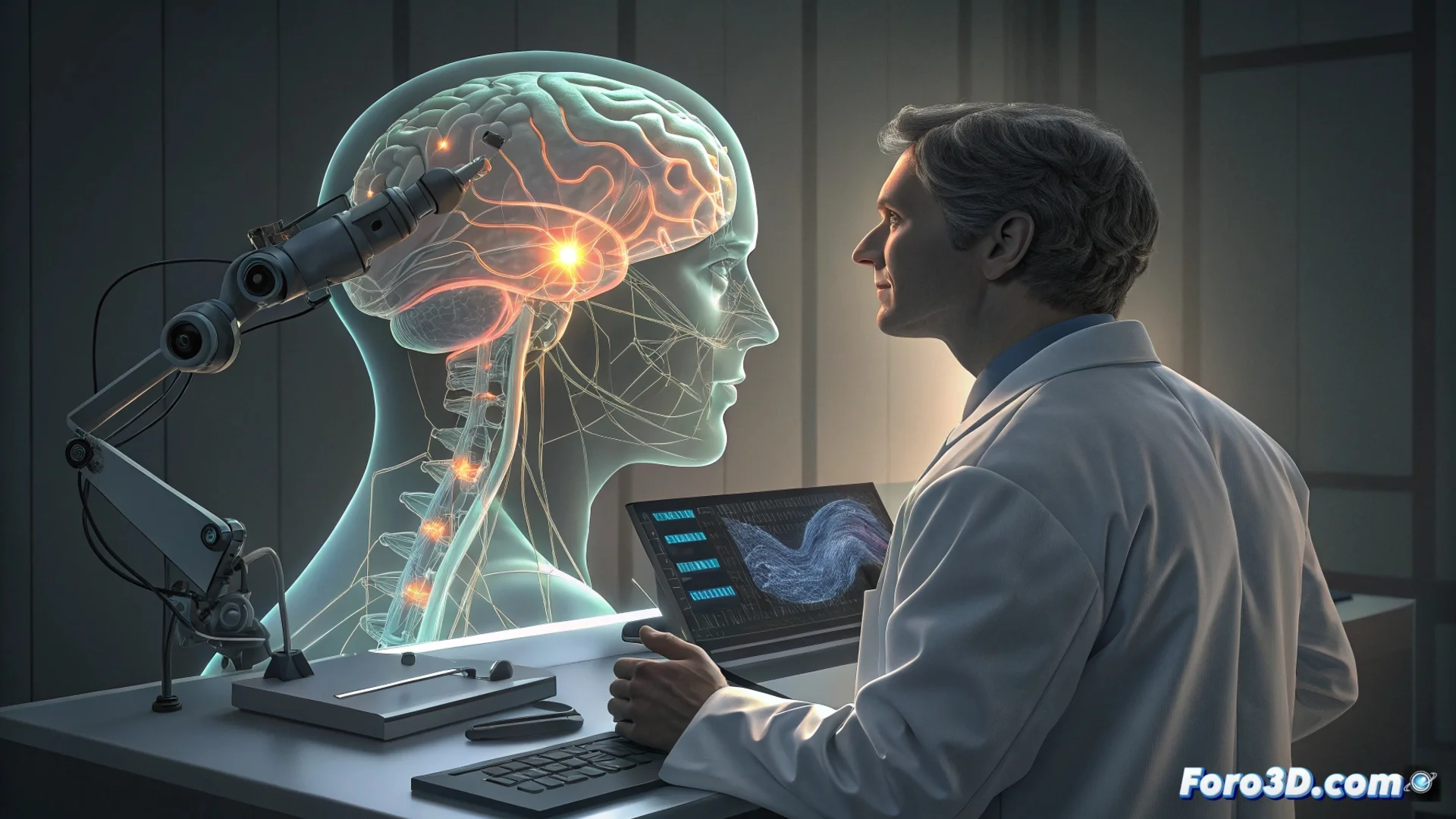
Second Clinical Trial of an Invasive Brain-Computer Interface
Neurotechnology advances with a second clinical trial testing an invasive system so that people with spinal cord injuries can recover motor functions. This approach uses microelectrodes implanted directly into the brain to capture and decode neural activity. 🧠
How Does the Neural Interface System Work?
The core of this technology is an implantable brain-computer interface (BCI). The microelectrodes record the electrical signals that the brain generates when a person thinks about moving an arm or hand. A small device processes these signals wirelessly and, through machine learning algorithms, translates them into digital commands. These commands can direct a robotic arm, an on-screen cursor, or a virtual keyboard.
Key Components of the Implant:- Microelectrode Array: Implanted in the motor cortex to capture movement intention with high precision.
- Neural Processing Unit: Decodes signals in real time and sends them wirelessly to an external receiver.
- Machine Learning Software: Learns each user's unique neural patterns and optimizes translation into commands.
Preliminary results indicate that patients can learn to use the system and maintain a level of precise control for weeks.
Objectives and Findings of the Clinical Trial
This study not only tests if the system works, but focuses on evaluating its long-term viability. Researchers monitor how brain tissue responds to the implant over a full year, observing device stability and neural signal quality over time. They also measure how well participants can control assistive devices in tasks simulating daily life.
Main Metrics Being Evaluated:- Biological Stability: How the brain tissue around the implanted electrodes reacts and adapts.
- Signal Durability: Whether the quality of neural decoding is maintained or degrades over months.
- Control Consistency: Users' ability to perform tasks reliably and repeatedly.
The Future of Recovered Autonomy
Progress brings closer the real possibility that people with severe paralysis can recover some autonomy, such as communicating or manipulating objects. However, scientists emphasize that it is an experimental technology. The idea of controlling an exoskeleton with the mind is no longer just science fiction, although the path to widespread clinical applications still requires overcoming significant engineering and biological challenges. 🔬