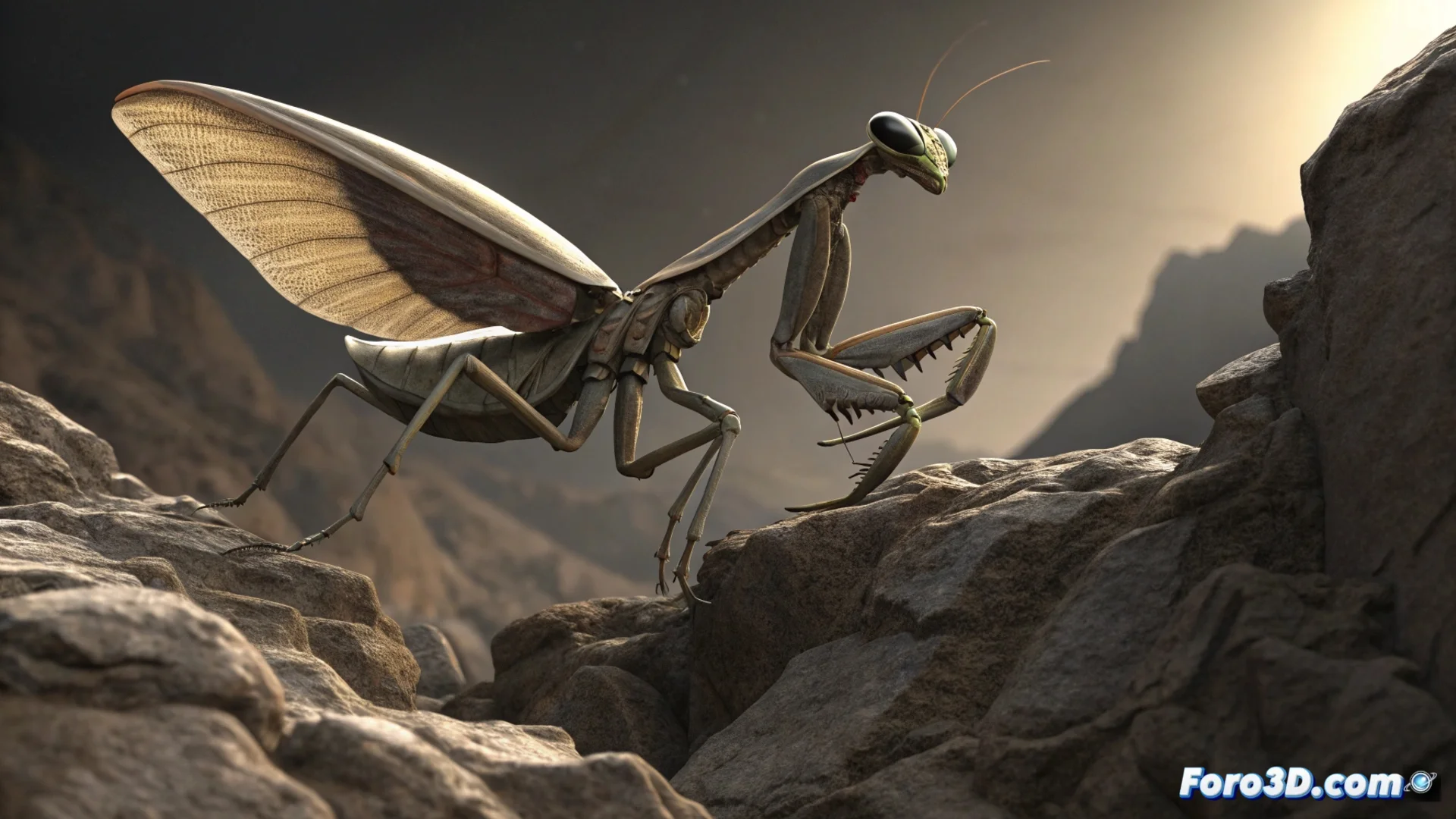
RoboMantis: a Bio-Inspired Robot that Walks and Glides
A team from Carnegie Mellon University presents RoboMantis, a robot whose design is based on the praying mantis. This system can move on land and, when encountering an obstacle, deploy wings to perform a jump and a glide that allows it to overcome it. This versatility aims to expand its autonomy in challenging landscapes. 🦗
Efficiency Inspired by a Natural Predator
The robot adopts the shape and movement tactic of the insect, a terrestrial hunter that also performs short aerial journeys. Its articulated legs replicate the animal's posture, providing stability when walking. The wings remain folded over the body and extend with a quick mechanism for takeoff. This hybrid strategy optimizes energy use, as walking consumes less than continuous flying, reserving flight only for when it is essential.
Key Features of the Bio-Inspired Design:- Articulated legs that imitate the morphology and movement of the mantis for stable terrestrial displacement.
- Foldable wings that deploy quickly via an activation mechanism for takeoff.
- Modal transition that prioritizes efficiency, using the most energy-efficient mode for each situation.
This hybrid approach prioritizes energy efficiency, reserving flight only when strictly necessary.
Technology to Conquer Hostile Terrains
The engineering team integrates lightweight sensors, powerful actuators, and control algorithms to manage the switch between modes. The robot must precisely calculate the jump force, takeoff angle, and adjust the wing surfaces during gliding. The goal is for machines like this to work in disaster environments, uneven terrains, or hard-to-access areas to perform inspection or rescue tasks, where mobility is a constant challenge.
Potential Applications of Multimodal Mobility:- Operate in catastrophe zones where infrastructure is damaged and the terrain is unpredictable.
- Inspect hard-to-reach areas, such as collapses or rugged terrains, to assess damage.
- Perform initial rescue tasks, carrying sensors or small supplies to places unreachable by wheeled robots.
A More Agile Future for Robotics
Although the project is still in the laboratory phase, its concept points toward robots with greater adaptability. While a wheeled robot stops at a puddle, RoboMantis could bypass it with a controlled jump. This development not only imitates nature but seeks to overcome current mobility limitations to create truly versatile mechanical assistants. 🤖