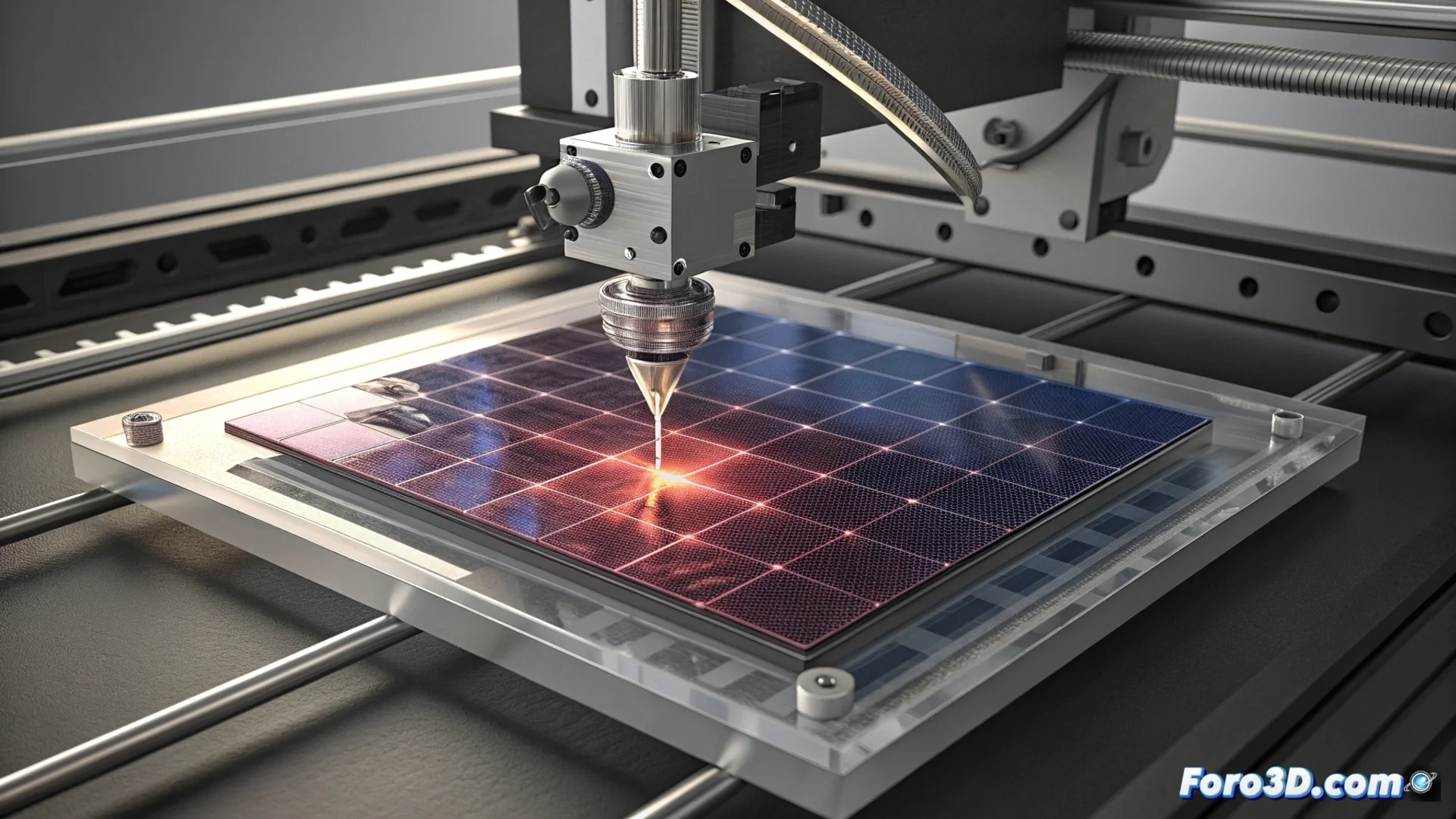
Researchers Develop Color-Adjustable Solar Cells with 3D Printing
Solar energy takes an aesthetic leap. A team of researchers has devised an innovative method to manufacture panels that can change their color at will. This technology fuses 3D printing with nanotechnology to design custom photonic structures, opening a new chapter in how we integrate renewable sources into our environment. 🎨⚡
The Technical Basis: 3D-Printed Nanostructures
The process begins by 3D printing high-precision nanostructures on a transparent material. These tiny structures act as an intelligent photonic filter, manipulating light in a specific way. By modifying their geometry and dimensions, scientists determine which colors are reflected to the eye and which are absorbed to generate electricity. The semiconductor layer that converts light is deposited later on this nanostructured base.
Key Advantages of the Method:- Total Visual Control: Allows selecting the color or even creating complex patterns on the panel surface.
- Preserved Efficiency: The photonic design minimizes loss in the ability to convert solar light into useful energy.
- Architectural Customization: Panels can be manufactured to blend perfectly with facades, roofs, or design elements.
With this technology, the debate will no longer be just about watts per square meter, but about which shade best harmonizes with the facade.
Overcoming the Aesthetic Barrier of Solar Energy
The main goal is to eliminate a major obstacle to the mass adoption of solar energy: its appearance. Traditional panels, with their uniform dark blue or black tone, often limit their use in applications where design is crucial. This innovation allows photovoltaic technology to integrate into visible surfaces of buildings, vehicles, or electronic devices without looking like an unaesthetic technical add-on.
Potential Applications:- Building Facades and Roofs: Create panels that mimic the color of brick, concrete, or other materials.
- Consumer Products and Urban Furniture: Incorporate discreet solar cells into portable devices, public benches, or bus shelters.
- Decorative Elements: Develop installations that