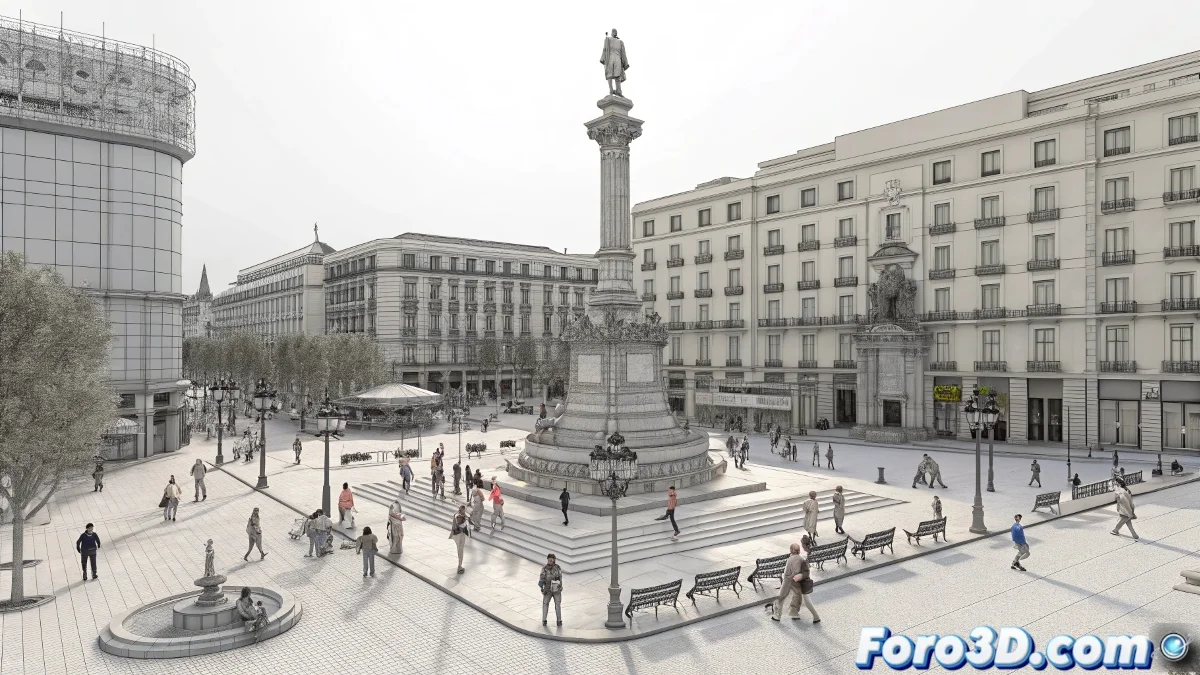
Representation of Over-Tourism in Barcelona and Ibiza Using Blender
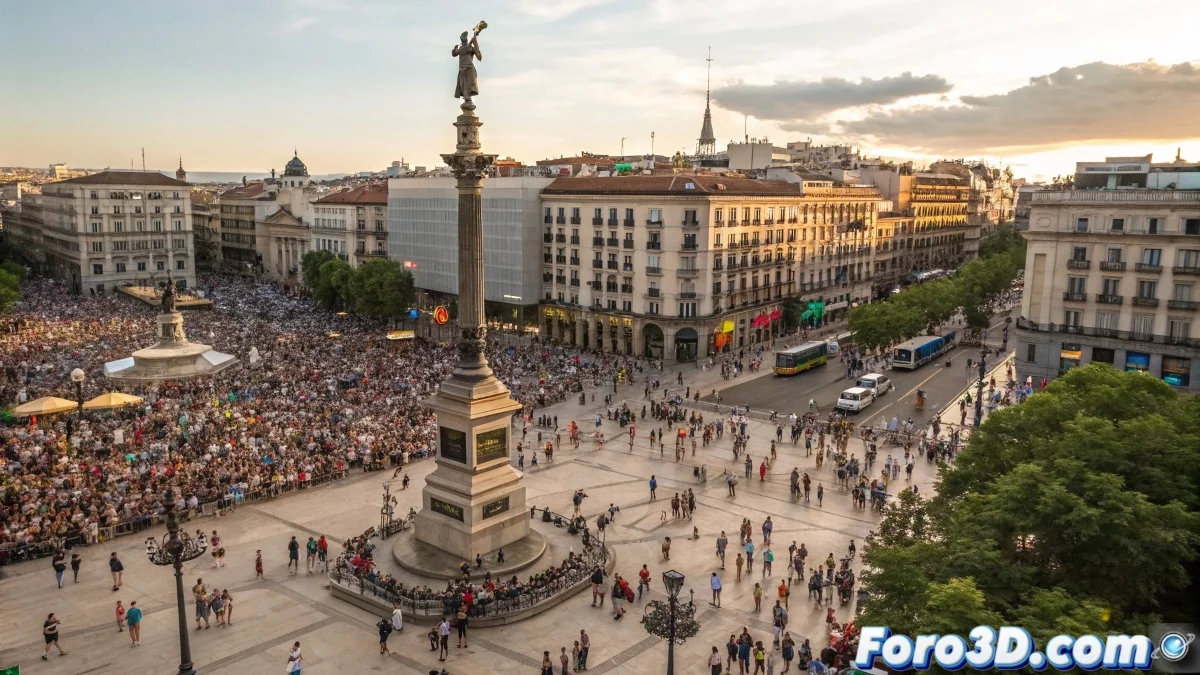
The over-tourism phenomenon is once again making headlines in cities like Barcelona and Ibiza, where residents are expressing their discontent with the massive influx of visitors 🧳. International media such as ABC Australia and The Guardian have documented how this overwhelming tourism is causing housing crises, skyrocketing rents, and growing tension between locals and tourists. To visualize this complex social phenomenon, Blender becomes a powerful tool that allows recreating saturated urban scenes, capturing both the tourist density and citizen discontent through 3D modeling, particle systems, and visual narrative.
When you model crowds of tourists faster than low-cost flights arrive in the city.
Modeling the Characteristic Urban Environment
The first step consists of recreating the distinctive architecture of Barcelona or Ibiza, focusing on narrow streets, buildings with ornate balconies, and characteristic elements like terraces and street lamps. Use array modifiers or instances to replicate buildings efficiently, maintaining architectural coherence while optimizing resources. To save time, import assets from libraries like BlenderKit or Poliigon, but ensure they are adapted to the Mediterranean style that defines these cities. Realistic scale is crucial so that the proportion with the characters is believable and properly conveys the feeling of saturation. 🏙️
Particle Systems for Intelligent Crowds
The true essence of over-tourism is captured through Geometry Nodes to create efficient and varied crowds. Define two main groups: tourists with suitcases, cameras, and hats, and locals carrying protest signs or showing gestures of discontent. Use low-poly mesh instances to optimize performance, applying random variations in scale, rotation, and textures to avoid repetitive patterns. Add velocity fields that guide the tourists' movement through the streets while locals group in specific areas, creating a visual dynamic that narrates the conflict without the need for dialogue.
Lighting and Urban Atmosphere
To convey the atmosphere of a sunny day in the Mediterranean, set up a Sun Light with soft shadows and realistic direction according to the time of day you want to represent. Complement with an environmental HDRI that provides natural reflections on windows and metallic surfaces. Adjust Blender's Color Management to achieve proper contrast between buildings, streets, and characters, enhancing the warm colors characteristic of these cities while maintaining visual readability of the scene despite the saturation of elements.
Narrative Composition and Visual Storytelling
The camera becomes your best ally to convey the feeling of pressure and overcrowding. Place it at street level so the viewer experiences the scene from a resident's perspective, using depth of field to focus on specific protest areas while slightly blurring the more distant tourist crowds. Dynamic angles and tight framing accentuate visual claustrophobia, while the arrangement of elements guides the gaze toward narrative conflict points. Every element, from the signs to the characters' expressions, must reinforce the message about the effects of mass tourism.
Rendering and Final Post-Production
Render the scene with Cycles for maximum quality or Eevee for quick iterations, adding motion blur to moving characters to increase the sense of dynamism and controlled chaos. In post-production, apply color correction to emphasize tension through marked contrasts and selective saturation, and add very subtle volumetric dust to bring the urban environment to life. Blender can reproduce the city full of tourists and annoyed residents with impressive detail, but it still doesn't have a modifier to automatically turn all complaints into viral hashtags… that transformation still depends on reality. 😉