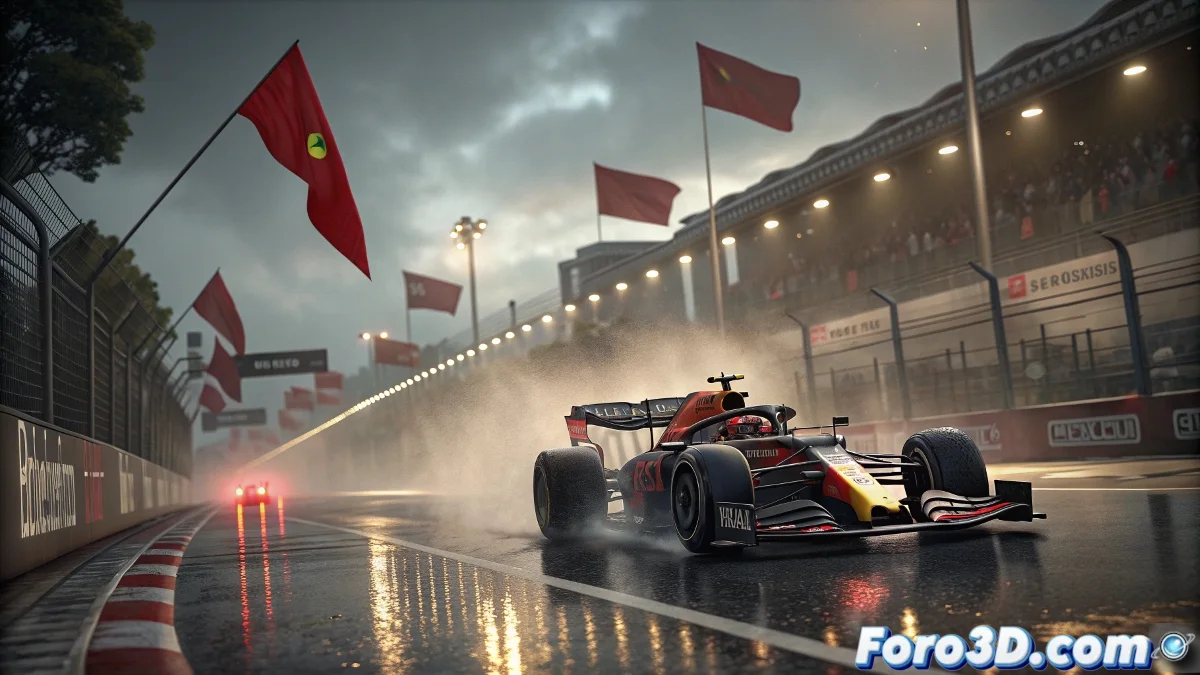
Verstappen Snatches Pole from Sainz in Chaotic Baku Qualifying
In the qualifying session of the 2025 Azerbaijan Grand Prix in Baku, Max Verstappen secured pole position after a chaotic session with six red flags, changing conditions, and strong winds 🏁. Carlos Sainz surprised with second place for Williams, putting in a notable effort that nearly gave him pole, until Verstappen improved on his final attempt. A demonstration of how experience and coolness under pressure decide in F1, even when chaos reigns on the track. Because in Baku, even the wind plays against you ⚡.
Recreating the Chaos and Glory in Houdini
Houdini offers the tools to capture the intensity of this unique session, simulating from variable atmospheric conditions to the exact moment when Verstappen overtakes Sainz 🌬️. Using fluid dynamics, particles, and procedural animation, we can recreate the track getting wet intermittently, red flags waving strongly, and the single-seaters sliding at the limit. The result is a cinematic scene that not only documents the sporting event but also conveys the adrenaline of a qualifying where everything can change in a second.
Verstappen secured pole after a session with six red flags, changing conditions, and strong winds.
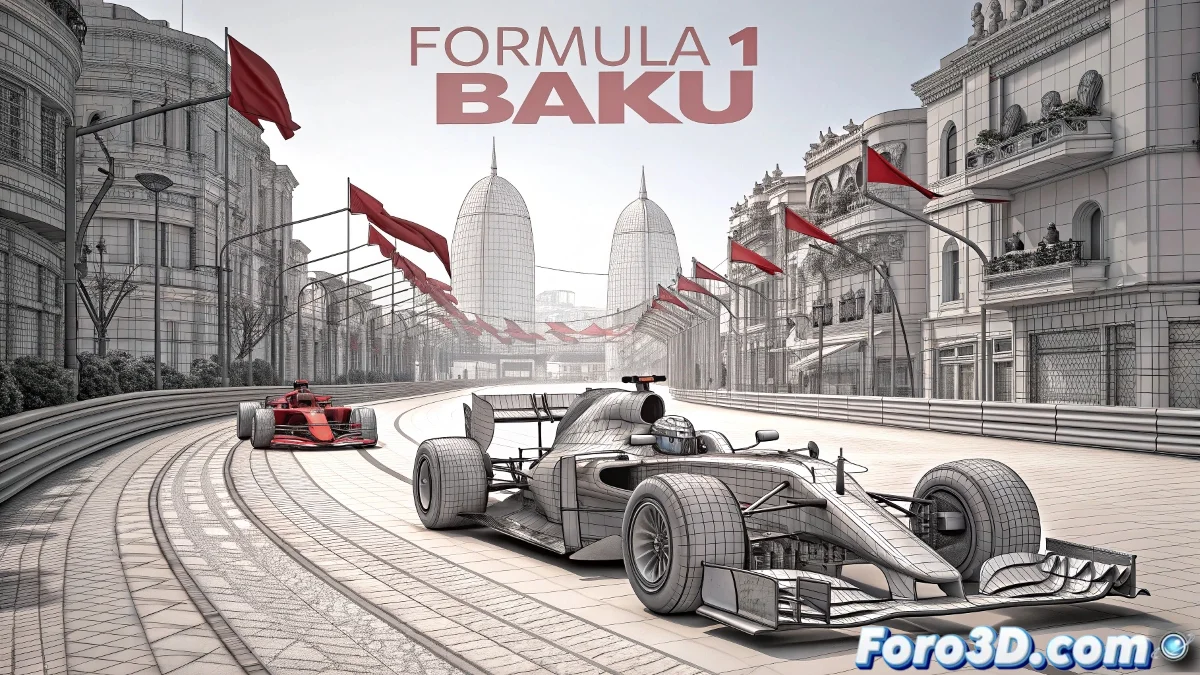
Project Setup and Circuit Modeling
Starting a new file in Houdini with metric units ensures scalar precision of the Baku circuit 🏗️. The layout is modeled using Bézier curves based on real plans, adding details like retaining walls, run-offs, and iconic buildings as background. Organization into nodes—Circuit, Cars, Effects—allows non-destructive work and on-the-fly parameter adjustments. The key is capturing the urban and narrow essence of Baku, where every mistake is paid dearly.
Simulation of Atmospheric Conditions and Effects
Changing conditions are simulated using fluid dynamics for intermittent rain and strong wind 💨. Water droplets are generated with particles emitted from above, colliding with the asphalt and creating visible splashes. Wind is defined by force fields that affect flags, airborne particles, and even car stability on straights. Six red flags are animated with simulated fabrics (Vellum), waving aggressively in incident zones. Each effect must feel organic and unpredictable—like the real session.
Single-Seater Animation and the Fight for Pole
Verstappen's (Red Bull) and Sainz's (Williams) cars are modeled with simplified but recognizable geometry, textured with accurate liveries 🚗. They are animated following spline trajectories that replicate real lap lines, with keyframes adjusted to show Verstappen's improvement on his final attempt. The time difference is slightly exaggerated in the animation for visual clarity—Sainz close, but Verstappen crossing the line aggressively. Camera shake and follow movements add drama to the decisive moment.
Render and Post-Production for Cinematic Impact
The render with Redshift or Mantra is set to 1920x1080 px, 30 fps, with motion blur active for wheels and fast movement 🎥. Stadium lights and spotlights are placed for highlights on bodywork and wet asphalt. In post-production, colors are adjusted toward cool tones (blues for night, grays for rain), reflections in puddles are enhanced, and subtle grain is added for filmic texture. The result should evoke the tension and relief of Verstappen—and Sainz's agony—in a single frame.
The Irony of Dominance in Chaos
The irony is that while engineers go crazy fine-tuning engines and aerodynamics, Verstappen decides it all in that last second when we all thought “Sainz has it”… but the champion appears to remind us who's in charge. Though, to be fair, even the wind in Baku seems to have preferences 😅.