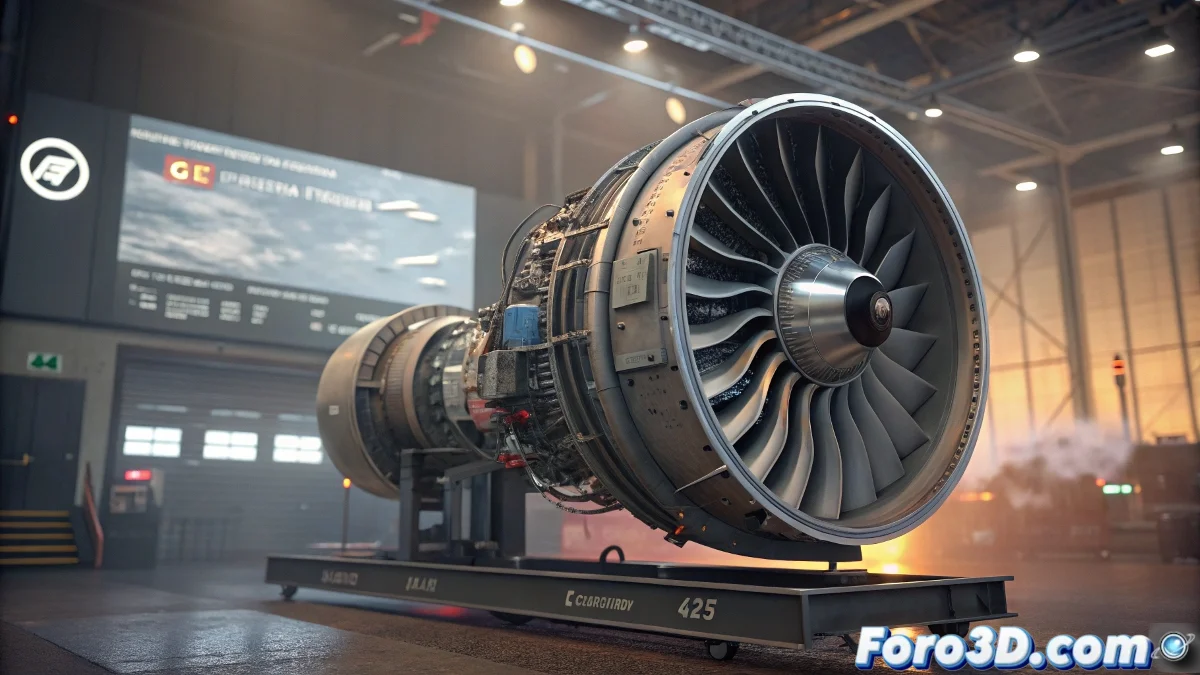
When 3D printing stopped being just for figurines
Pratt & Whitney has just demonstrated that additive manufacturing can handle anything, even the heart of a jet engine ✈️. Its 3D printed rotary turbine for the TJ150 is not just a pretty prototype: it has passed real temperature and speed tests, something unthinkable a decade ago for printed parts.
"We went from printing keychains to components that withstand more stress than an intern during render season" — GATORWORKS Engineer.
Redesigning complexity: fewer parts, more power
The team achieved:
- Reducing 50 components to a single printed module
- Maintaining strength in extreme conditions (1,200°C and 50,000 RPM) 🔥
- Shortening the development cycle from years to months
The TJ150: small but mighty
This compact engine:
- Generates 150 pounds of thrust in a reduced space
- Is designed for drones and military autonomous systems
- Demonstrates that 3D printing is no longer just for prototypes
How does this affect 3D artists?
More than you think:
- Precise internal models for engines in VFX
- Real references for simulations in Houdini
- Complex geometries ready to import into Blender 🖥️
From the workshop to the screen (passing through space)
This technology not only changes aviation: soon we will see its effects in:
- Ultrarrealistic flight sequences
- CGI engines with precise physics
- 3D assets based on certified real designs
And to think that not long ago we used 3D printing to make movie miniatures... now it prints parts that could take those miniatures into space 🚀. The future has arrived, and it brings turbine nozzles.