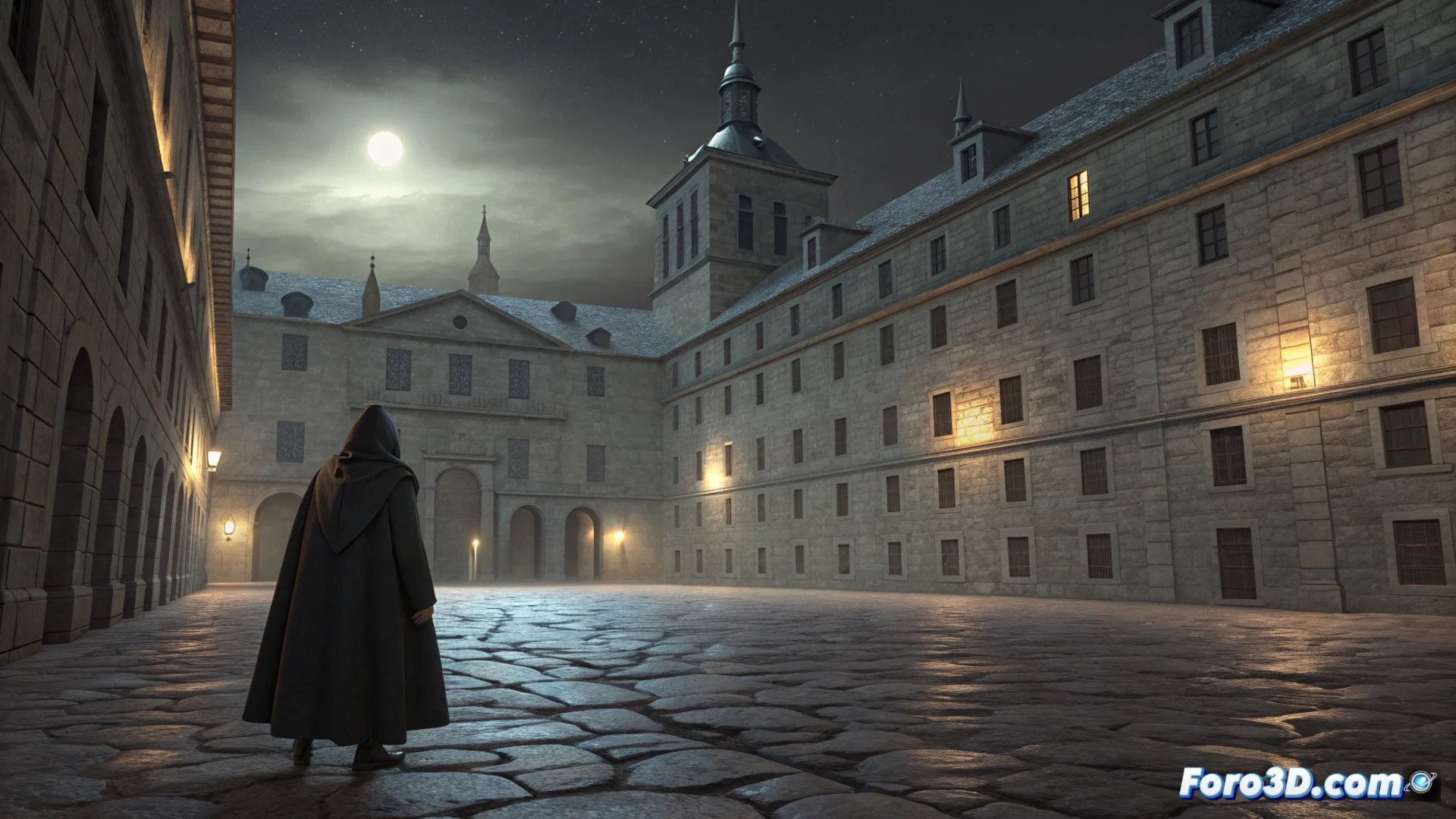
Philip II Builds El Escorial Over a Mouth of Hell
An old Madrid legend holds that the Monastery of El Escorial does not rise in the mountains by chance. According to oral tradition, King Philip II selected that specific location to seal with stone and prayer one of the seven gateways to the underworld that, it was believed, existed in the world. The colossal building would thus serve as a spiritual counterweight. 🏰
The Architecture That Fuels the Myth
This narrative of dark origin blends with visible features in the monument itself. The coldness of the granite, the severity of the lines, and certain structural elements have nourished the legend for centuries.
Architectural Elements Linked to the Myth:- Vaulted Basements and Passages: The underground areas of the complex fuel rumors about what they might conceal.
- Grill-Shaped Floor Plan: Although dedicated to Saint Lawrence, for the legend it symbolizes a grate that contains subterranean forces.
- Austere Monumentality: The grandeur and seriousness of the place are interpreted as a physical and spiritual barrier.
"The power of oral tradition keeps alive the idea that something lies beneath the foundations that the king wanted to enclose forever."
A Tale from Local Folklore
The story is passed down from generation to generation, but does not appear in official historical documents. Experts classify it as an urban myth or a later legend, created to make sense of the magnitude and unique character of the construction.
Characteristics of the Folkloric Tale:- Oral Transmission: It has spread through word of mouth, without documentary basis.
- Fusion of Concepts: It unites the monarch's religious devotion with an ancestral fear of the unknown and the infernal.
- Sensory Details: It is even said that, in certain rooms, by putting one's ear to the floor, whispers can be heard (attributed by some to the echo of tourists).
Between History and Legend
Beyond its historical veracity, the tale is part of the dark folklore of the region and contributes to the aura of mystery surrounding the Royal Site. It represents how the collective imagination can interpret a symbol of power and faith, adding a layer of intrigue to a monument that is fascinating in itself. The legend endures, suggesting that Philip II perhaps built to seal something more than his dynastic legacy. 🔒