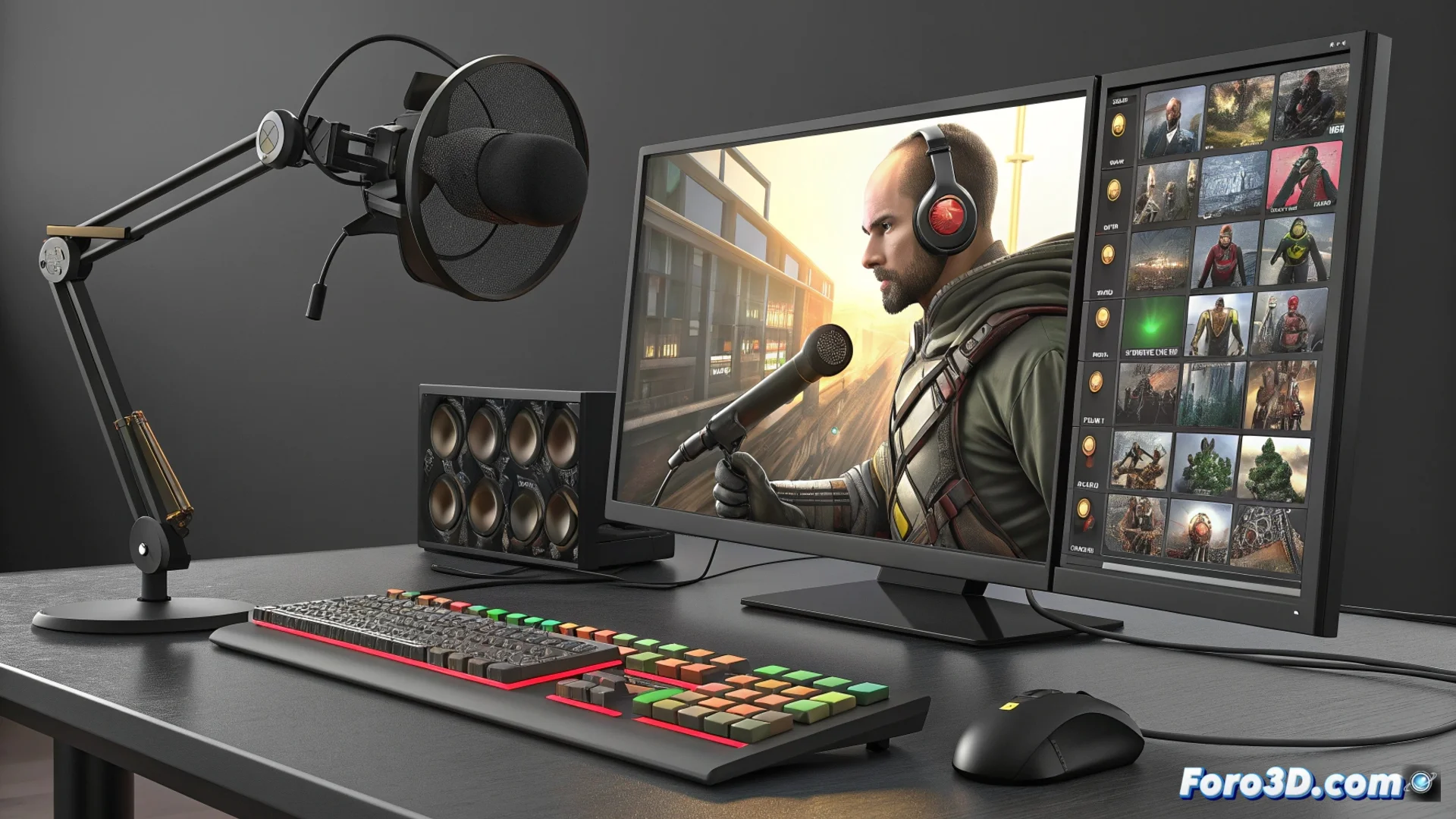
Organize Your Stream with Scenes and Sources in OBS Studio
OBS Studio is a powerful tool for anyone producing live content. Its core lies in using scenes, which act as predefined visual containers. You can prepare these compositions in advance to cover each phase of your broadcast, from a starting screen to a game view with camera. This helps you structure what your audience perceives, making the workflow more professional and less chaotic 🎬.
Scenes: Your Streaming Canvas
A scene in OBS is a group of visual and audio elements. Think of it as a master layer that you define before streaming. You can create one for your intro, another for playing while showing your camera, and another to display a web page. The software's central system allows you to switch between these scenes instantly with a single click, eliminating awkward pauses during the live stream.
Key elements you can include in a scene:- Display Capture Source: Records what happens on your main monitor or in a specific application.
- Video Device Source: Connects a webcam or the signal from a gaming console.
- Image Source: Inserts logos, banners, or custom backgrounds.
- Text Source: Displays your name, titles, or any message on screen.
- Browser Source: Integrates live web pages, ideal for showing chats or donations.
Preparing complex scenes with many sources can make you forget to set up the correct audio source, sometimes resulting in silent streams or with the wrong application audio.
Total Control Over Each Source
Each element you add to a scene is an independent source. OBS's power lies in how you can manipulate them. You don't just add them; you can overlay them, resize them, crop them, and adjust their visibility. This gives you precise control to design the exact visual appearance you want for your stream. For example, you can place your camera over the game capture and a logo in a corner, all within the same scene.
Advantages of organizing with scenes:- Instant Transitions: Change what you stream by selecting another scene from the control list.
- Customizable Keyboard Shortcuts: Set up keys to switch scenes without touching the mouse, vital during a live stream.
- Visual Transitions: Use wipes or fades so changes between scenes aren't abrupt.
- Manage Specific Moments: Switch seamlessly between talking to the camera and playing.
Agile Workflow During the Broadcast
The main OBS window displays all the scenes you created. During the stream, you just need to select the next scene for the change to take effect immediately. This flexibility is key to producing dynamic content. Planning and structuring your scenes in advance is the most important step to avoid technical errors and offer a smooth, high-quality viewing experience for your audience 🚀.