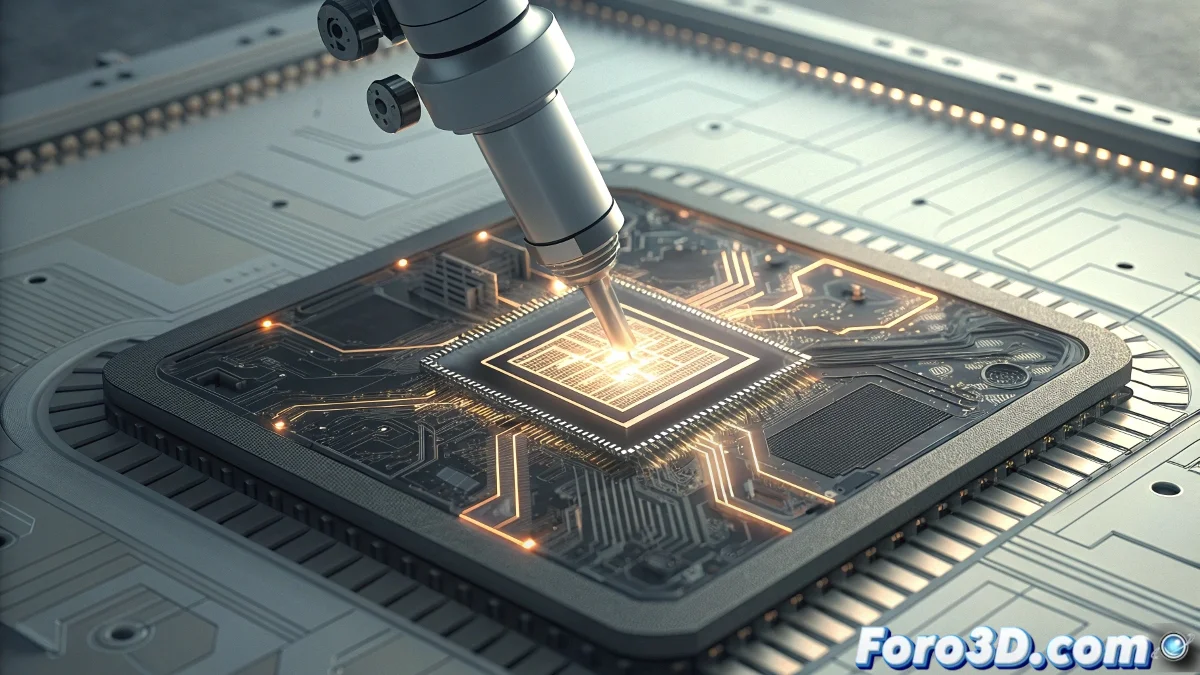
An alliance that promises to revolutionize AI hardware
In the world of visual design and special effects, where rendering times can test the patience of a saint, a piece of news emerges that will make more than one artist jump out of their chair. OpenAI and Broadcom have decided to join forces to develop no less than 10 gigawatts of capacity in custom artificial intelligence chips. This collaboration represents one of the most ambitious efforts in creating specialized hardware for machine learning workloads.
Why it matters to visual creators
For foro3D professionals, accustomed to seeing their projects consume resources as if there were no tomorrow, this partnership could mean a paradigm shift. The custom chips are specifically designed to optimize the training and inference processes of AI models, which in plain English translates to fewer waits and more creation. Imagine processing physical simulations or complex renders in fractions of the current time.
This collaboration marks a turning point in how we understand specialized hardware for artificial intelligence
Potential advantages for the workflow
- Exponential acceleration in preview processes
- Optimization of dynamic simulations and particles
- Reduction of bottlenecks in rendering pipelines
- Enhanced capabilities for integrated AI tools
The future of specialized hardware
While Nvidia continues to dominate the market, this strategic move demonstrates that the AI hardware ecosystem is maturing toward more specific solutions. Joint developments between software companies and chip manufacturers could lead to architectures that better understand the real needs of content creators. After all, in the VFX world, having a chip that understands your rendering frustrations would be almost therapeutic.
The implications go beyond simple numerical processing. We're talking about potential improvements in upscaling algorithms, intelligent denoisers, and even creation assistants that could work offline with minimal latency. The graphic design sector could see tools emerge that today seem like science fiction, all thanks to this type of investment in fundamental infrastructure.
Relevant technical considerations
- Custom architectures for specific workloads
- Improved energy efficiency compared to generic solutions
- Possible integrations with mainstream creation software
- Compatibility with existing machine learning libraries
And while these tech giants play would you rather with the future of hardware, 3D artists will continue here, staring at progress bars as if with the force of our minds we could speed them up 🥴