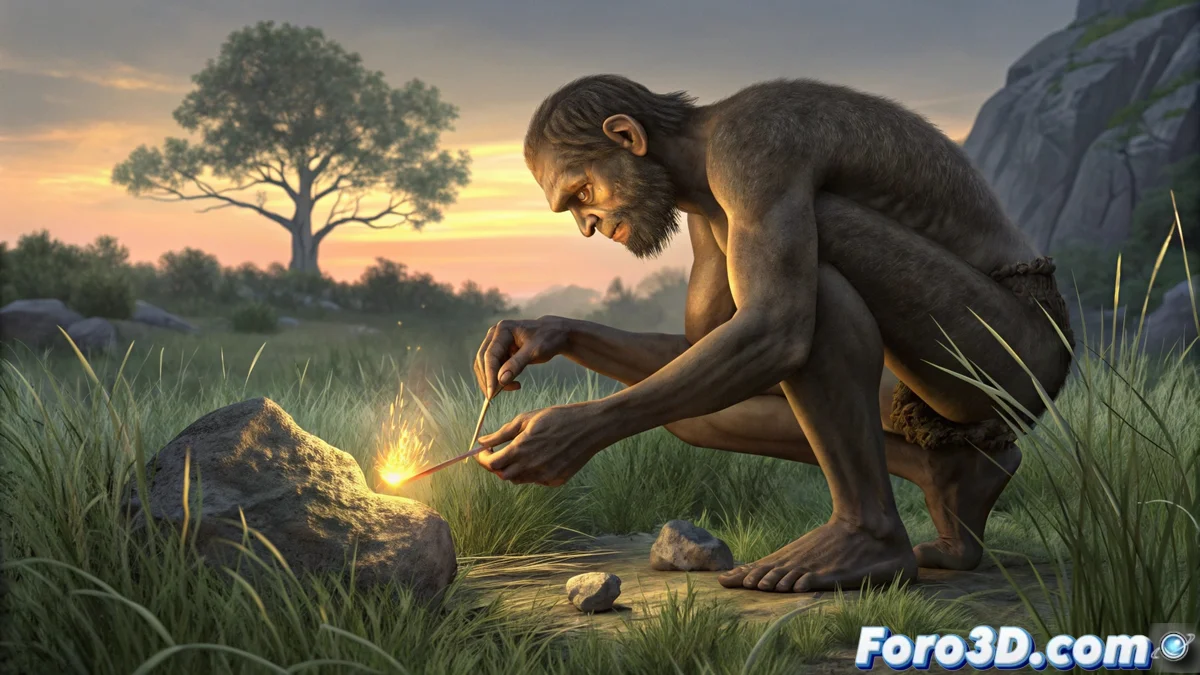
Oldest Evidence of Fire-Making Found in Britain
An archaeological discovery in Suffolk County, east of England, changes what we know about when early humans learned to master fire. The finding of specific tools for generating sparks pushes back the date of this crucial technological milestone in Europe. 🔥
The Tools That Reveal a Technological Advance
Researchers recovered fragments of flint and pyrite, an iron mineral. A detailed analysis shows microscopic marks on both surfaces that match the pattern left by striking them together. This method, called percussion, is a primitive but effective way to produce the ignition needed to light fuels. Experts rule out that these marks come from stone knapping or natural processes, confirming that the purpose was specifically to make fire.
Key Details of the Discovery:- The pieces were dated to approximately 400,000 years old.
- The percussion marks on the flint and pyrite are conclusive and not random.
- This indicates controlled and repeated use of the technique, not an accidental event.
This finding positions Britain as a key place to study this fundamental cultural milestone in human evolution.
The Boxgrove Site and Its Inhabitants
The discovery site is the famous Boxgrove site, known for its abundant fossils of Homo heidelbergensis. This finding greatly expands our knowledge of these hominids' capabilities. Mastering fire represented an evolutionary leap, as it allowed them to keep warm in cold climates, cook food, and defend themselves against predators. Previous evidence of controlled fire in Europe is about 200,000 years more recent.
Implications of the Boxgrove Discovery:- Directly connects fire-making technology with Homo heidelbergensis.
- Suggests that the cold climate of ancient Britain was a powerful incentive to innovate.
- Rewrites the timeline of when this skill was acquired in northwest Europe.
A Legacy That Illuminates Our Past
This discovery speaks not only of a technique, but of human adaptation and resilience. The ability to generate sparks at will represents unprecedented control over the environment. Perhaps, as the researchers reflect, the first great challenge (a prehistoric “error 404”) was simply finding dry wood to keep that first hard-won fire alive. This finding sheds new light on the practical intelligence of our most distant ancestors. 💡