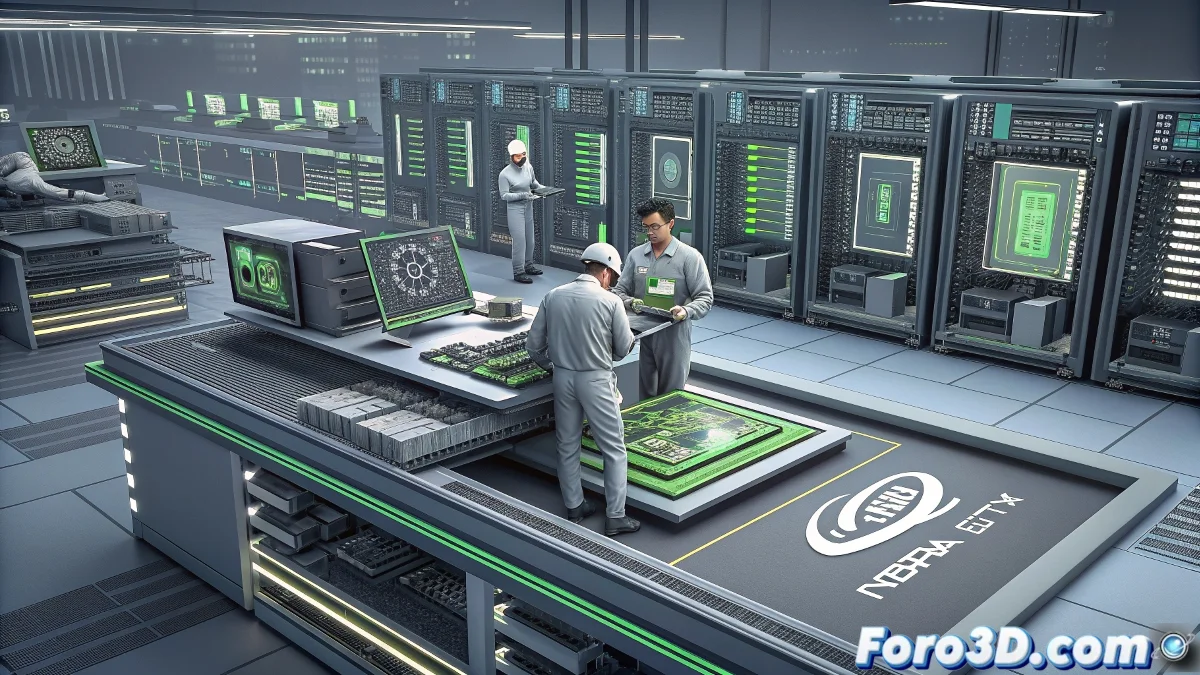
A Historic Alliance: Nvidia and Intel Join Forces
Nvidia and Intel have announced a strategic collaboration to jointly develop x86 processors with RTX graphics, targeted at both PCs and data centers 💻. As part of this agreement, Nvidia will acquire $5 billion in Intel shares, representing approximately 4% ownership in the company, significantly boosting the value of its shares in the market. This alliance not only combines the best of both technologies but also redefines competition in the semiconductor industry against giants like AMD. Because in the tech world, sometimes rivals become the best allies 🤝.
x86 SoCs with RTX Graphics: The Future of Gaming and Productivity
The collaboration includes the development of x86 System-on-Chip (SoC) that combine Intel CPUs with Nvidia RTX graphics chiplets 🚀. These SoCs are designed to deliver advanced graphics performance in gaming and productivity applications on consumer PCs, integrating the power of both companies into a single chip. This means users will be able to enjoy real-time ray tracing, accelerated AI, and improved energy efficiency without the need for discrete graphics cards in many cases. A step toward total integration that promises to revolutionize the consumer market.
These SoCs combine Intel CPUs with Nvidia RTX graphics chiplets, designed to deliver advanced graphics performance in gaming and productivity applications.
Custom Processors for the AI Era
In addition to SoCs for PCs, Intel will manufacture custom x86 processors for Nvidia, which will be integrated into artificial intelligence infrastructure platforms and high-performance servers 🏢. These chips will leverage Nvidia's NVLink technology to enhance connectivity between architectures, enabling faster and more efficient data flows in data center environments. This move is crucial to meet the growing demand for computing power in AI, machine learning, and big data analytics, where every millisecond counts.
Market Impact and Competitive Strategy
Nvidia's share acquisition is at a price of $23.28 per share, consolidating Nvidia as one of Intel's main shareholders 💰. This announcement has had an immediate positive impact on the market, with significant rises in the shares of both companies. Analysts see this as a strategic move to strengthen the position of both giants against competitors like AMD, which has gained ground in recent years with its own integrated designs. The collaboration could accelerate innovation and reduce costs through economies of scale.
Technical Details and Expected Benefits
The alliance is technically based on several pillars:
- Chiplet Integration: Combination of Intel CPUs with Nvidia GPUs in advanced packaging.
- NVLink Technology: High-speed interconnection for data centers and AI.
- Intel Fabrication: Use of Intel's manufacturing processes for the new chips.
- Software Optimization: Joint drivers and tools for maximum performance.
The Irony of Computational Power
With so many gigahertz and teraflops at play, soon computers will have more power than you after three espressos... though they still won't complain about headaches from waking up early 😅.