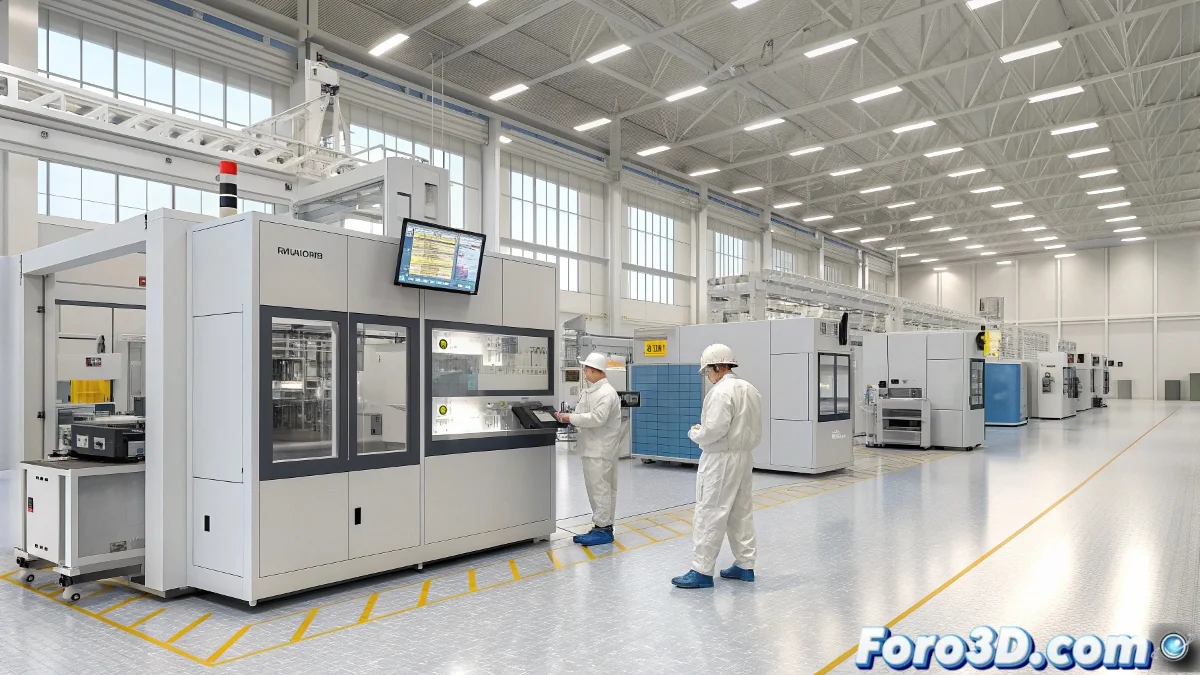
Nestlé Boosts Production with 3D Printing in the UK
Nestlé has announced the expansion of its 3D printing operations in several UK production centers 🏭. The initiative aims to accelerate the manufacturing of critical parts for its packaging and automation equipment, optimizing production times and reducing dependence on external suppliers. With the incorporation of advanced 3D printers, the multinational can produce components on demand, quickly adapting to changes in the production line and maintaining operational agility in a competitive market. Because in the food industry, every second of downtime counts ⏱️.
Agile and Flexible Production for Packaging Lines
Additive manufacturing allows Nestlé to prototype and produce specific parts without interrupting the usual operations of its plants 🛠️. From custom gears to filling nozzles, 3D printing offers the flexibility to iterate designs quickly and manufacture components on demand. This reduces waiting times associated with orders from external suppliers and enables on-site adaptations to improve packaging machine efficiency. A crucial advantage in an industry where production continuity is key.
Additive manufacturing allows prototyping new parts without affecting the usual operations of the plants.
Benefits in the Supply Chain and Operational Autonomy
The use of 3D printing reduces the need to store large inventories of spare parts, minimizing storage and logistics costs 📦. Plants gain autonomy by being able to internally manufacture specific or obsolete components, improving supply chain resilience against global disruptions. This is particularly valuable for fast-wear parts or custom ones that would otherwise require high minimum orders or long delivery times. 3D printing turns each plant into a self-sufficient production center.
Sustainability and Innovation in Materials
Nestlé seeks to integrate more sustainable materials into its 3D printing processes, such as biopolymers or recyclable composites, to reduce resource waste and lower the environmental footprint 🌱. Digitization of manufacturing enables optimized designs that require less material and energy without compromising functionality. Additionally, the ability to produce locally reduces emissions associated with component transportation, aligning with corporate sustainability goals. Innovation that serves both efficiency and the planet.
Practical Applications in the Food Industry
3D printing at Nestlé focuses on critical components:
- Packaging machine parts: Nozzles, guides, supports, and holding elements.
- Maintenance tools: Custom wrenches, adapters, and calibration devices.
- Rapid prototypes: Iterative design of new components for production lines.
- Obsolete parts: Replacement of components discontinued by original manufacturers.
The Irony of Edible Manufacturing
Soon, in Nestlé plants, even chocolate molds could be printed… and eaten afterward! Though technicians probably prefer to keep using metal for machine parts 😅.