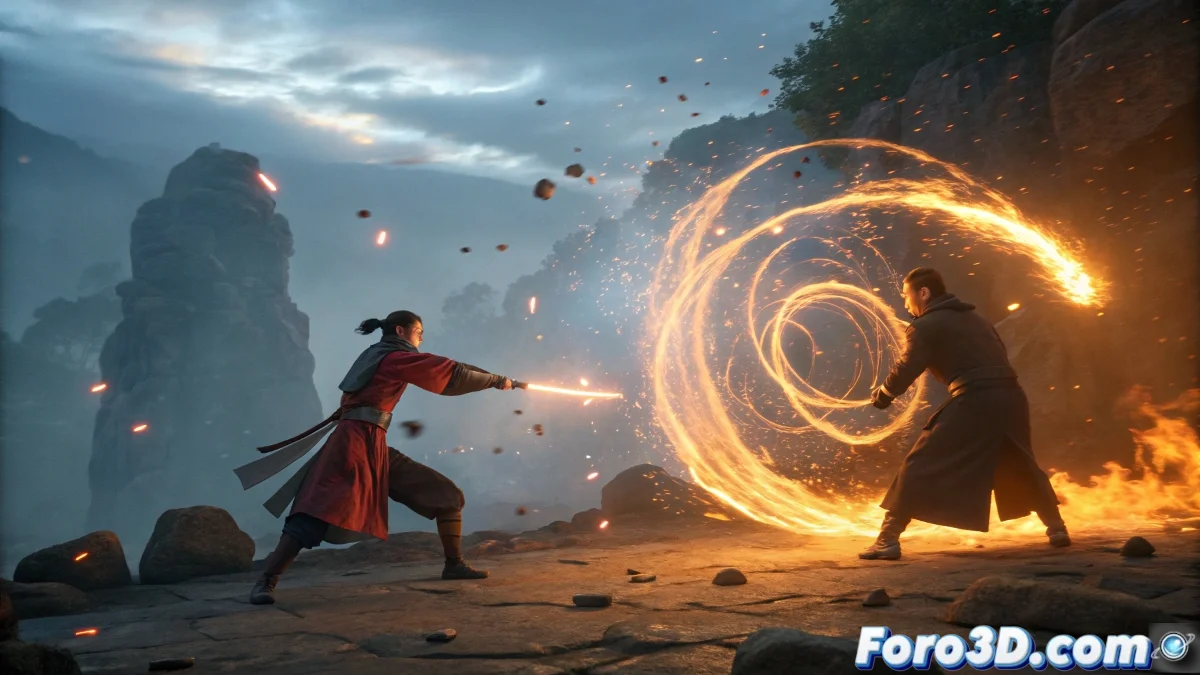
When Magic is Made (with) Pixels ✨
The short film Ne Zha by LOCATOR Visual Effects is a masterclass in turning the impossible into convincing images. Between smoke dancing to the rhythm of magical attacks and characters with luminescent skin, this breakdown reveals the tricks behind the fantasy.
The Art of Making Magic Believable
LOCATOR mastered three technical pillars:
- Dynamic simulations in Houdini for energy and smoke
- Advanced shaders with Redshift for ethereal surfaces
- Motion capture adapted to supernatural characters
Key fact: "80% of the time on magical effects is spent making them react organically to movement, not creating them," the breakdown explains.
Workflow: From Epic to Meticulous
1. Magical Simulations
Houdini for:
- Reactive smoke volumes
- Procedural energy beams
- Particle-body interaction
2. Supernatural Characters
Combined techniques:
- Facial capture + keyframe animation
- Exaggerated facial rigs
- Skin shaders with luminous SSS
3. Epic Post-Production
In Nuke, added:
- Final energy particles
- Atmospheric depth
- Dramatic color correction
Alternatives for 3ds Max Users
You can replicate these effects with:
- Phoenix FD - For mystical smoke/fire
- Arnold/V-Ray - Advanced shaders
- CAT/Biped - Base animation
- After Effects - Compositing
Bonus: Use TyFlow for reactive particles like magical energies.
The VFX Artist's Paradox
As the breakdown aptly summarizes: "We spent 3 weeks simulating 200 frames of perfectly choreographed mystical smoke... only for 10% to be visible in the final edit behind a character." But when that 10% makes the audience hold their breath, every hour of rendering was worth it. 💫
"In VFX, if no one notices it's digital, that's when you know you did your job well... even if it hurts a bit that they don't appreciate the details." - Anonymous LOCATOR artist.