Modeling the French VBCI Combat Vehicle: Reference Guide
The VBCI (Véhicule Blindé de Combat d'Infanterie) is a pillar of the French army, a wheeled armored transport designed to carry infantry into the heart of combat. Modeling it accurately requires capturing its functional essence and distinctive eight-wheeled silhouette. 🎯
Anatomy and Basic Proportions
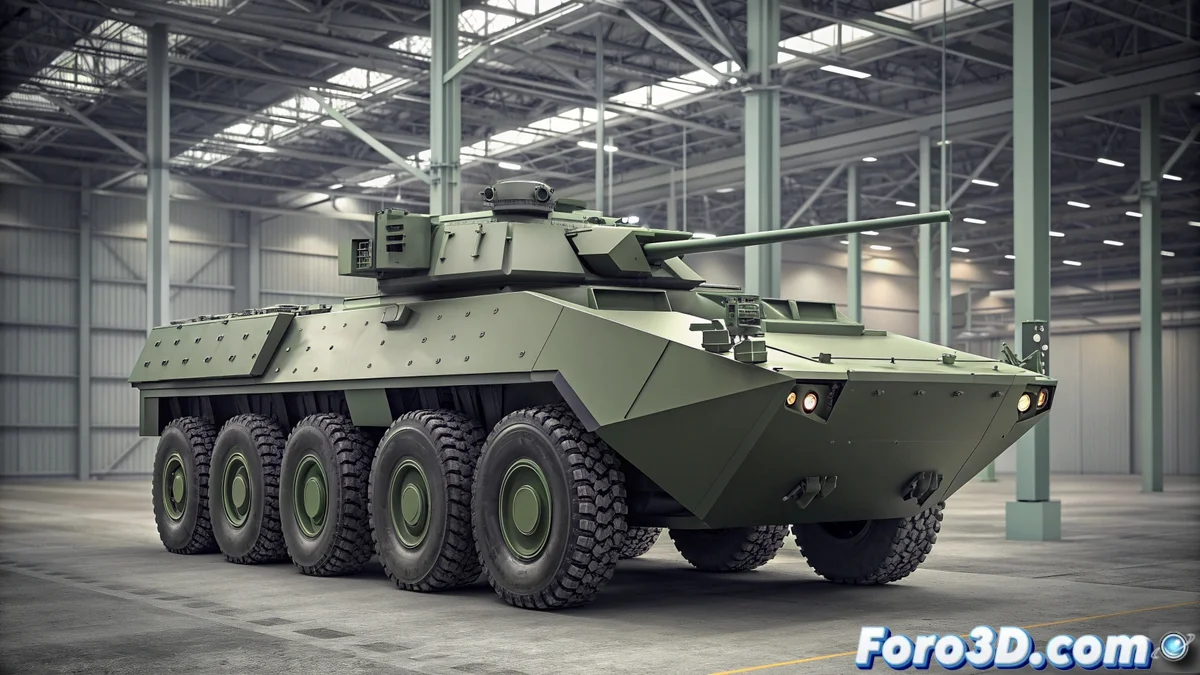
To start, define the overall dimensions: 7.8 meters long, 2.98 meters wide, and 2.26 meters high. The chassis is elongated and low, with a front nose that features a very pronounced slope. The Dragar turret, operated by a single man, is located in the central position on the hull roof, defining the visual center of gravity of the model.
Key Geometry Elements:- Chassis and Wheels: A long frame that supports eight large wheels of equal size. They are not a decorative detail; they are the primary mobility system.
- Front Profile: The nose line is almost vertical at its bottom and slopes drastically toward the roof.
- Turret: A compact and angular structure mounted on the roof, slightly offset toward the front of the vehicle.
When modeling this vehicle, remember that its eight wheels are not for going to buy bread, but for transporting infantry under enemy fire.
Construction Details and Capabilities
The main hull is manufactured with an aluminum structure, to which additional modular armor can be attached depending on the mission. At the rear, it integrates two propellers that give it amphibious capability, allowing it to cross bodies of water. This combination of adaptable protection and aquatic mobility is essential to represent.
Armor and Mobility Features:- Base Structure: Aluminum hull that serves as the structural core.
- Modular Protection: Removable armor panels added over the hull to increase defense.
- Amphibious Propulsion: Two retractable or fixed propellers in the rear section for navigation.
Weapons System and Final Profile
The armament defines its role. The 25 mm M811 automatic cannon is the main weapon, mounted in the Dragar turret. Alongside it, a 7.62 mm coaxial machine gun provides defense against close threats. By combining all these elements—chassis, turret, armor, and weapons—the aggressive and functional profile of the VBCI is achieved, a vehicle created to operate in hostile environments and protect the infantry it transports. ⚙️