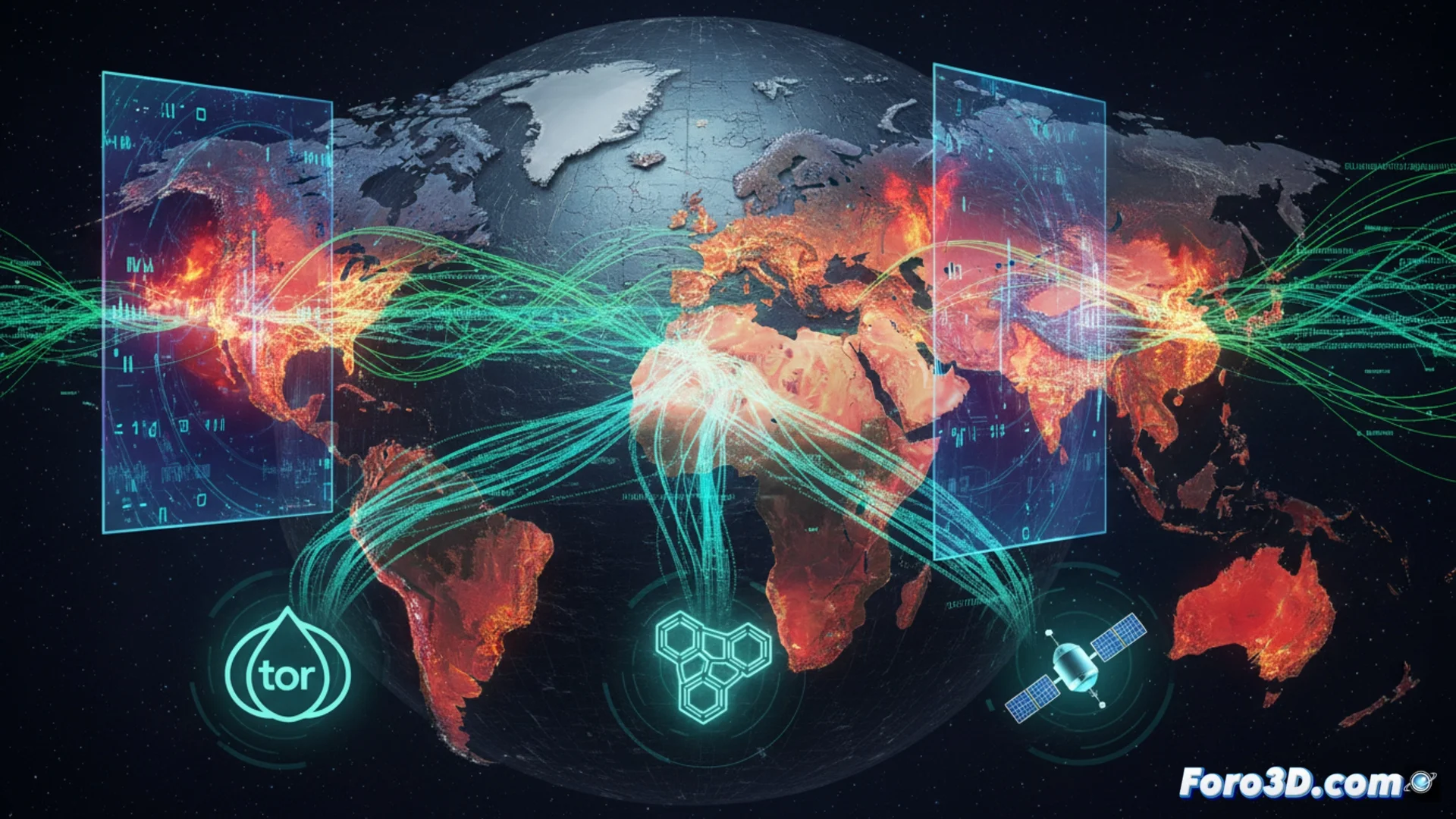
Methods for Browsing Without Revealing Identity in Authoritarian Regimes
In territories where governments exert strict control over the network, internet users constantly seek ways to hide their activity online. Although VPNs and proxy servers are well-known solutions, there are other less conventional ways to preserve privacy and access restricted information. 🛡️
Anonymous Networks and Specialized Browsing
One of the most powerful tools for maintaining anonymity is the Tor network. This system routes connections through a chain of servers operated by volunteers, making it extremely difficult to track the origin of the activity. To use it, a specific browser is required. However, this layer of security usually reduces connection speed, and authorities often attempt to block the main access points.
Key Features of Tor:- Multi-layer routing: Traffic passes through several nodes, encrypted at each step.
- Dedicated browser: Modified software to integrate securely with the network.
- Vulnerability to blocks: Entry relays are a common target for censorship.
Online privacy is not a luxury, but a fundamental necessity in hostile digital environments.
Techniques to Evade Censorship and Decentralized Networks
In addition to software, advanced technical tactics are employed. Tor bridges are non-public nodes that help bypass initial blocks. Obfuscation tools, such as Pluggable Transports, alter traffic to resemble a normal web connection and thus evade deep inspections. On the physical plane, mesh networks allow devices to connect directly, creating independent local infrastructures, although with limited geographic reach.
Complementary Strategies:- Unlisted bridges: Facilitate access when conventional paths are closed.
- Traffic simulation: Software that generates common network activity to avoid suspicion.
- Satellite connection: An option that is harder for governments to intercept.
Evaluating Available Options
Each method presents advantages and limitations. While networks like Tor offer robust anonymity at the cost of speed, mesh networks provide independence but with a reduced range. The choice depends on the level of risk and the user's technical capabilities. The pursuit of digital privacy in oppressive contexts continues to drive innovation in these tools. 🔒