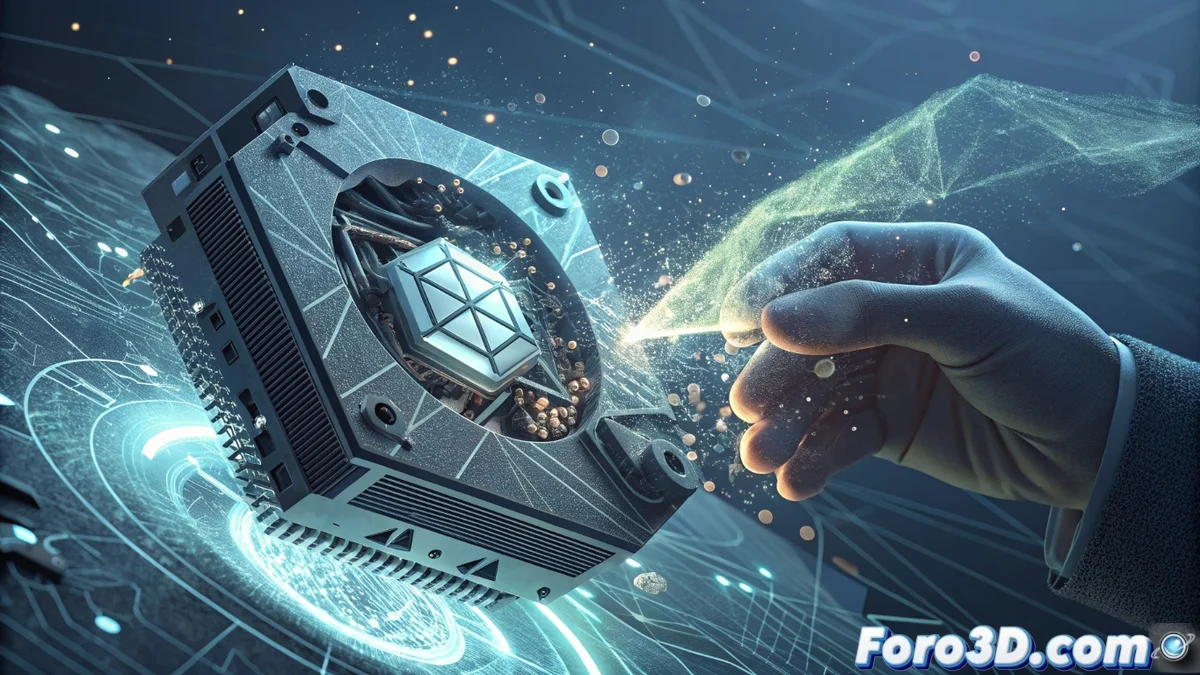
Maxon Updates Redshift to Version 2026.2
Maxon presents version 2026.2 of its Redshift rendering engine, marking a step forward in speed and control for 3D artists. This release focuses on renewing key tools and polishing the experience within environments like Cinema 4D, responding to community demands. 🚀
A Native and Powerful Particle System
The update completely transforms the Redshift particle system. Now users can simulate and visualize complex effects directly in the engine's interactive preview viewport, without necessarily depending on external systems. This streamlines the creative process for generating everything from light atmospheric effects to intense explosive sequences.
Main features of the new system:- Emitters and forces: Full control over the birth, direction, and behavior of particles.
- Collisions: Ability to simulate realistic physical interactions with geometry.
- Preview rendering: Immediate visualization of effects, allowing for faster iteration.
This evolution brings Redshift closer to a unified workflow, where simulation and rendering occur in the same space.
Improvements in Texturing and Stability
The Triplanar node receives a significant overhaul. It projects textures onto 3D models lacking UV coordinates, but now with more precise control over how projections blend across different planes, visibly reducing seams. Additionally, stability issues have been addressed, especially when using mesh lights in Cinema 4D.
Other fixes and optimizations included:- Fixes for several user-reported bugs, increasing the engine's reliability.
- Performance optimizations that affect render times.
- Greater smoothness in integration with Cinema 4D, refining inter-application interaction.
The Path to Intuitive Rendering
With each update, rendering engines like Redshift simplify technical steps, allowing artists to focus more on creative vision and less on configuring parameters. As the industry advances, tools like the new particle system and improved Triplanar node represent a concrete step toward more direct and efficient workflows. The challenge remains balancing artistic control with intelligent automation. 💡