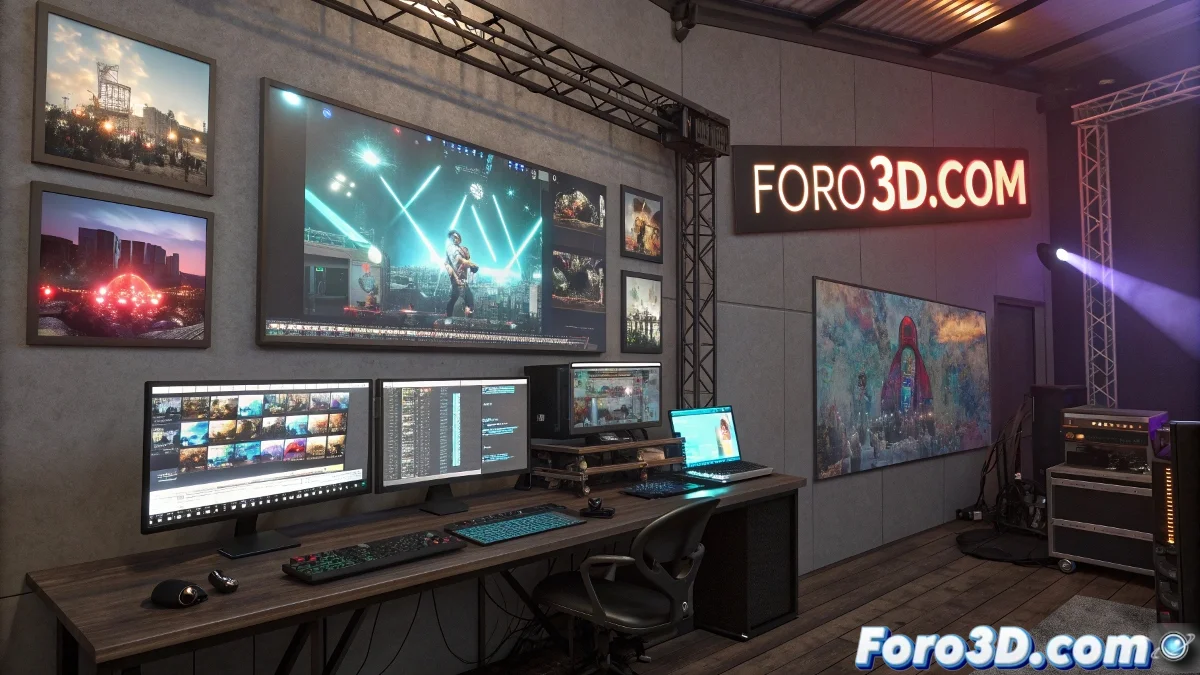
Mad Cool 2025: Where Beats Met Pixels
Olivia Rodrigo not only closed Mad Cool with her music, but also with an explosion of digital art that turned the stage into a 3D dream. Giant LED screens, mapped projections, and real-time generated effects demonstrated that festivals are no longer just audio, they are immersive experiences. 🎤✨
The Software Behind the Show
While the audience danced, digital artists worked in the shadows with tools like:
- Unreal Engine for interactive visuals and virtual stages
- TouchDesigner to synchronize lights and projections with the music
- After Effects for compositing and post-concert effects
- Blender in some cases, for modeling 3D elements integrated live
"Today a VJ is as important as the DJ: without impactful visuals, the music loses half its power" – Digital artist working at festivals.
From Screen to Stage (and Vice Versa)
The creative process behind these shows is a mix of:
- Pre-production: 3D modeling of stages and animations
- Real-time: Control of visuals synchronized with the music
- Post-production: Editing for social media with DaVinci Resolve
Why This Matters to the 3D Community?
Events like Mad Cool are the perfect laboratory for techniques that are later applied in:
- Music video production
- Virtual reality experiences
- Motion graphics for brands
- Live special effects
So the next time you see a concert, pay close attention to those hypnotic visuals… because behind them there's probably some 3D artist who spent more hours rendering than the musician rehearsing. 🖥️🔥
And if Olivia Rodrigo ever releases a Blender tutorial, the internet will explode. But until then, we'll keep recreating her show in our projects. 😉