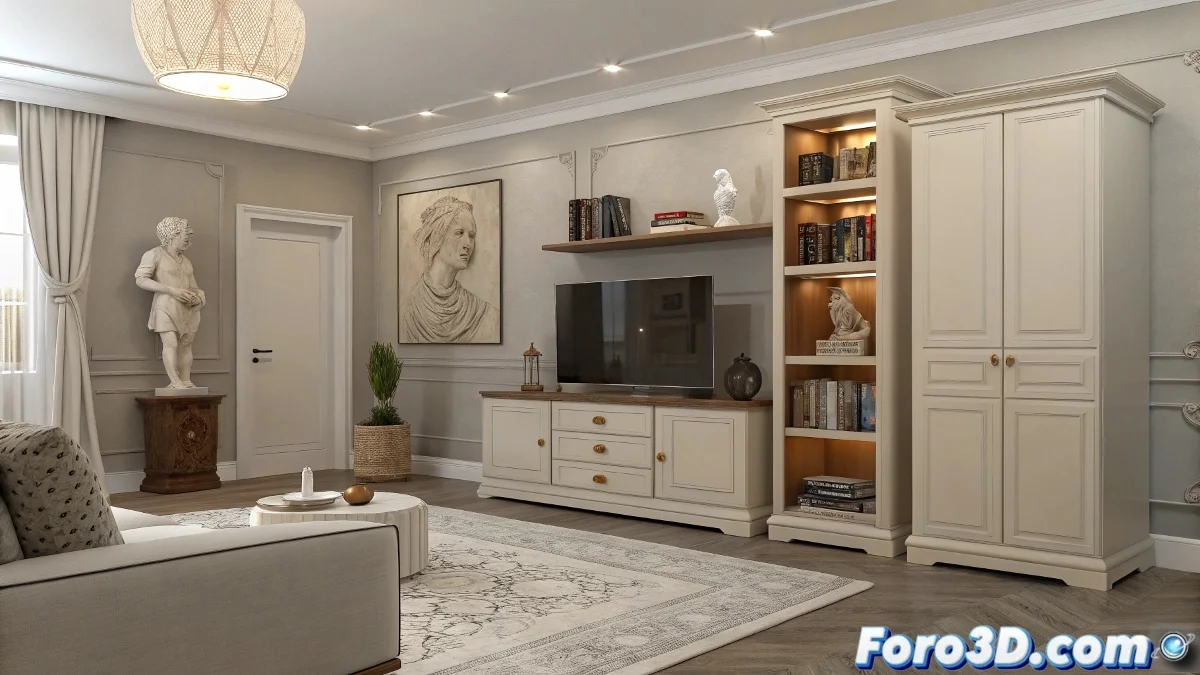
Infinigen Indoors: When Procedural and Imported Assets Go Hand in Hand
The Infinigen environment generator has just broken its own rule: not everything has to be created with nodes anymore. Its latest update allows importing static 3D models from Blender or Maya, combining the best of manual design with procedural generation. The result? Richer scenes where that ornate sofa you worked so hard to model finally makes sense.
"We let artists do what they do best (modeling) and AI do what it does best (filling in the rest)" — Patch notes.
Game-Changing New Features
- Asset Import: Sculptures, complex furniture, and elements difficult to generate procedurally
- Infinigen-Sim: Module for creating doors, drawers, and interactive objects 🚪
- Advanced Export: Formats like USD, URDF, and MJCF for simulation pipelines
Hybrid Workflow
Now you can:
- Model key elements in Blender/Maya
- Import them into Infinigen
- Procedurally generate the environment around them
- Export everything together for Unreal or Isaac Sim
Requirements and Limitations
- Multiplatform Support: Native Linux/macOS, Windows via WSL (experimental)
- NVIDIA GPU required for CUDA acceleration
- In Blender, it works best as an external module rather than internal
What Is It Really For?
Ideal for:
- Rapid Prototyping of indoor spaces
- Robotics/AI simulations with interactive objects
- Motion graphics with procedural base but manual details
With this update, Infinigen stops being just a procedural generator to become a bridge between traditional modeling and assisted creation. That said, we're still waiting for the day it can generate that perfect coffee cup that's so hard for us to model ☕.