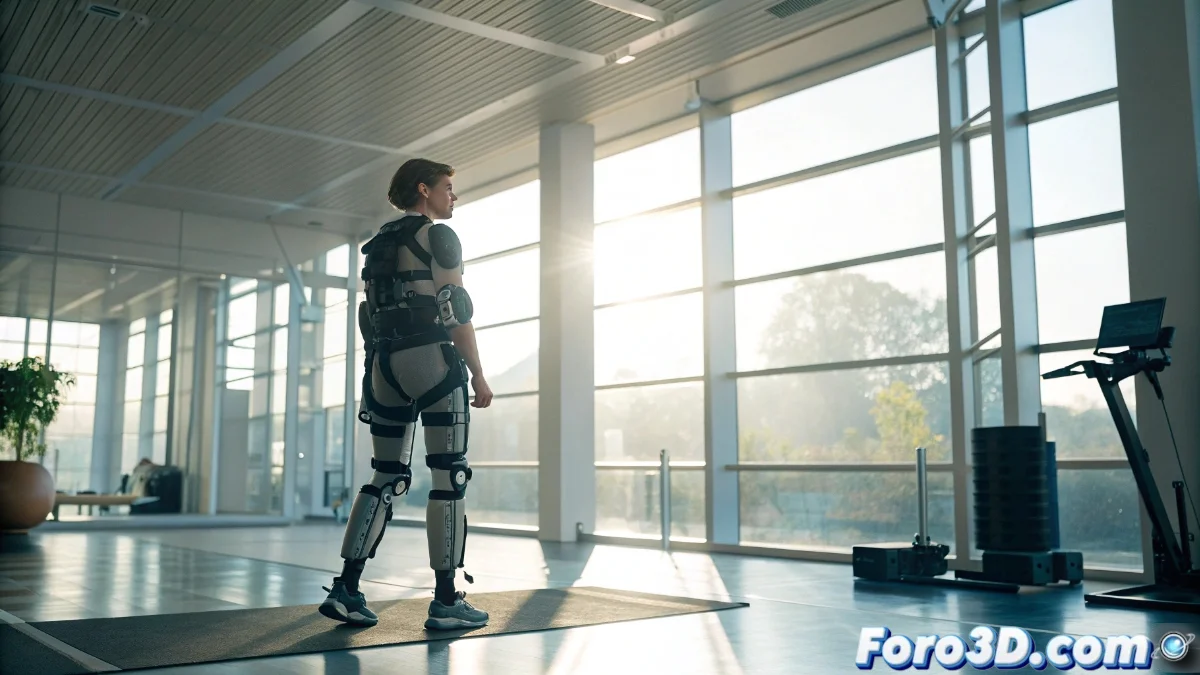
Indego Exoskeleton: Robotic Technology for Reduced Mobility
The Indego exoskeleton represents a significant advancement in wearable robotic devices, specifically designed to provide support to individuals with limited mobility in the lower extremities, such as those with spinal cord injuries. Initially created at Vanderbilt University and later commercially driven by Parker Hannifin, this modular and lightweight system enables users to stand up, move around, and perform daily tasks with greater autonomy. Its technology synchronizes with the body's natural movements, offering assistance in the hips and knees through electric actuators that respond to torso tilt or instructions from mobile apps 🤖.
Technical Architecture and Mode of Operation
The device integrates adjustable segments that attach to thighs, legs, and feet, linked to a control unit and rechargeable batteries. It employs inertial sensors to capture the user's movement intention and activates the motors in the joints in a coordinated manner, enabling stable steps and postural transitions. It is compatible with walkers or crutches for additional balance, and its foldable design facilitates transportation. Customization of variables such as speed or stride amplitude is managed through specialized software, fine-tuning performance for each individual.
Key System Components:- Modular adjustable segments for thighs, legs, and feet
- Electric actuators in hips and knees with tilt response
- Inertial sensors to detect movement intentions
The adaptive technology of the Indego transforms rehabilitation, offering a path to functional recovery and independence.
Impact on Rehabilitation and Clinical Benefits
This exoskeleton is primarily used in clinical and home settings for gait therapy, helping to prevent complications arising from prolonged immobility, such as muscle atrophy, osteoporosis, or pressure ulcers. It promotes blood circulation, strengthens the cardiovascular system, and improves psychological well-being by partially restoring the ability to move in an upright position. Research confirms that regular use can accelerate functional recovery in patients with multiple sclerosis, strokes, or spinal cord injuries.
Highlighted Therapeutic Applications:- Prevention of complications from prolonged immobility
- Improvement of circulation and cardiovascular strengthening
- Acceleration of recovery in multiple sclerosis and stroke
Practical Considerations and Future of the Device
Although the Indego promises to restore freedom of movement, it is crucial to remember that its operation depends on a rechargeable battery, making every step literally electrifying. This aspect underscores the importance of energy management in robotic assistance devices, while continued exploration of improvements in autonomy and adaptability aims to expand its impact on users' quality of life 💡.