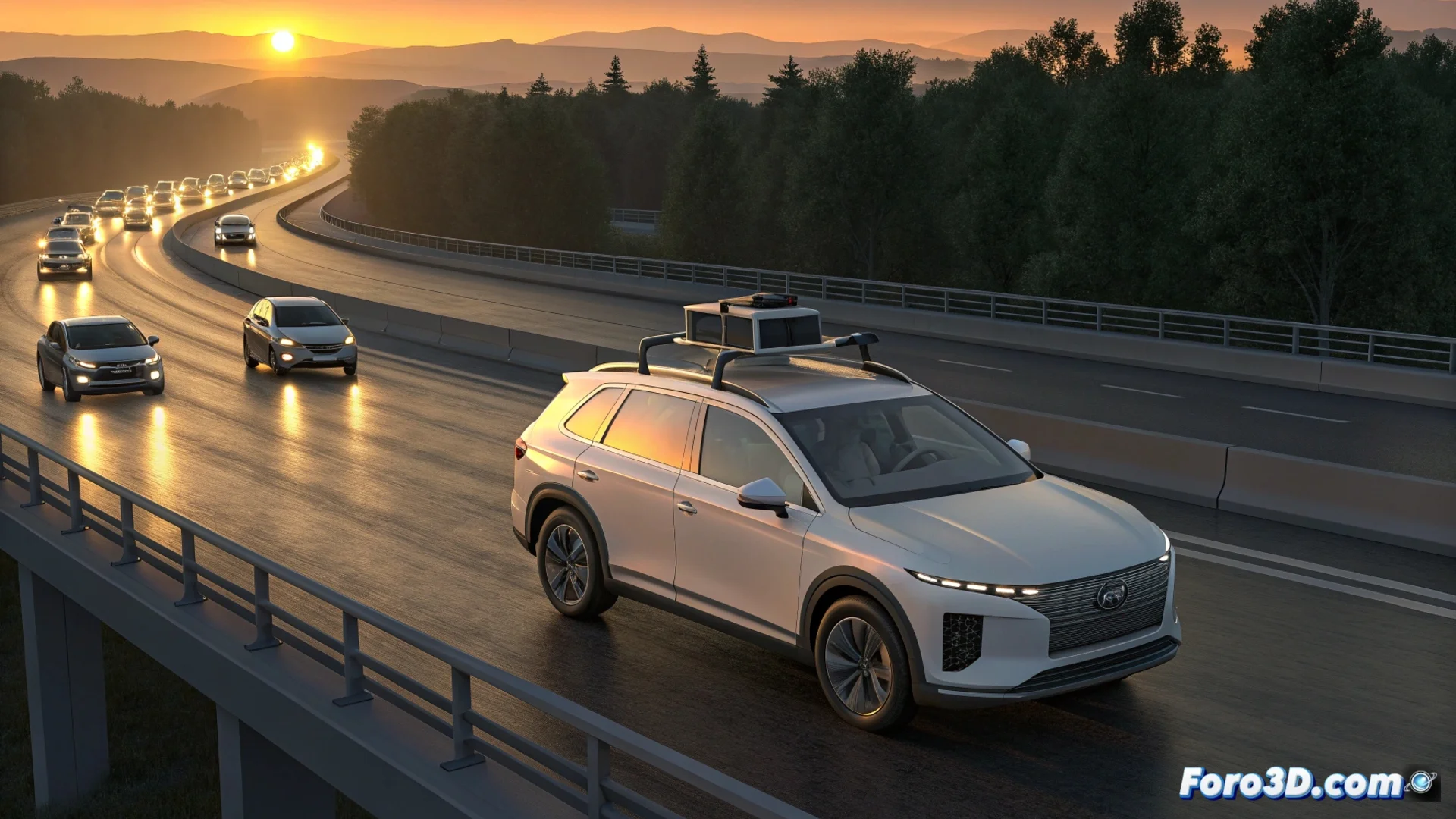
Hyundai Tests Its Autonomous Driving System on Roads in Korea and Europe
The Hyundai Motor Group is accelerating to develop and validate its autonomous driving technology. Currently, the group is conducting thorough tests of its Highway Driving Pilot on real highways in South Korea and Germany, a crucial step before implementing the system in future production models. 🚗
The Technological Core: Sensors That Perceive the Environment
This system is designed to handle the vehicle autonomously on high-speed roads. It can perform complex maneuvers such as lane changing and overtaking other cars. To achieve this, it integrates a powerful combination of hardware: LiDAR sensors, long-range radars, and a set of high-definition cameras. This data fusion creates a detailed and reliable representation of everything surrounding the automobile.
Key Features of the Perception System:- LiDAR: Generates a precise 3D map of the environment by measuring distances with laser pulses.
- Radar: Detects objects and calculates their speed with high precision, even in bad weather.
- Cameras: Provide essential visual information to recognize signs, lanes, and traffic lights.
The goal is to refine the system to operate safely and smoothly under various traffic conditions.
Test Vehicles in Action
The test fleets consist of specific models. The Staria van and the fuel cell Nexo SUV serve as mobile development platforms. The Hyundai Nexo, which already incorporates advanced driver assistance systems, offers an ideal technological base for integrating and testing this level 3 autonomy software.
Test Process Phases:- Data Collection: Engineers analyze terabytes of information gathered during real-world driving.
- Human Supervision: Although the system operates, the law requires a driver to remain alert and ready to take control.
- Validation: The aim is to confirm performance in varied and complex traffic scenarios.
The Path to Full Autonomy
While the system operates, the drivers in the test seats can relax, but current regulations require them to be prepared to intervene within seconds if the vehicle requests it. This requirement underscores that, although the Hyundai Highway Driving Pilot represents a significant advancement, absolute trust in the machine remains a goal under development. The group continues to optimize every algorithm with a primary focus on safety. 🔒