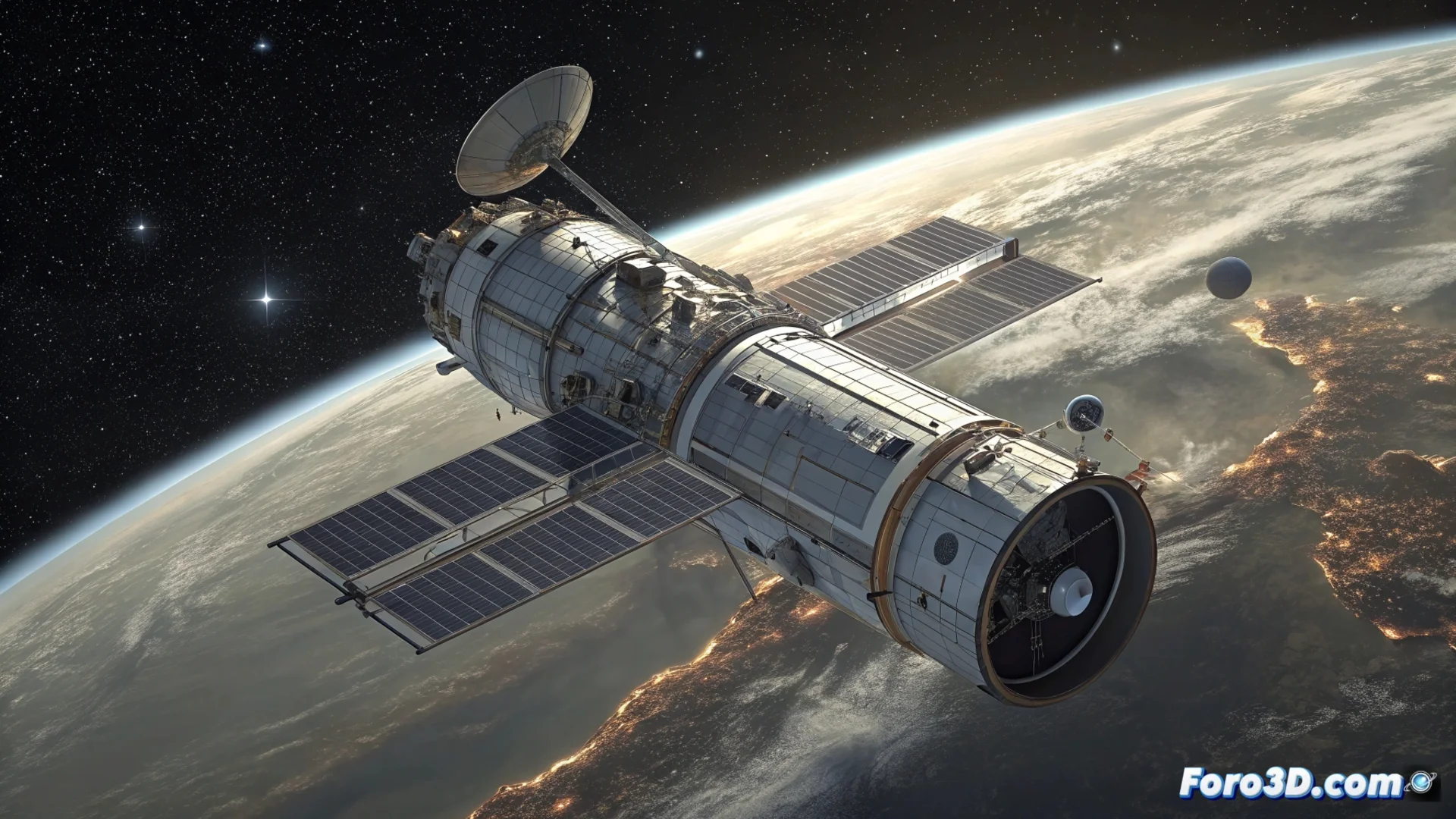
Hubble Survives the Shuttles and Poses a Deorbiting Problem
NASA faces an unexpected logistical challenge due to the extraordinary longevity of the Hubble Space Telescope. Launched in 1990, its design relied on the shuttle program to maintain it and, ultimately, retire it from orbit in a controlled manner. However, that program ended in 2011, leaving the observatory without its original retirement plan, a twist of fate that no one anticipated. 🛰️
The Latent Risk of Atmospheric Reentry
The core of the problem is that Hubble was not built to disintegrate completely if its orbit is allowed to decay naturally. Massive components, such as its primary mirrors and titanium structures, could withstand the intense heat and reach the Earth's surface. This represents a calculated but real risk that debris could scatter over a wide area and potentially cause damage.
Key Risk Factors:- The telescope lacks a dedicated propulsion system to guide a safe reentry.
- Its orbit decays slowly, but the final moment is inevitable without intervention.
- The statistical probability of causing casualties is low, but NASA has a mandate to mitigate any danger.
Hubble's greatest success, its operational duration, has become its own logistical nightmare.
Exploring Paths for a Controlled End
Currently, engineers are analyzing different technical scenarios to resolve this dilemma. The priority is to plan ahead and avoid a dangerous end, while the telescope continues to produce valuable science.
Options NASA is Evaluating:- Attach a robotic propulsion module to the telescope that, activated remotely, directs it toward a controlled reentry over an uninhabited ocean.
- Launch a manned mission (using vehicles like Crew Dragon) or a fully robotic one to install such a system, a more complex and costly option.
- Evaluate emerging on-orbit servicing technologies that could extend its lifespan even further before making the final decision.
A Legacy That Demands Planning Its Conclusion
The situation underscores the importance of designing end-of-life from the start for space missions. While Hubble