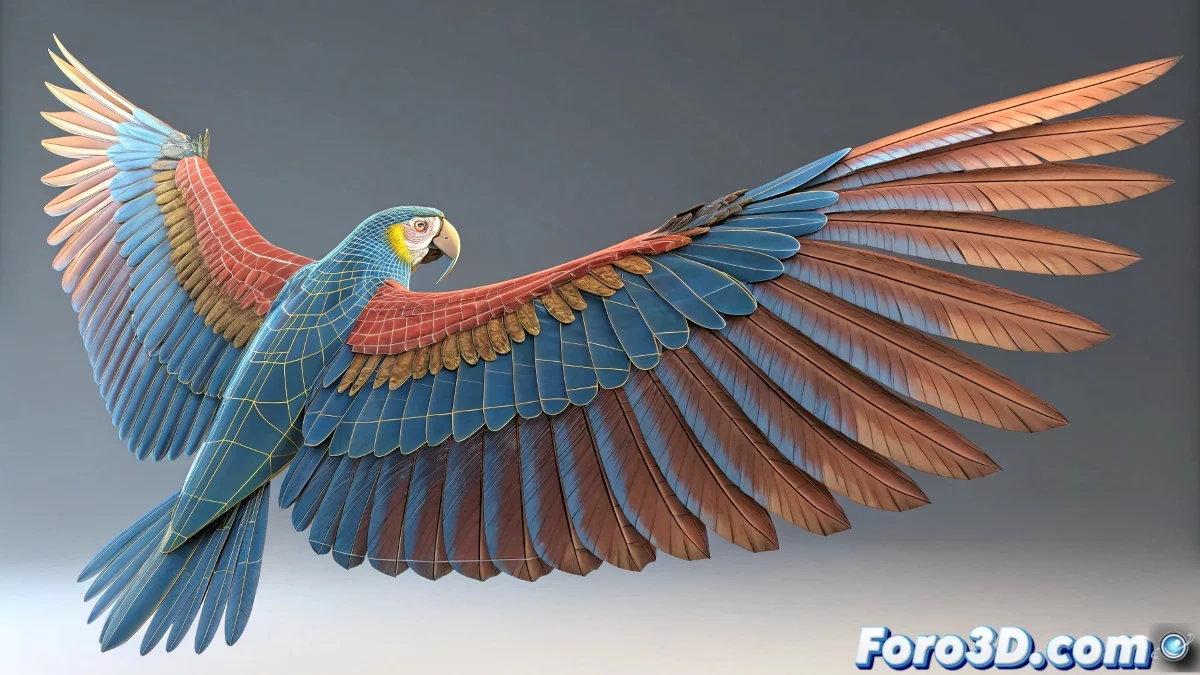
How to Achieve Realistic and Dynamic Movement in Character Wing Rigging
Rigging wings in 3ds Max is no easy task. If anyone thought it was just a matter of moving a couple of bones, here comes the sad reality: wings need a life of their own 🕊️. Especially if you want to emulate the fluidity we saw in movies like Rio.
Why Using Only IK Spline is Not Enough
Sure, IK Spline will help you define the base curvature of the wing, but if what you're looking for is for the feathers to react with that inertia and bounce effect, you need to go further. The movement shouldn't be merely mechanical; it must convey lightness and a natural response to the air.
Additional Techniques to Bring Wings to Life
- Using modifiers like Flex or Spring Controller to simulate elasticity in the main bones.
- Setting up wire parameters or expressions so that the more distal sections of the wing respond with a slight delay relative to the base shoulder movement.
- Applying custom constraints to allow secondary control over the rotation of individual feathers 🎛️.
- Playing with the influence scale to make the reaction smoother towards the tips.
The Magic of Physical Simulation Applied to Wing Rigs
If you're into taking animation a step further, you can incorporate physical simulation. Plugins like MassFX or RayFire allow you to create bounce or collision effects between feathers. Furthermore, the CAT Rig with Dynamic Bones offers simpler yet effective options to achieve that natural movement we all expect to see on screen 🪶.
Practical Tips for Total Control
- Start with a solid base of bones and controllers.
- Add secondary simulation only when the base animation is already working well.
- Don't forget to test the system with different flapping speeds: wings don't behave the same in slow flight as they do during takeoff.
- If the system becomes too heavy, consider baking the simulations before rendering.
Ironic touch to close: And if after all this your wing is still stiffer than a wooden bird... try putting on some samba music 🎶. Sometimes the secret to movement is in the rhythm, even if it's digital.
Conclusion with Good Humor
Mastering dynamic wing rigging requires patience, testing, and a bit of technical creativity. But once you see those feathers moving gracefully through the viewport... well, all the effort will have been worth it 😎.