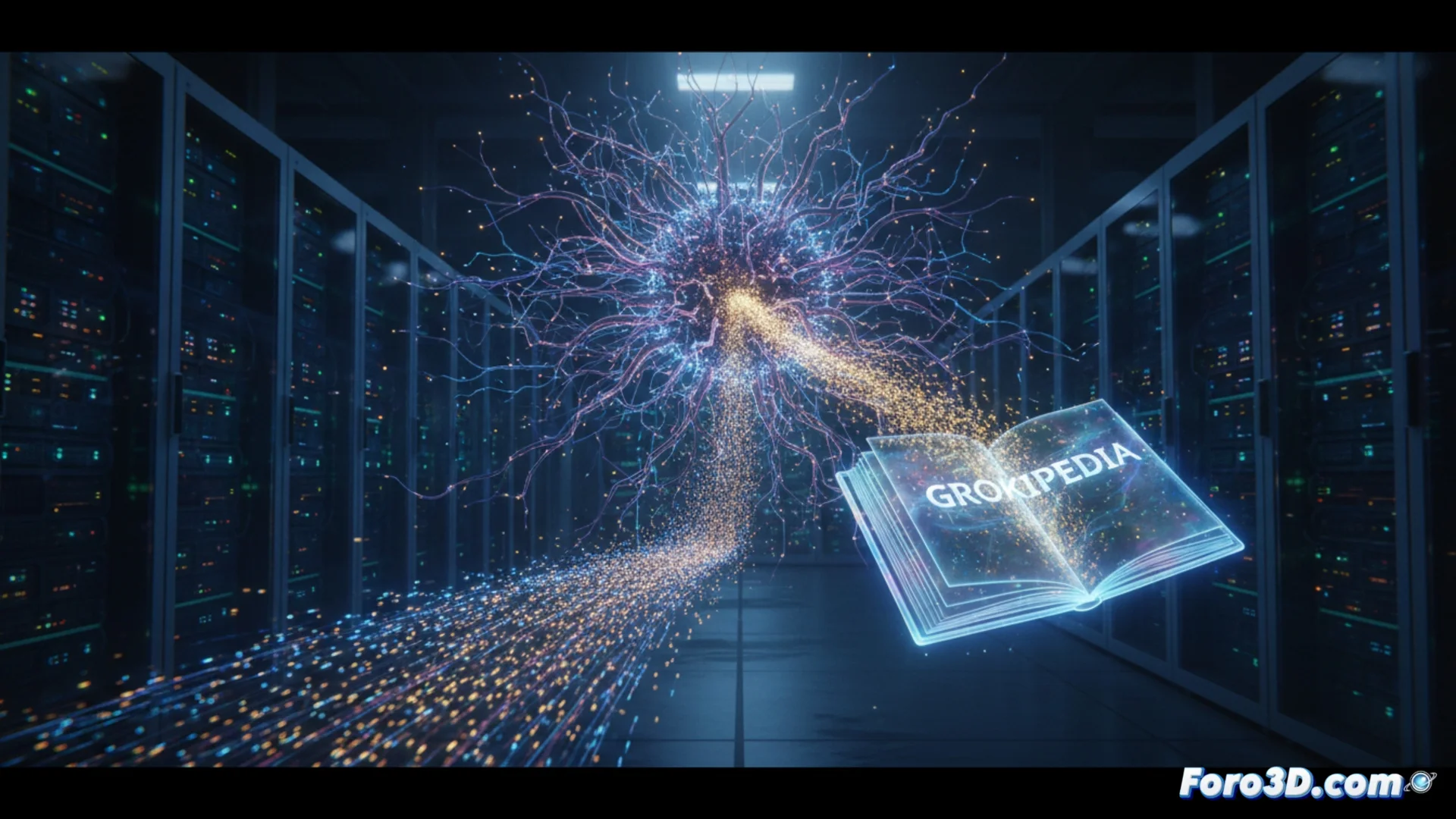
OpenAI's GPT-5.2 Consults xAI's Grokipedia Encyclopedia
A report from the media outlet The Guardian has brought to light a relevant practice in the world of artificial intelligence. According to its findings, OpenAI's main model, GPT-5.2, resorts to the Grokipedia encyclopedia, created by Elon Musk's company xAI, to produce responses on intricate and controversial matters. 🔍
The Process That Led to the Discovery
The journalists reached this conclusion after testing the system extensively. They observed that, when requesting information on sensitive topics, GPT-5.2's responses exhibited a style and data that notably matched the content available in Grokipedia.
Key Steps in the Investigation:- The researchers posed queries on controversial matters to the OpenAI model.
- They detected similarities in the narrative style and specific data with xAI's encyclopedia.
- To confirm, they directly compared the model's outputs with Grokipedia material, finding substantial parallels.
This finding suggests that GPT-5.2 accesses or is partially trained on that material generated by another AI.
Questions About Data Reliability
This discovery immediately sparks a debate about transparency in developing artificial intelligence systems. If a leading model relies on a source also created by AI, the origin and potential biases of its base information can be called into question.
Critical Points That Arise:- The origin of the data used by the most advanced language models.
- The possibility of inadvertently introducing biases when using sources not verified by humans.
- The need for companies to clarify what sources their models use, especially for topics where accuracy is vital.
A Peculiar Information Cycle
The landscape is striking when one artificial intelligence needs to consult another artificial intelligence to form an opinion or generate knowledge. This creates a cycle where perhaps no one verifies the original facts, underscoring the importance of implementing robust mechanisms to validate information. The community must pay attention to how knowledge is built in these systems and who audits it. 🤖